What Does Caviar Taste Like? The Definitive Taste Guide (2026)
I still remember my first spoonful of real caviar. I was twenty two, sitting in a dimly lit bistro in Paris, trying not to look intimidated by the mother-of-pearl spoon in front of me. I expected it to be intensely fishy, slimy, or overly salty. Instead, when the pearls popped against the roof of my mouth, I experienced a rush of cool, briny butter that vanished as quickly as it arrived, leaving behind a faint whisper of ocean mist and walnuts. It wasn’t fishy at all it was like concentrating the essence of the sea into a single, luxurious bite.
If you are reading this, you are probably standing where I was: curious, perhaps a bit skeptical, and asking the fundamental question: what does caviar taste like?
This guide cuts through the snobbery and mystery. Whether you are prepping for a fancy dinner or just want to know if the expensive jar is worth the hype, here is the honest, experience driven breakdown of what caviar is, how it tastes, and why people pay hundreds of dollars for a few ounces of fish eggs.
The Flavor Profile: What Does Caviar Taste Like?
The answer to what does caviar taste like isn’t singular because not all caviar is created equal. However, high-quality sturgeon caviar shares a specific flavor architecture. It should never taste like a fishing pier smells.
True caviar tastes primarily of fresh ocean brine, followed by a rich, buttery creaminess. It has a savory quality often described as “umami.” Depending on the variety, you might detect notes of almond, hazelnut, or even dried fruit. The texture is just as critical as the flavor. The eggs should be distinct pearls that “pop” gently a sensation experts call “the Caspian pop” releasing their oil instantly.
When people ask how does caviar taste, I tell them to imagine the clean salinity of a raw oyster mixed with the richness of unsalted butter and a touch of roasted nuttiness. It is delicate. If it tastes metallic, sour, or overly “fishy,” it has likely oxidized or wasn’t stored correctly.
The “Sturgeon” Factor
To understand the egg, you must understand the source. What does sturgeon fish taste like? The meat of the sturgeon is dense, meaty, and mild, often compared to swordfish or veal rather than flaky white fish. This clean, substantial profile translates to the roe. Because the fish itself isn’t oily or pungent, the eggs carry a pristine, refined flavor profile that absorbs the subtle minerals of the water they live in.
Caviar vs. Roe: Clearing the Confusion
Before we go further, let’s address the most common mix-up: roe vs caviar (or caviar vs roe).
Technically, what is caviar? By strict definition, caviar refers only to the cured eggs (roe) of the Acipenseridae family the sturgeon. Everything else salmon eggs, trout eggs, lumpfish eggs is considered “roe” or “caviar substitutes.”
The difference in taste is massive. Roe vs caviar is like comparing a sparkling grape juice to a vintage Champagne.
- Caviar (Sturgeon): Complex, buttery, nutty, subtle brine. Texture is smooth and popping.
- Roe (Salmon/Trout/Lumpfish): Simple, salty, juicy, often “fishier.” Texture can be sticky or watery.
When you ask what does caviar taste like, you are asking about the premium sturgeon product. If you eat salmon roe (the orange spheres on sushi) expecting the taste of Osetra, you will be confused. Understanding caviar vs roe prevents you from overpaying for a product that doesn’t deliver that signature buttery finish.
Visual Guide: What Colour Is Caviar?
If you are buying based on sight, you need to know what colour is caviar (or what color is caviar for my American readers). It is rarely just black.
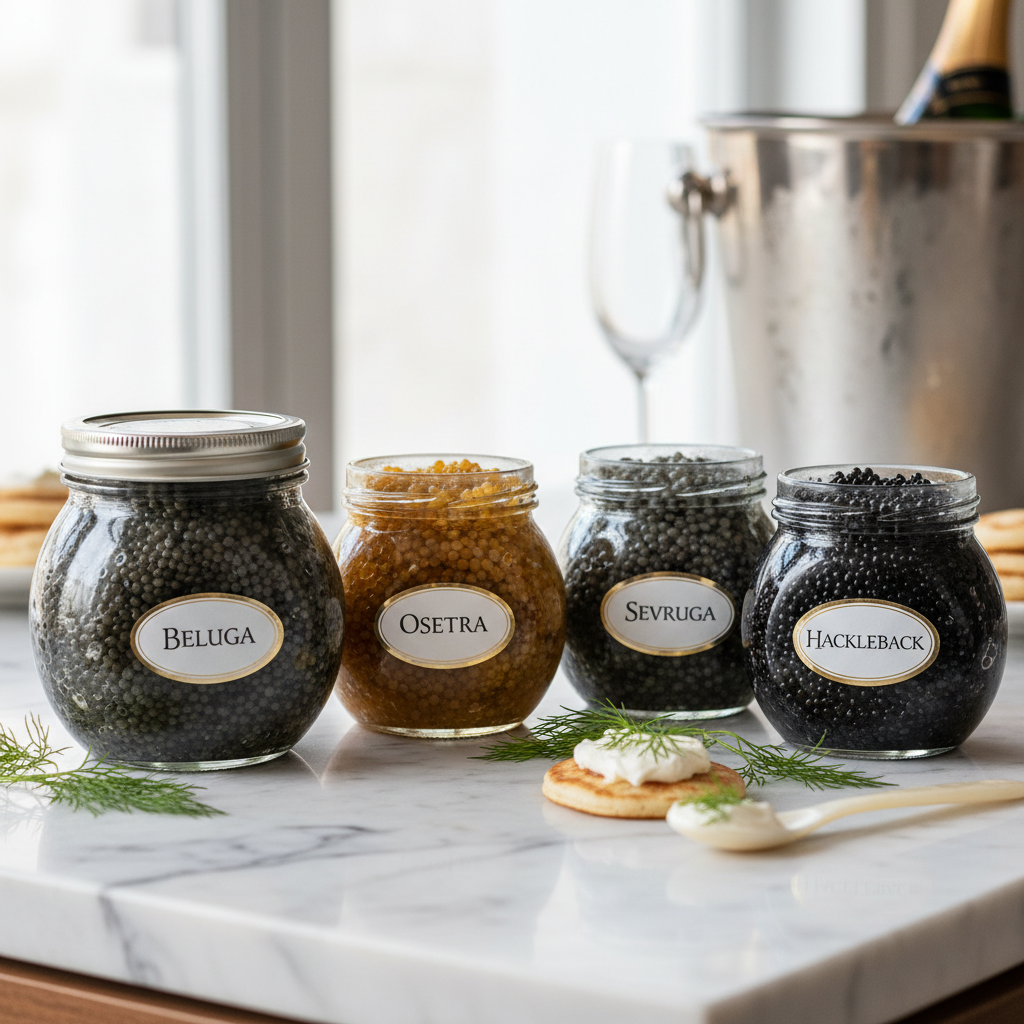
- Beluga: Steely gray to dark charcoal.
- Osetra: Varies widely from dark brown to golden amber (often prized as “Royal”).
- Sevruga: typically light to dark gray.
- Hackleback: Deep, glossy, jet black.
When beginners ask what color is caviar, they often expect the jet black beads seen in cartoons. In reality, the most expensive caviar often leans toward lighter, golden brown hues. If you see neon colors (red, green), that is dyed roe, not caviar. Knowing what colour is caviar supposed to be helps you spot fakes immediately.
Caviar Grades and Characteristics
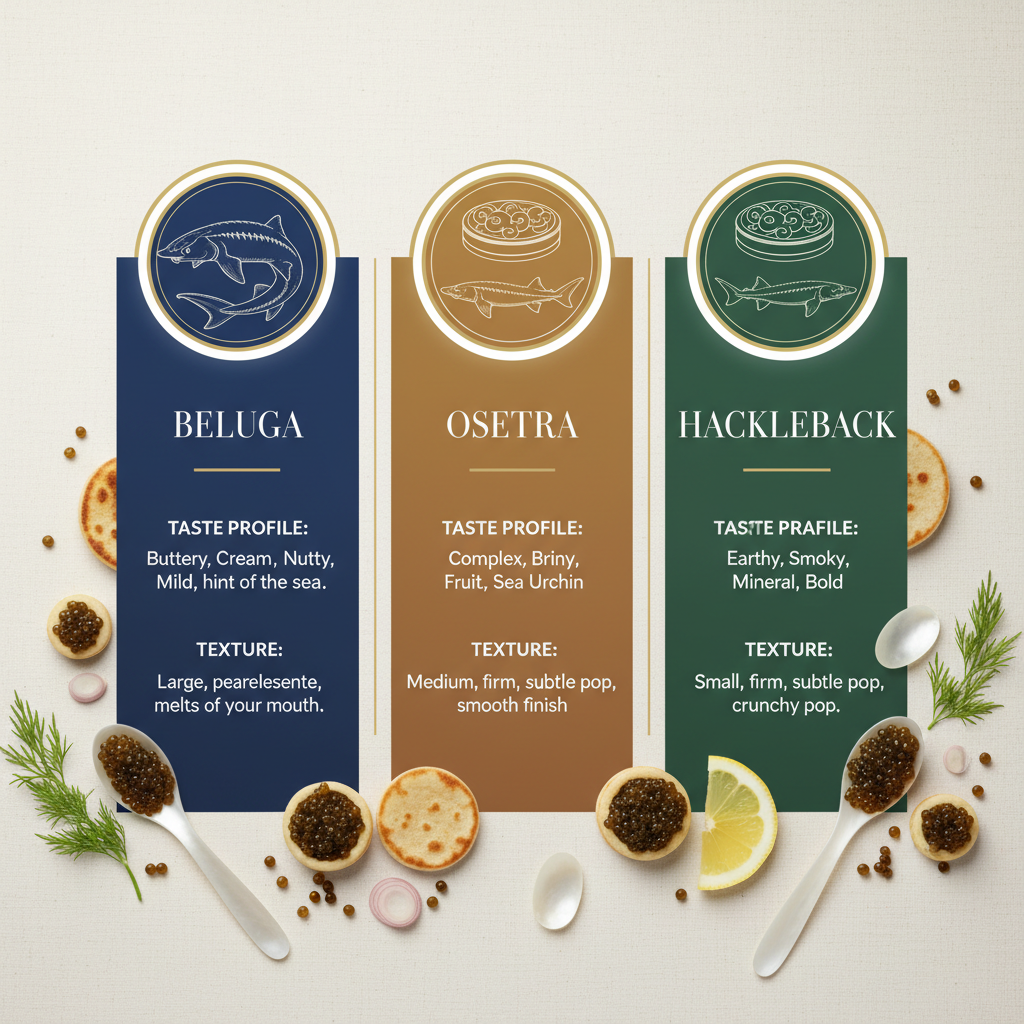
| Variety | Color Profile | Texture | Flavor Notes | Price Range | Best Pairings |
|---|---|---|---|---|---|
| Beluga | Light to Dark Gray | Creamy, delicate | Butter, mild brine, clean finish | $$$$ ($200+/oz) | Toast points, crème fraîche |
| Osetra | Amber to Dark Brown | Firm, distinct pop | Nutty, walnuts, fruity hints | $$$ ($100–$180/oz) | Blinis, boiled eggs |
| Sevruga | Platinum Gray | Crunchy, small beads | Intense sea flavor, mineral | $$ ($65–$110/oz) | Potato chips, mild cheeses |
| Hackleback | Jet Black | Soft, small beads | Sweet, intense, earthy | $ ($30–$45/oz) | Plain crackers, cucumbers |
Top 10 Caviar Varieties Ranked by Taste
To help you decide where to start, I’ve ranked the top 10 varieties you will encounter. This list balances flavor complexity, texture, and popularity.
1. Beluga (Huso Huso)
The King of Caviar. If budget is no object, this is the benchmark. Beluga pearls are the largest of all sturgeon roe, often the size of a pea. What does caviar taste like at this level? It is incredibly creamy. The membrane of the egg is so thin it is almost invisible, bursting with the slightest pressure. The flavor is exceptionally mild less salty than others with a finish that tastes like sweet cream butter. It’s rare, often illegal to import in certain regions due to conservation status, but farm-raised hybrid options exist.
2. Osetra (Ossetra)
The Nutty Connoisseur’s Choice. Many chefs actually prefer Osetra to Beluga because it has more character. When people ask how does caviar taste, Osetra provides the most complex answer. It has a firmer texture with a satisfying pop. The flavor profile is famous for its nutty undertones think toasted walnuts or hazelnuts layered over a clean ocean brine. What colour is caviar from an Osetra sturgeon? It ranges from warm brown to a stunning golden hue. It lingers on the palate longer than Beluga.
3. Kaluga (River Beluga)
The Sustainable Titan. Often called “River Beluga,” Kaluga is a freshwater sturgeon (often a hybrid) that produces massive, glossy eggs. It mimics the creamy texture of Beluga but brings an earthier, richer tone. What is caviar if not an experience in texture? Kaluga delivers a firm pop that melts into a buttery consistency. It is currently the darling of Michelin-starred restaurants because it offers that premium “Beluga like” experience at a slightly more accessible price point.
4. Sevruga
The Intense Ocean Hit. Sevruga eggs are smaller and grayer than Osetra. If you want to know what does caviar taste like when it’s bold, try Sevruga. It is briny, intense, and distinct. It tastes deeply of the sea, with a crisp mineral finish. It lacks the creaminess of Beluga but makes up for it with pure flavor impact. What does sturgeon fish taste like? Sevruga reminds you that this comes from a fish; it’s unashamedly marine.
5. Hackleback Caviar (American Sturgeon)
The Sweet Entry Point. Native to the Mississippi and Missouri river systems, hackleback caviar is the pride of American roe. It is small, firm, and jet black. What does caviar taste like from the USA? Surprisingly sweet. Hackleback caviar has a nutty, sweet finish that is very approachable for beginners. It doesn’t have the long, complex aftertaste of Osetra, but for the price, it is unbeatable. If you are asking what color is caviar that is affordable yet authentic, look for the black shimmer of Hackleback.
6. Siberian Sturgeon (Baeri)
The Dark Horse. Often dark brown to black, Siberian sturgeon caviar is known for being direct and savory. How does caviar taste from Siberia? It is less nutty than Osetra and earthy, with a stronger umami punch. It has a slightly softer texture than Osetra but offers a wonderful, clean brininess that pairs beautifully with potatoes or blinis. It answers what is caviar for the mid-range market perfectly authentic, delicious, and consistent.
7. White Sturgeon (Transmontanus)
The American Giant. Farmed extensively in California, White Sturgeon produces roe that rivals the best imports. The beads are large and range from dark gray to brown. What does caviar taste like from California? It is incredibly clean and mild. It lacks the distinct nuttiness of Osetra but makes up for it with a smooth, buttery consistency that is very easy to eat. It’s a great “blank canvas” caviar that doesn’t overpower other ingredients.
8. Sterlet
The Imperial Flavor. Once reserved for Russian Tsars, Sterlet caviar is small and delicate. What colour is caviar from a Sterlet? It can be light gray to golden. The flavor is intense similar to Sevruga but with a finer, almost velvet texture. It is hard to find today due to overfishing, but sustainable farms are bringing it back. It answers how does caviar taste when it is concentrated rich, powerful, and deeply savory.
9. Paddlefish (The Cousin)
The Close Relative. While not technically a sturgeon, the Paddlefish is a close relative, and its roe is often sold alongside hackleback caviar. What does caviar taste like if it’s Paddlefish? Very earthy and muddy in a pleasant, rich way. It has a “mossy” quality that many connoisseurs enjoy. The eggs are gray and soft. It is often used to explain caviar vs roe differences because while it mimics Sevruga in looks, the texture is softer and the flavor earthier.
10. Salmon Roe (Ikura)
The Pops of Umami. Okay, this is technically in the roe vs caviar debate, but it deserves a spot because of its popularity. What is caviar to the sushi lover? It’s Ikura. These giant orange orbs are juicy rather than creamy. When they pop, they release a liquid, oily, salty nectar. How does caviar taste compared to this? Sturgeon caviar is butter; Salmon roe is juice. It is intense, fishy, and sweet.
The Economics of Taste: Is It Worth It?
Understanding what is caviar helps justify the cost. Sturgeon take 7 to 20 years to mature before they produce eggs. You are paying for time.
When comparing caviar vs roe, the price difference is stark. You can get a jar of lumpfish roe for $10. A tin of hackleback caviar might cost $40. A tin of Beluga can run $400.
The flavor correlates with the effort. Cheap red lumpfish roe is salty, dyed, and crunchy it tastes like salt water and food coloring. Hackleback caviar offers genuine sturgeon complexity sweet and nutty. Beluga offers a textural perfection that is impossible to replicate.
If you are just starting, don’t jump straight to Beluga. Start with hackleback caviar or a domestic White Sturgeon. They provide a genuine answer to what does caviar taste like without breaking the bank.
Tasting Chart: Intensity vs. Creaminess
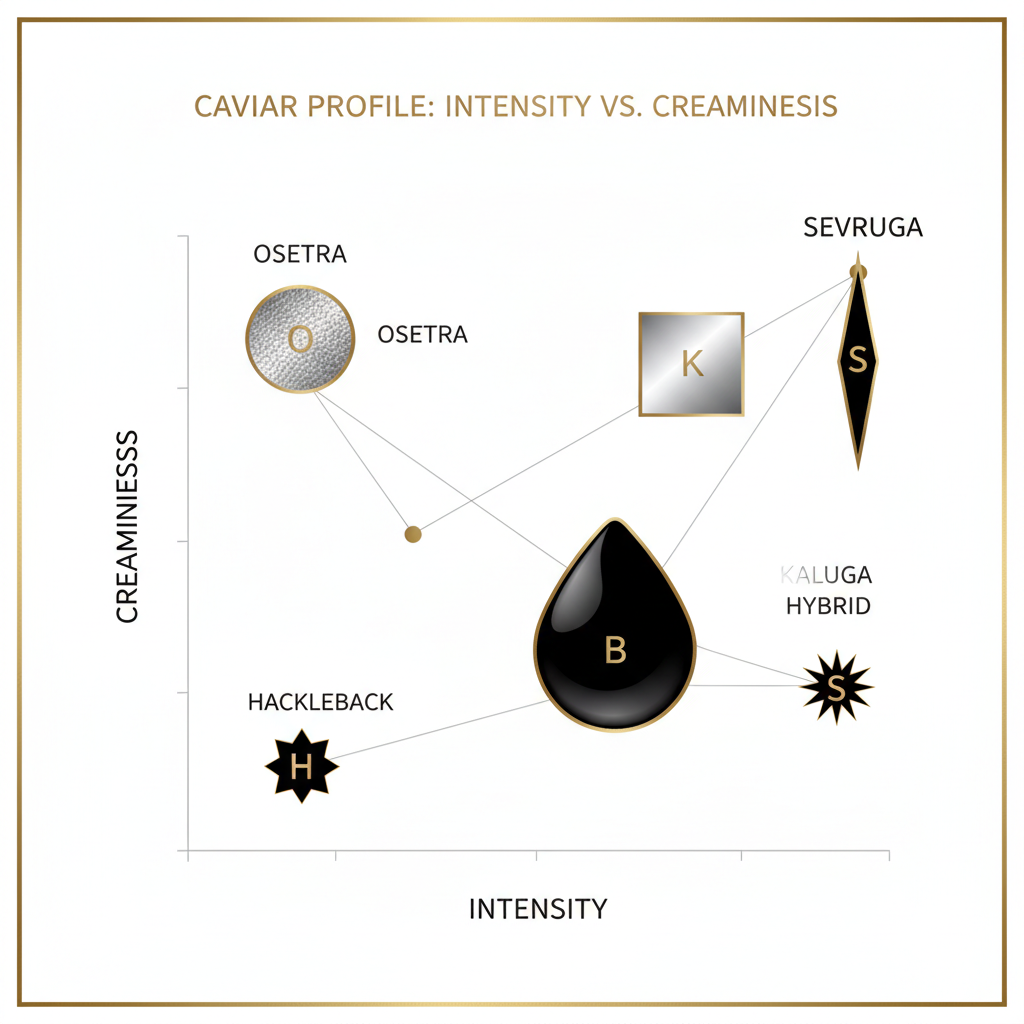
| Caviar Variety | Creaminess (1-5) | Intensity (Brine, 1-5) | Flavor Highlights |
|---|---|---|---|
| Beluga | 5 | 2 | Ultra creamy, mild brine, sweet butter |
| Kaluga | 4 | 2 | Creamy, subtle brine, earthy richness |
| White Sturgeon | 4 | 2 | Smooth, light brine, gentle mushroom |
| Osetra | 3 | 3 | Nutty, balanced brine, complex finish |
| Sevruga | 2 | 5 | Bright sea salt, crisp, mineral |
| Hackleback | 2 | 4 | Sweet finish, earthy, bold brine |
Creaminess: 1 = least creamy, 5 = most buttery
Intensity: 1 = subtle brine, 5 = pronounced ocean flavor
How to Eat It (So You Actually Taste It)
Knowing how does caviar taste is useless if you ruin it with metal spoons or strong toppings.
- The Spoon: Never use silver or stainless steel. Metal oxidizes the eggs instantly, giving them a tinny, battery-like flavor. Use mother of pearl, glass, wood, or even a plastic spoon.
- The Temperature: Serve it ice cold. Warm caviar turns soupy and fishy.
- The Base: The traditional vehicle is a blini (small pancake) or a plain cracker.
- The Technique: Don’t chew. Use your tongue to press the eggs against the roof of your mouth until they pop. That is how you unlock the butteriness.
If you are trying to detect what does sturgeon fish taste like in the egg, eat it purely “au naturel” straight off your hand (the anatomical snuffbox, the space between your thumb and index finger) is the traditional way to warm it slightly before tasting.
Common Questions and Misconceptions
“Is it just salty?”
No. What does caviar taste like if it’s just salty? It tastes like bad caviar. Good caviar uses the “Malossol” method, meaning “little salt.” The salt is there to cure and preserve, not to dominate.
“Does it taste like fish?”
This is the biggest fear. What does sturgeon fish taste like? It’s mild. Therefore, the eggs should be mild. If your caviar smells strongly of fish, it is old. Fresh caviar smells like the sea like clean water and fresh air not like dead fish.
“Why is my caviar red?”
If you are asking what colour is caviar and seeing red, you are eating Salmon or Trout roe. Remember the roe vs caviar distinction. Sturgeon caviar is never red. It ranges from gray to black to gold.
“What is Hackleback?”
I mention hackleback caviar often because it is the unsung hero of the American market. It is wild-caught, sustainable, and affordable. How does caviar taste from a Hackleback? It is faster, sharper, and sweeter than the aged imports. It’s excellent for first-timers.
For more deep dives into luxury ingredients, check out this report on Sustainable Seafood Trends or read about the history of sturgeon farming at The World Sturgeon Conservation Society. For a broader look at gourmet pairings, Wine Folly offers great guides on matching wines with salty delicacies.
Also, be sure to read our guide on other flavours to complete your tasting setup.
Frequently Asked Questions
Q: Does good caviar taste fishy?
A: No, high-quality caviar should not taste fishy. It should taste like ocean brine and butter. If it has a strong, pungent fishy odor or taste, it indicates that the eggs are old, oxidized, or of poor quality. The primary flavor should be clean and slightly nutty.
Q: What is the difference between roe and caviar?
A: The main difference in roe vs caviar is the fish source. What is caviar? It is exclusively the eggs of the sturgeon family. Roe is a general term for eggs from any marine animal, including salmon, trout, and lobster. All caviar is roe, but not all roe is caviar.
Q: What color is high-quality caviar supposed to be?
A: What color is caviar that is high quality? It ranges from light gray and golden amber to dark brown and jet black. Lighter colors (like golden Osetra) are often rarer and more expensive. Hackleback caviar is naturally jet black, while Beluga is steely gray.
Q: Is expensive caviar really worth the money?
A: Generally, yes, if you value texture and complexity. Expensive varieties like Beluga and Osetra offer a unique, creamy “pop” and complex nutty flavors that cheaper caviar vs roe substitutes cannot mimic. However, affordable options like hackleback caviar offer great taste for a fraction of the price.
Q: What does Hackleback caviar taste like compared to Beluga?
A: Hackleback caviar is sweeter, nuttier, and has a smaller, softer bead compared to Beluga. Beluga is larger, creamier, and milder. While Hackleback lacks the intense buttery finish of Beluga, it is highly regarded for its sweet, distinct flavor profile.
Q: Can you eat caviar if you don’t like seafood?
A: Surprisingly, yes. Many people who dislike cooked fish enjoy caviar because it lacks the “fishy” texture and smell of filets. What does sturgeon fish taste like? It’s mild, and the eggs are more akin to savory butter or salted egg yolk than a piece of cooked salmon.