Popcorn Flavor Seasonings: The Ultimate 2026 Guide to Elevating Your Snack
Popcorn is the canvas; popcorn flavor seasonings are the paint. Whether you are a movie theater veteran, a home-snacking enthusiast, or a business looking for the next big seller, the difference between a forgettable bowl and an addictive snack lies entirely in the seasoning.
According to recent market analysis, the global demand for creative popcorn toppings is exploding, with a projected growth rate of nearly 10% through 2030. Why? Because we are tired of plain butter. We want umami, heat, sweet-salty fusions, and guilt-free indulgence.
In this comprehensive guide, we will break down everything you need to know about popcorn flavoring seasoning. From the science of making powder stick to the kernels, to identifying the best popcorn seasoning for your diet, and where to find popcorn seasoning wholesale deals.
Let’s turn up the flavor.
The Evolution of Popcorn Flavor Seasonings
Gone are the days when “seasoning” meant just shaking table salt over a greasy bag. Today, the world of popcorn seasonings is a sophisticated culinary landscape.
What is Popcorn Flavor Powder?
Technically, popcorn flavor powder is a micro-fine blend of spices, salts, dehydrated fats (like cheese or butter powder), and sometimes sweeteners. The particle size is critical. Unlike standard table salt, which bounces off the kernels and settles at the bottom of the bowl, specifically engineered flavored popcorn salt seasonings are pulverized to a flour-like consistency. This increases the surface area and allows the seasoning to cling to the nooks and crannies of the popped corn.
The Three Main Categories
When shopping for or creating flavor profiles, you generally encounter three types:
- Dry Powders: Ideally suited for dusting. These include cheddars, ranches, and BBQ blends. They require a binder (oil or butter) to stick effectively.
- Glazes: These are usually sugar-based (like caramel or kettle corn mixes) and are added during the popping process to melt and coat the shell.
- Sprays/Oils: Infused fats that add both moisture and flavor, serving as the adhesive for dry powders.
2026 Trends: The Best Popcorn Seasoning Profiles
If you want to impress guests or customers, you need to move beyond simple cheddar. Based on current food trends and data from 2025–2026, here are the flavor profiles dominating the market.
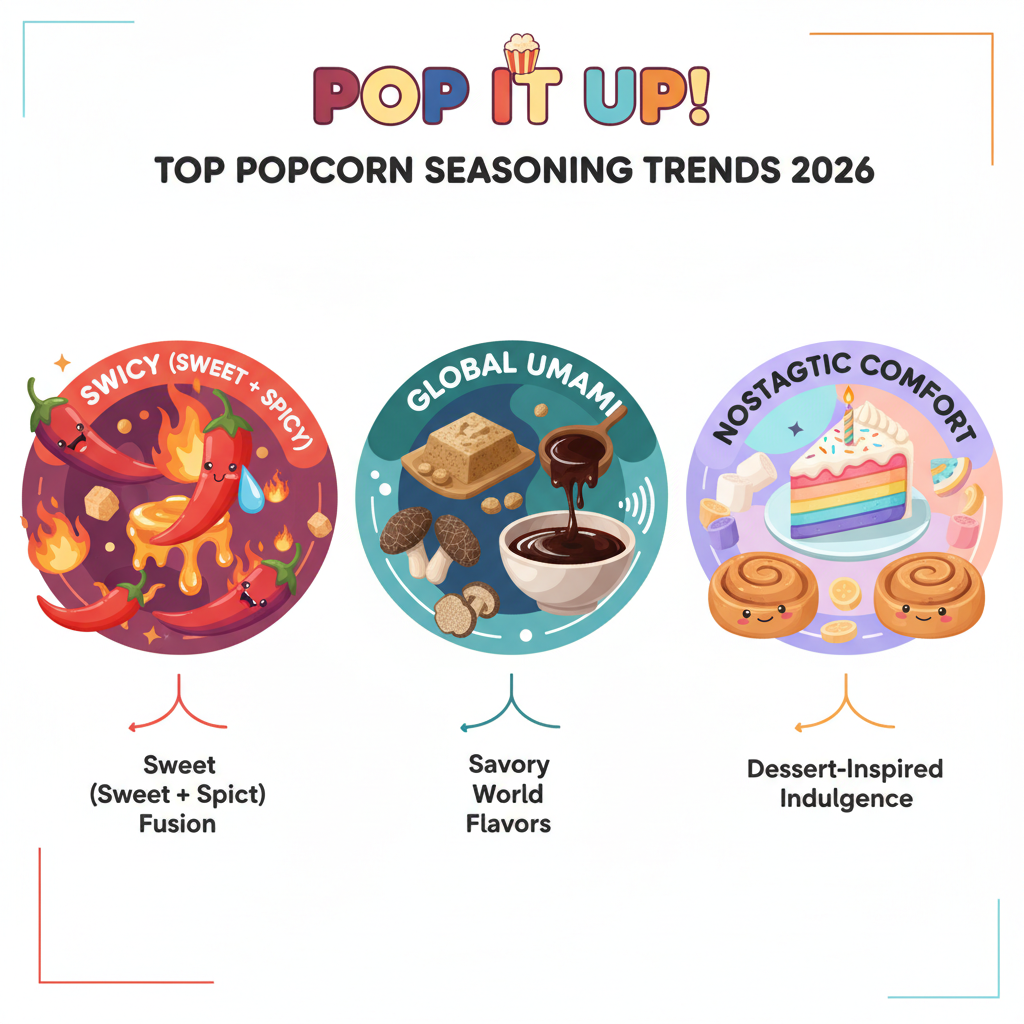
1. Swicy (Sweet + Spicy)
The “swicy” trend is taking over snack aisles. Think Hot Honey, Mango Habanero, or Chili Lime. These popcorn flavor seasonings trigger multiple taste receptors at once, creating a highly addictive snacking experience.
2. Global Umami
Consumers are looking for savory depth.
- Miso Butter: A rich, fermented salty kick.
- Truffle Parmesan: The gold standard for “gourmet” snacking.
- Elote (Mexican Street Corn): A blend of cumin, chili powder, lime, and cheese powder.
3. Nostalgic Comfort
While exotic flavors grow, comfort remains king.
- Birthday Cake: Vanilla notes with sprinkles.
- Pizza: Tomato powder, oregano, and mozzarella profiles.
- Dill Pickle: The tangy, sour punch that has seen a massive resurgence in the chip aisle is now a top contender for best popcorn seasoning.
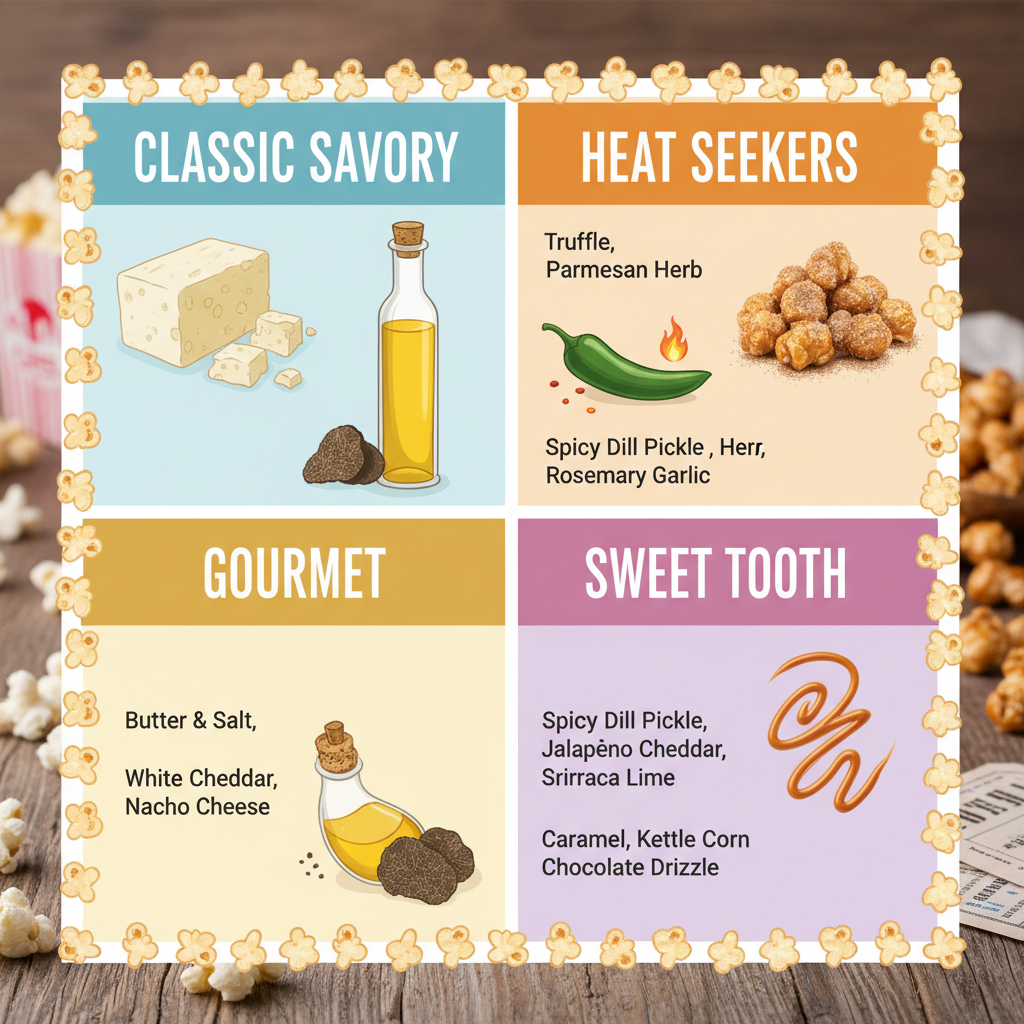
| Flavor Category | Key Ingredients | Target Audience |
|---|---|---|
| Classic Savory | White Cheddar, Butter Salt, Ranch | Families, Kids |
| Gourmet | Truffle Oil, Rosemary, Himalayan Salt | Foodies, Dinner Parties |
| Heat Seekers | Jalapeño, Ghost Pepper, Sriracha | Gen Z, spice lovers |
| Sweet Tooth | Kettle Corn, Cinnamon Sugar, Cocoa | Dessert lovers |
The Science of Adhesion: How to Make Popcorn Seasoning Stick
The number one complaint regarding popcorn flavor seasonings is that they end up on your fingers or the bottom of the bowl, not on the popcorn.
This is simple physics. A dry kernel has a smooth, non-porous surface. Dry powder cannot adhere to it without a binding agent.
The “Binder” Method
To maximize flavor coverage, you must use a fat-based binder.
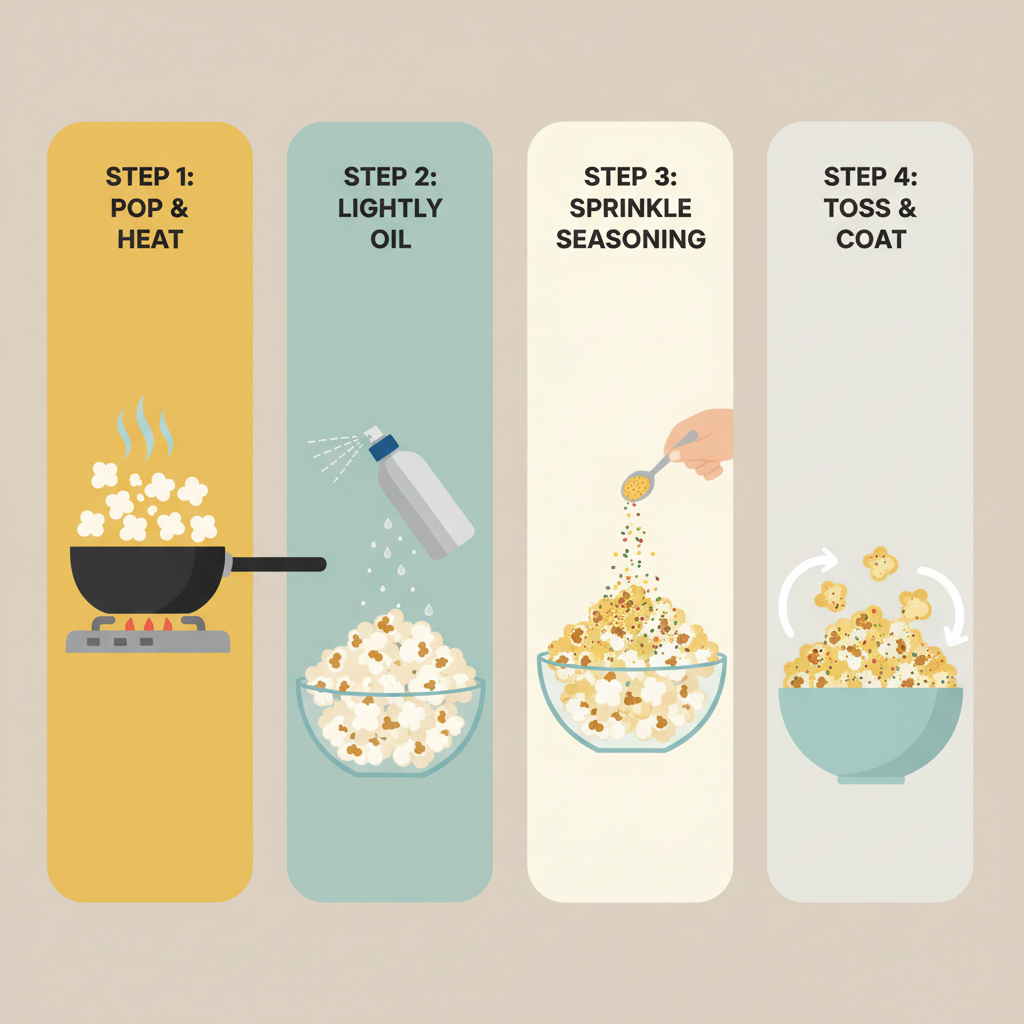
- Pop the corn: Use your preferred method (air pop, stove, microwave).
- The Mist: Immediately after popping, while the corn is hot, mist it with a fat.
- Healthy option: Olive oil spray or avocado oil spray.
- Indulgent option: Melted butter or ghee.
- Pro Tip: Use a spray bottle rather than pouring. Pouring makes the popcorn soggy; spraying creates a fine tackiness.
- The Toss: Sprinkle your popcorn flavor powder immediately after spraying and toss the bowl vigorously.
The “Grind” Hack
If you are using homemade spices or coarse salts, they are too heavy to stick. Put your seasoning blend into a spice grinder or mortar and pestle. Pulverize it until it looks like dust or powdered sugar. This micro-texture is the secret behind commercial flavored popcorn salt seasonings.
Is There Such Thing as Healthy Popcorn Seasoning?
Popcorn itself is a whole grain powerhouse. According to the Cleveland Clinic, popcorn is loaded with fiber and polyphenols (antioxidants) that aid digestion and may help fight disease. However, burying it in artificial yellow dyes and hydrogenated oils negates those benefits.
What to Look For
When searching for a healthy popcorn seasoning, check the label for:
- Low Sodium: Many commercial salts are 90% sodium. Look for blends that use herbs, garlic powder, or nutritional yeast for flavor bulk.
- No Artificial Dyes: Avoid Red 40 or Yellow 5 and 6. Natural colorants like turmeric or paprika are superior.
- Nutritional Yeast: A favorite among vegans, “nooch” provides a cheesy, nutty flavor with zero dairy and a massive dose of B-vitamins.
DIY Healthy Blends
Creating your own blend is often the healthiest route.
- The Superfood Blend: Spirulina powder, sea salt, and garlic powder.
- The Anti-Inflammatory: Turmeric, black pepper (to activate curcumin), and ginger.
Popcorn Seasoning Wholesale: A Guide for Business Owners
If you run a cinema, a snack bar, or an e-commerce food brand, buying retail packets won’t cut it. Sourcing popcorn seasoning wholesale requires attention to margins and shelf stability.
Sourcing Considerations
- Bulk Density: Commercial seasonings are often sold by weight (lbs), but you use them by volume (scoops). Ensure you understand the yield per pound.
- Anti-Caking Agents: In a commercial setting, clumping is a disaster. Wholesale mixes usually contain silicon dioxide or calcium silicate to keep the powder flowing freely.
- Custom Blends: Many suppliers allow private labeling. If you want to launch a signature “Spicy Ranch” for your brand, look for contract manufacturers who specialize in popcorn flavor seasonings.
For businesses looking to explore unique flavor profiles or analyze market gaps before ordering bulk, platforms like Flavor Suggest can provide inspiration on pairing trending ingredients.
Comparative Analysis: Premade vs. Homemade Seasonings
Should you buy a jar of popcorn seasoning or mix it yourself?
Premade Store-Bought
- Pros: Consistency, convenience, engineered for “stickability” (often micro-ground).
- Cons: Often high in sodium, artificial additives, and costlier per ounce.
- Best For: Quick snacks, movie nights, specific artificial flavors (like “movie theater butter” which is hard to replicate naturally).
Homemade
- Pros: Control over ingredients, lower sodium, customizable heat/sweetness levels.
- Cons: Texture can be gritty if not ground down; requires pantry staples.
- Best For: Health-conscious snackers, gourmet entertaining.
5 Expert Tips for the Ultimate Popcorn Experience
- Layering: Don’t season all at once. Season half the bowl, toss, add more popcorn, season again. This ensures the bottom kernels aren’t bland.
- Heat Activation: Some spices, like curry powder or chili powder, taste better if “bloomed” in hot oil for 10 seconds before being drizzled over the popcorn.
- Sweet & Salty Balance: If using a sweet seasoning (cinnamon sugar), add a pinch of fine sea salt. The salt creates contrast that makes the sweetness pop.
- Storage: Humidity is the enemy of popcorn flavor powder. Store your blends in airtight jars with silica packets to prevent them from turning into a solid brick.
- Freshness: Spices lose potency after 6 months. If your paprika is gray, toss it. Fresh spices make for vibrant popcorn.
Frequently Asked Questions (FAQ)
1. What is the most popular popcorn seasoning?
While butter salt remains the global leader, white cheddar and kettle corn (sweet and salty) are close contenders for the top spot. In recent years, spicy variations like jalapeño cheddar have surged in popularity.
2. How do I get salt to stick to air-popped popcorn?
Air-popped corn is very dry. You must use a binding agent. A light mist of olive oil, coconut oil spray, or even a specialized “popcorn tack” spray is essential before sprinkling your popcorn flavor seasonings.
3. Is popcorn seasoning gluten-free?
Most pure spice blends are naturally gluten-free. However, many commercial popcorn seasonings use anti-caking agents or flavor enhancers (like soy sauce powder or malt vinegar powder) that may contain wheat. Always check the label for “Certified Gluten-Free” status.
4. Can I use regular table salt for popcorn?
You can, but it yields poor results. Table salt grains are large and heavy; they will bounce off the kernels and settle at the bottom of the bowl. For best results, use “popcorn salt” or grind your table salt into a fine powder.
5. What is a healthy alternative to butter for popcorn?
Olive oil, avocado oil, and coconut oil are excellent heart-healthy fats. For a lower-calorie option, a light spritz of water or vinegar (for a salt and vinegar vibe) can help spices stick, though it may slightly soften the crunch.
6. Why does my popcorn seasoning taste bitter?
This often happens with burnt spices or excessive use of potassium chloride (a common salt substitute). If you are blooming spices in hot oil, be careful not to overheat them, as paprika and garlic powder burn in seconds.
7. How long does popcorn seasoning last?
Commercially packaged flavored popcorn salt seasonings typically have a shelf life of 1–2 years. However, once opened, moisture can cause clumping. Homemade blends should be used within 3–6 months for peak flavor.
8. What are the ingredients in movie theater popcorn seasoning?
The yellow “salt” used in theaters is typically a product called Flavacol. It is composed of salt, artificial butter flavor, Yellow #5, and Yellow #6. It is extremely fine-grained to adhere perfectly to the corn.
9. Can I use popcorn seasoning on other foods?
Absolutely! Popcorn flavor powder is incredibly versatile. Try sprinkling white cheddar powder on broccoli, using spicy seasoning on roasted potatoes, or dusting ranch powder onto chicken before baking.
10. Where can I buy popcorn seasoning wholesale?
You can source popcorn seasoning wholesale through restaurant supply stores, direct-to-consumer bulk spice websites, or specialized concession suppliers like Gold Medal or Snappy Popcorn.
Conclusion: The Final Pop
Elevating your snack game is about experimentation. Whether you are sourcing popcorn seasoning wholesale for a business or just trying to find the best popcorn seasoning for a Friday night in, the variety of flavors available in 2026 is unmatched.
Remember the golden rules: grind your salts fine, use a binder for adhesion, and don’t be afraid to mix profiles for a custom taste. From healthy yeast blends to decadent chocolate drizzles, popcorn flavor seasonings turn a humble grain into a gourmet experience.
Ready to find your next favorite flavor combination? Start experimenting tonight, and don’t settle for boring butter.
Key Takeaways
- Texture Matters: Use micro-fine powders for better adhesion.
- Use a Binder: Oil sprays or melted fats are non-negotiable for air-popped corn.
- Health Check: Read labels to avoid high sodium and artificial dyes; consider DIY blends.
- Trend Watch: Look for “Swicy” (sweet + spicy) and global umami flavors this year.
- Storage: Keep powders dry and airtight to prevent clumping.
Disclaimer: This content is for informational purposes only. For specific dietary concerns, consult a medical professional or nutritionist.