Rib Eye Steak vs Striploin: The Ultimate Guide for 2026
You’re standing at the butcher counter, staring at two premium cuts of beef. One is heavily marbled and promises a buttery richness; the other looks leaner but boasts a bold, beefy flavor. It’s the classic showdown: rib eye steak vs striploin. Which one deserves a spot on your grill tonight?
While both cuts are steakhouse staples, they offer distinctly different eating experiences. The ribeye is the king of marbling, delivering melt-in-your-mouth tenderness. The striploin (often called the New York Strip) is the “steak lover’s steak,” prized for its firm texture and intense flavor.
In this ultimate 2026 guide, we’ll settle the debate once and for all. We’ll break down the differences in taste, texture, price, and nutrition, and give you expert tips on how to cook them to perfection. whether you’re wondering which is better sirloin or ribeye or just want to know what is a striploin, we’ve got you covered.
Key Takeaways
- Ribeye is defined by high fat content and marbling, offering a rich, buttery taste.
- Striploin (New York Strip) is leaner with a tighter texture and a more robust, “beefy” flavor.
- Cooking Matters: Ribeyes forgive overcooking thanks to fat; Striploins need precise temperature control.
- Health: Striploin is generally the leaner, lower-calorie option compared to the fatty ribeye.
The Main Event: Rib Eye vs Striploin Compared
To understand the battle of ribeye vs ny strip, you first need to know where these cuts come from. Geography on the cow dictates everything from tenderness to flavor.
What is a Rib Eye Steak?
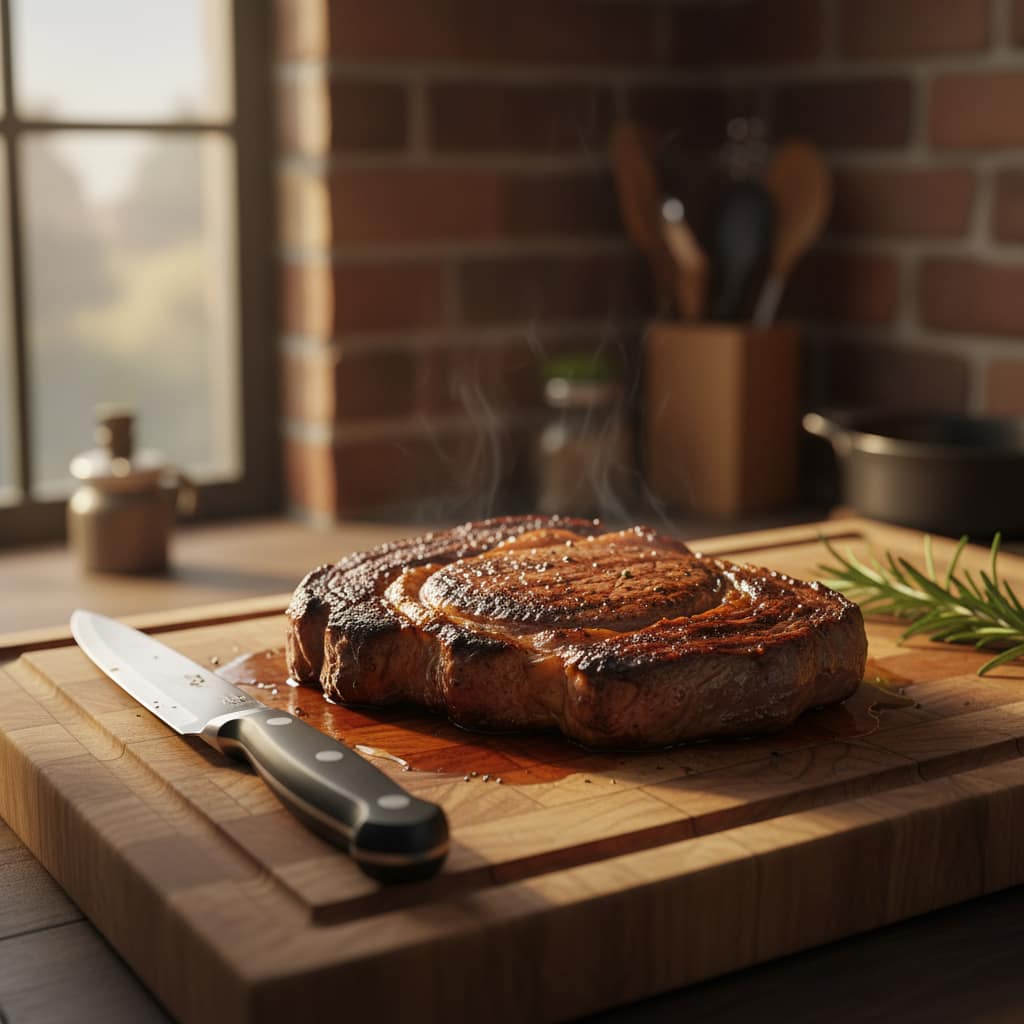
The ribeye comes from the rib section of the cow, specifically ribs 6 through 12. This area doesn’t do much heavy lifting, which allows extensive intramuscular fat (marbling) to develop.
- Flavor Profile: Rich, buttery, and savory. The fat renders down during cooking, basting the meat from the inside out.
- Texture: extremely tender and juicy, often described as “melt-in-your-mouth.”
- Appearance: Characterized by a “eye” of meat surrounded by a ring of fat and significant white flecks throughout. You might also see the spinalis dorsi (ribeye cap) on top, widely considered the most delicious bite of beef available.
What is a Striploin (New York Strip)?
So, what is new york strip steak exactly? It comes from the short loin sub-primal, located right behind the rib section. It’s a muscle that does a bit more work than the rib, but not enough to make it tough.
- Flavor Profile: Bold, intense beef flavor. It’s less “fatty” tasting than a ribeye but packs a savory punch that steak purists love.
- Texture: firmer than a ribeye with a bit of a chew (in a good way). It has a tighter grain structure.
- Appearance: Usually rectangular or oblong with a distinct strip of fat running along one edge, but less internal marbling than a ribeye.
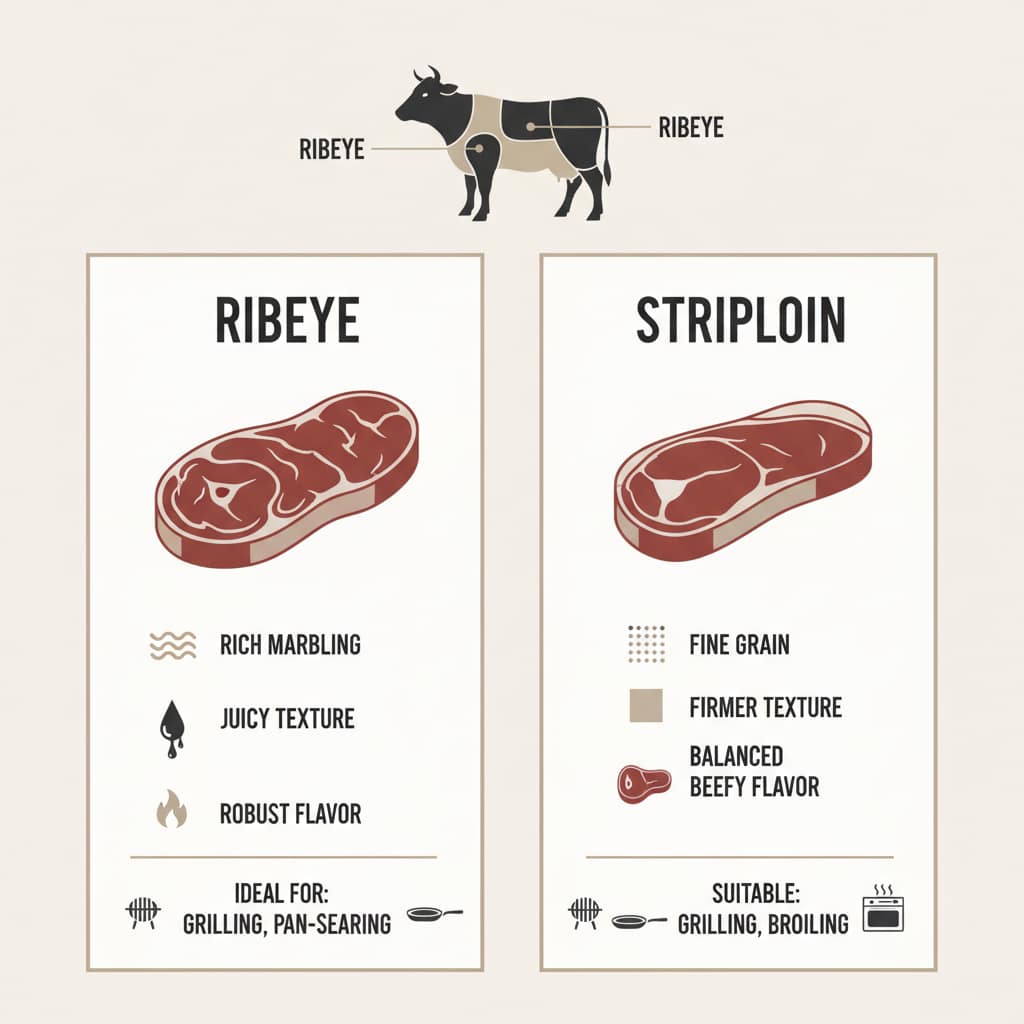
Comparison Chart: Ribeye vs Striploin
| Feature | Rib Eye Steak | Striploin (NY Strip) |
|---|---|---|
| Location | Rib Primal (Ribs 6-12) | Short Loin (Rear of the cow) |
| Marbling | High (Very fatty) | Moderate (Leaner) |
| Texture | Melt-in-your-mouth tender | Firm, slight chew, structured |
| Flavor | Buttery, rich, mild beefiness | Robust, intense, savory beefiness |
| Fat Content | High | Medium to Low |
| Best For | Pan-searing, heavy grilling | Grilling, Broiling, Sous Vide |
| Price | Generally more expensive | Moderate to expensive |
Nutritional Showdown: Health Benefits and Macros
When deciding between rib eye steak or new york strip, your health goals might play a role. Beef is a powerhouse of nutrition, packed with protein, iron, Zinc, and Vitamin B12. However, the fat content varies significantly.
According to USDA data updated for 2025, here is a rough nutritional breakdown per 3-ounce cooked serving:
- Ribeye: ~250 calories, 20g fat, 22g protein.
- Striploin: ~190 calories, 9g fat, 26g protein.
The Verdict: If you are watching your calorie or saturated fat intake, the striploin steak vs ribeye choice is clear: the Striploin is the leaner, higher-protein option. However, if you are on a Keto or high-fat diet, the Ribeye’s fat content is actually a benefit.
Expert Insight: “Don’t fear the fat in moderation. The stearic acid found in beef fat has a neutral effect on cholesterol levels. However, for daily eating, a leaner cut like Striploin is better for heart health.” Dr. Sarah Jenkins, Nutritional Scientist
How to Cook Them: The Secret to Perfection
The biggest mistake home cooks make is treating new york steak vs ribeye exactly the same. Because of their different fat contents, they react differently to heat.
Cooking the Perfect Ribeye
Because the ribeye is so fatty, it needs high heat to render that fat down so it’s delicious rather than gristly. It is also more forgiving; if you accidentally overcook it slightly, the fat keeps it juicy.
- The Method: Pan searing in cast iron is king here.
- The Technique: Get the pan smoking hot. Sear hard for 3-4 minutes per side. Baste with butter, garlic, and thyme in the last minute.
- Doneness: Aim for Medium-Rare (130°F to 135°F). Rare ribeyes can be chewy because the fat hasn’t melted yet.
Cooking the Perfect Striploin
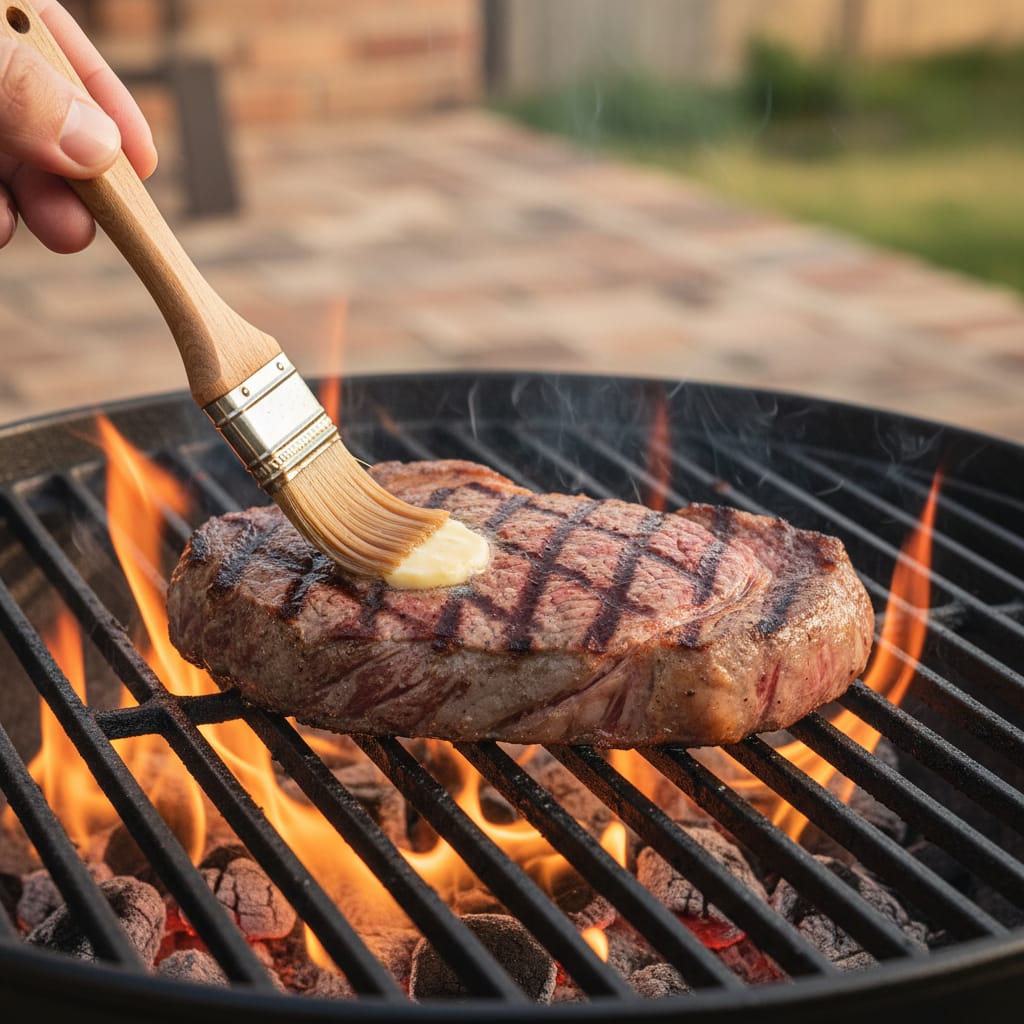
The rib eye vs new York battle changes on the grill. The Striploin has less internal fat to protect it, so it can dry out if overcooked.
- The Method: High-heat grilling or the “Reverse Sear” method.
- The Technique: For grilling, sear the fat cap (the edge) first to render it crispy. Then cook the faces of the steak.
- Doneness: Medium-Rare is critical here. Do not go past Medium (140°F), or the tight grain will become tough.
Price and Value: Which is Better Sirloin or Ribeye?
You might often see “Sirloin” and “Striploin” confused. To clarify which is better sirloin or ribeye:
- Ribeye is a premium cut, often the most expensive on the menu due to demand and marbling.
- Striploin (NY Strip) is also a premium cut but usually runs 10-20% cheaper than ribeye.
- Sirloin is a leaner, less tender cut from further back on the cow. It is significantly cheaper than both but lacks the tenderness of the other two.
If you want luxury, go Ribeye. If you want a premium experience without the highest price tag, the Striploin is your best value.
Pairing Suggestions: Drinks and Sides
To elevate your steak night, pairing is essential.
For Ribeye:
- Drink: A bold Cabernet Sauvignon or a smoky Islay Scotch (see our Bourbon vs Whiskey Guide for more spirit ideas). The tannins cut through the heavy fat.
- Side: Bitter greens like sautéed spinach or acidic sides like balsamic roasted tomatoes to balance the richness.
For Striploin:
- Drink: A Merlot or a Syrah. You want something fruity to complement the savory beefiness without overpowering it.
- Side: Rich sides work well here. Think garlic mashed potatoes, creamed corn, or mac and cheese.
Frequently Asked Questions (FAQs)
1. Is Ribeye or New York Strip more tender?
The Ribeye is generally more tender due to the high amount of intramuscular fat (marbling) which breaks down fibers as it cooks.
2. What is New York Strip steak called in other countries?
In the UK and Australia, it is often called “Sirloin” or “Porterhouse” (boneless). In France, it is known as “Contre-filet.”
3. Which steak is better for grilling?
Both are excellent, but the Ribeye can cause flare ups due to dripping fat. The Striploin is often easier to manage on a grill for beginners.
4. Why is my Striploin tough?
Striploin is a leaner muscle. If you cook it past medium (145°F+), the muscle fibers contract and tighten, resulting in a tough chew. Always use a meat thermometer.
5. Is a Tomahawk steak a Ribeye?
Yes! A Tomahawk is simply a ribeye steak with at least five inches of rib bone left intact for presentation purposes.
6. Do I need to marinate these steaks?
Generally, no. Both cuts are premium quality and only need salt and pepper. Marinades are better suited for tougher cuts like flank or skirt steak.
7. Which is healthier: Ribeye or Striploin?
The Striploin is healthier in terms of lower calories and lower saturated fat content.
8. What is the “cap” of the Ribeye?
The spinalis dorsi is the curved muscle at the top of the ribeye. It is considered the most flavorful and tender part of the entire cow.
9. Can I cook these steaks in an air fryer?
Yes, you can, but you won’t get a great crust. For 2026 standards, we recommend using an air fryer only for reheating or if you don’t have access to a skillet/grill.
10. How long should I let the steak rest?
Always rest your steak for 5 to 10 minutes after cooking. This allows the juices to redistribute. If you cut it too soon, the juices will run out, leaving dry meat.
Conclusion
The verdict on rib eye steak vs striploin ultimately comes down to your palate.
Choose the Ribeye if you want a decadent, melt-in-your-mouth experience and don’t mind navigating around some fat. It is the ultimate indulgence for flavor chasers.
Choose the Striploin (New York Strip) if you prefer a leaner, steak-forward experience with a satisfying chew. It’s the perfect balance of tenderness and bold flavor, often at a better price point.
Ready to fire up the grill? Check out our other guides on best grilling tools for 2026 to ensure your steak night is a success.
References
- USDA FoodData Central: Beef, rib eye steak, separable lean and fat, trimmed to 0″ fat, all grades, cooked, grilled.
- Meat Science Journal: Palatability traits of beef strip loin and ribeye steaks from varying quality grades.
- Certified Angus Beef: Cut Charts and Specifications.
- Harvard T.H. Chan School of Public Health: The Nutrition Source: Protein.
- National Cattlemen’s Beef Association: Beef It’s What’s For Dinner: Cut Guide.
- Serious Eats: The Food Lab: The Reverse Sear.
- Journal of Texture Studies: Instrumental Texture Profile Analysis of Beef Steaks.
- Mayo Clinic: Cuts of beef: A guide to the leanest selections.