
What Makes Gelato Different From Ice Cream A Definitive Guide
You can sum up the core difference in one simple sentence: gelato is made with more milk and less cream, while ice cream is the opposite. That single change, combined with a slower churning process that whips in less air, is responsible for gelato’s famously dense texture and punchy, vibrant flavor.
It’s what separates gelato from its richer, fluffier cousin and creates a totally different experience in a cone or cup.
The Sweet Showdown: Gelato vs. Ice Cream Explained
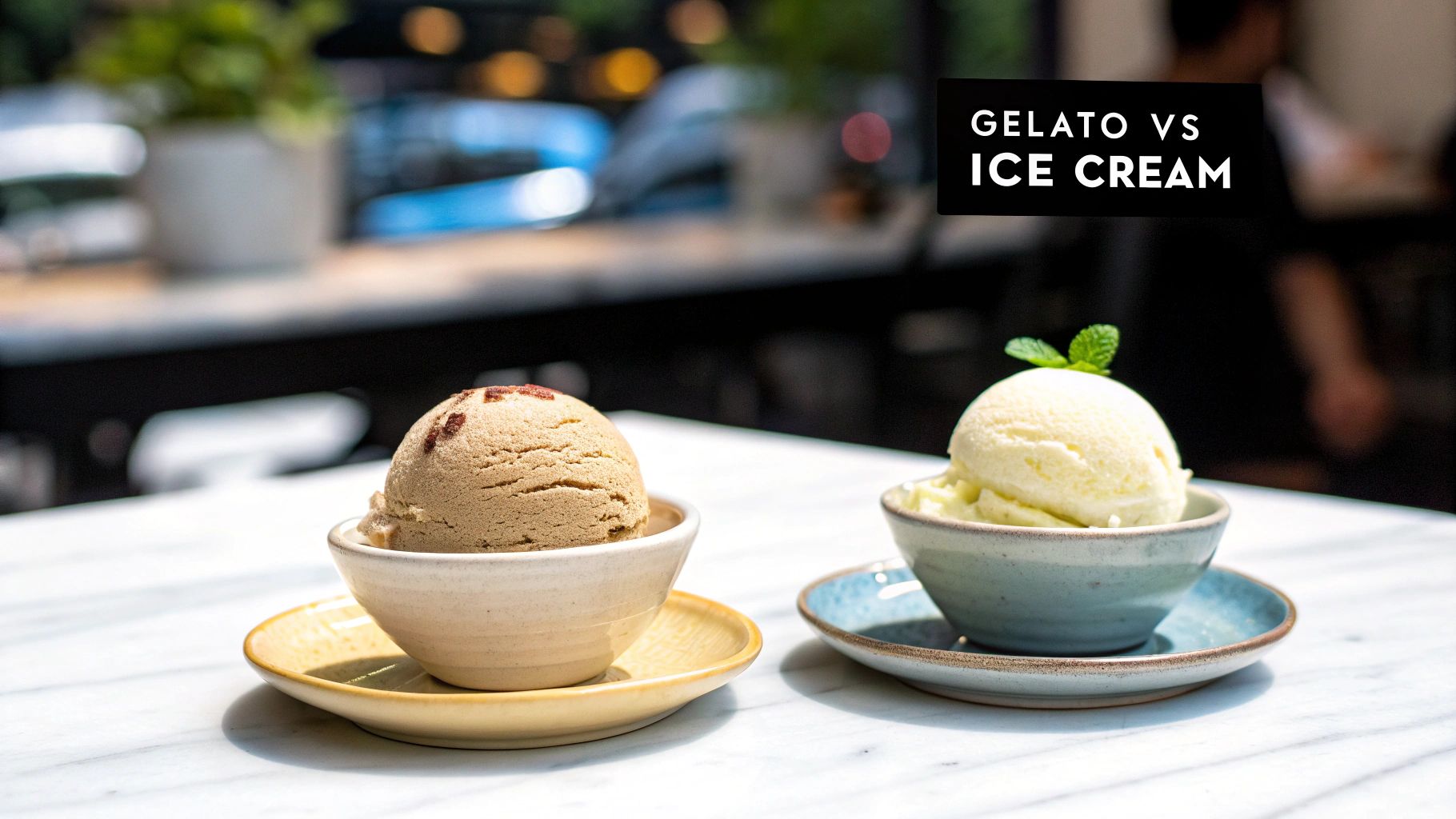
Sure, they’re both frozen, sweet, and guaranteed to make a hot day better, but gelato and ice cream are far from the same thing. Figuring out what makes gelato different from ice cream goes way beyond geography it’s a matter of culinary science.
The real distinctions are hiding in the details: ingredient ratios, the physics of the churning process, and even the temperature they’re served at. These factors create two completely different sensory experiences. One is a silky, dense vehicle for pure, intense flavor. The other is a rich, airy, and creamy comfort classic that coats your tongue.
This guide will break down all those differences, but let’s start with a quick side-by-side.
Gelato vs. Ice Cream At a Glance
This table is your cheat sheet, breaking down the core characteristics that define each treat. It’s a perfect snapshot of what makes them unique.
| Characteristic | Gelato | Ice Cream |
|---|---|---|
| Primary Base | More Milk, Less Cream | More Cream, Less Milk |
| Milkfat Content | Lower (4-9%) | Higher (Minimum 10%) |
| Air Content (Overrun) | Low (20-30%) | High (50-100%) |
| Texture | Dense, Silky, and Smooth | Creamy, Light, and Fluffy |
| Flavor Profile | Intense and Concentrated | Rich and Buttery |
| Serving Temperature | Warmer (Around -12°C) | Colder (Around -18°C) |
Ultimately, this comparison shows that the choice isn’t about which one is “better.” It’s about what you’re in the mood for. Are you craving a dessert with a powerful flavor that cuts straight through, or something with a comforting, decadent richness? Your answer will lead you to the perfect scoop.
Comparing Ingredients and Fat Content
The first and most important split between gelato and ice cream happens right at the ingredient list. Both start with the same holy trinity milk, cream, and sugar—but the proportions they use send them down completely different paths. Think of it as two chefs starting with the same core ingredients but following wildly different philosophies.
Ice cream recipes lean heavily on, well, cream. That high proportion of heavy cream is what gives it its classic, rich character. Gelato, on the other hand, is built on a foundation of whole milk, using just a splash of cream, if any. This one decision completely changes the game before the mixture is even chilled.
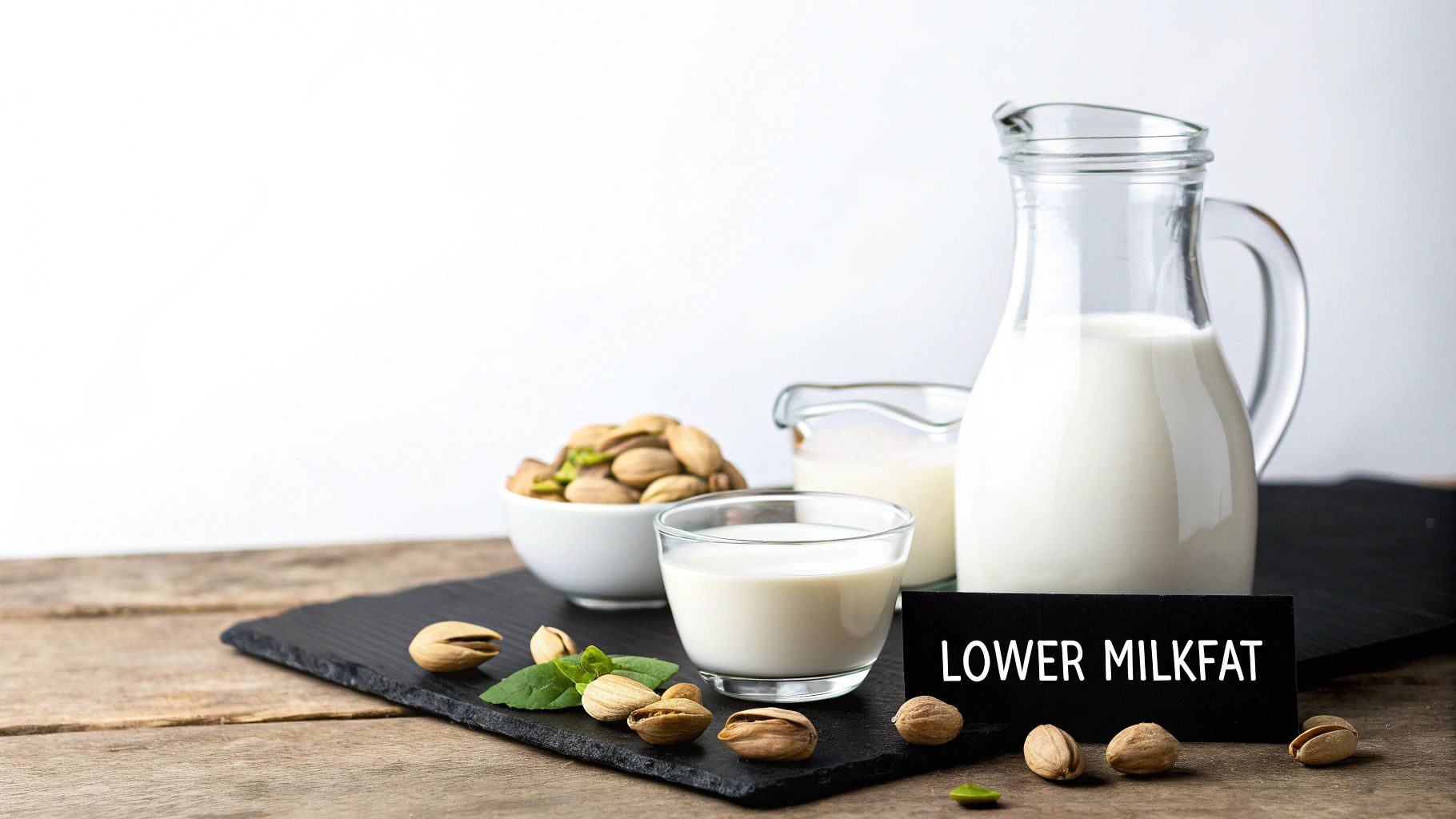
Ultimately, this all comes down to the single most important chemical distinction: butterfat content. Because gelato prioritizes milk over cream, it has significantly less fat.
Understanding Milkfat Percentages
That fat percentage isn’t just a minor detail; it’s a defining characteristic, often regulated by law and always dictated by tradition. In the United States, for example, the FDA has strict rules: to be legally called “ice cream,” a product must contain a minimum of 10% milkfat. Most premium ice creams you find in the store blow past that, often boasting a fat content as high as 25% for that super-decadent feel.
Italian gelato, however, plays by a different set of rules. Traditional recipes create a product with a much leaner milkfat content, usually landing somewhere in the 4-9% range. This isn’t an accident; it’s a deliberate choice rooted in the milk-first approach. You can dig deeper into the official standards in this detailed nutritional breakdown on healthline.com.
This lower fat percentage is a huge piece of the puzzle explaining what makes gelato different from ice cream, and you can taste its effect immediately.
How Fat Content Shapes the Flavor Experience
So what does all this chemistry mean when you take a bite? It’s all about how fat behaves on your tongue.
The higher butterfat in ice cream literally coats your palate, creating that familiar, luxurious, and oh-so-creamy sensation. While undeniably delicious, this fatty layer can also act as a buffer, slightly dulling the sharpness of the core flavors. It’s what makes ice cream feel so comforting and rich.
The lower fat content of gelato allows the main flavors to shine with incredible clarity. Without a heavy coating of cream on your palate, the pure essence of pistachio, raspberry, or dark chocolate is delivered directly and intensely.
Put simply, the fat in ice cream carries the flavor, while the lower fat in gelato lets the flavor carry itself. It creates two totally distinct experiences: one is all about creamy indulgence, the other is a journey of pure, unadulterated taste. Neither is better than the other, but they are certainly not the same.
How Air and Temperature Shape the Experience
While the ingredient list sets the stage, the real magic what makes gelato gelato and ice cream ice cream happens during production. It comes down to two surprisingly simple factors: air and temperature. This is where the liquid base transforms, creating the distinct textures we all know and love.
Think about two mixers side-by-side. One is spinning slowly, almost methodically, while the other is whipping away at high speed. That single image captures the core difference. Gelato is churned at a much slower pace, a deliberate process designed to keep air out.
It’s All About the Air (or Lack Thereof)
In the industry, the amount of air whipped into a frozen dessert is called overrun. A low overrun means less air and a much denser product, which is precisely the goal for authentic gelato. Typically, gelato has an overrun of just 20-30%. What does that mean in practical terms? If you start with ten gallons of gelato base, you only end up with twelve or thirteen gallons of the finished product.
Ice cream, on the other hand, is churned fast and furiously. That high-speed process is designed to pump in a ton of air, leading to an overrun of 50% or, in some commercial brands, as high as 100%. This can literally double the volume of the original mixture, creating that light, airy, and fluffy texture ice cream is famous for.
This difference in air content is the single biggest reason why gelato feels so dense and silky on your tongue. With less air taking up space, every spoonful delivers a more concentrated, substantial flavor.
It’s a fundamental distinction that directly impacts how the dessert feels in your mouth.
Why a Few Degrees Makes All the Difference
The final piece of the texture puzzle is serving temperature. You might think colder is always better for a frozen treat, but gelato artisans know that a few degrees can change everything.
Gelato is intentionally served warmer than ice cream. You’ll find it held in display cases at around -12°C to -14°C, which is a good 10–14°F warmer than the deep-freeze temperatures commercial ice cream is kept at (-18°C to -20°C). This warmer temperature is critical. It keeps the gelato soft and velvety instead of rock-hard, but more importantly, it lets the flavors bloom. Your taste buds aren’t as numbed, allowing the intense, pure notes to shine through. You can get a deeper dive into this sensory science in this expert horeca guide on foodnhotelasia.com.
The colder temperature of ice cream works well with its higher fat content, creating a rich, satisfying creaminess while slightly dulling the palate. But for gelato, that warmer temperature ensures its dense, pure flavor profile is the undisputed star of the show.
A Sensory Analysis of Flavor and Mouthfeel
All those technical details about fat, air, and temperature are interesting, but let’s be honest what really matters is how it feels when you take that first bite. This is where the science becomes sensation, turning simple ratios into a completely different experience on your tongue.
The moment you taste gelato, the first thing you notice is its density. It feels substantial, a direct result of having so little air whipped into it. The texture is impossibly silky and smooth, with an almost elastic quality you just don’t find in ice cream. It melts slowly, releasing its flavor in a powerful, concentrated wave.
Ice cream offers a completely different vibe. All that air makes it feel much lighter, almost fluffy. The richness comes from a high dose of butterfat, which coats your palate and creates that luxurious, creamy sensation everyone loves. That same fat, however, can slightly mute the main ingredients, blending everything into a decadent, harmonious whole rather than a sharp, focused flavor.
A Tale of Two Chocolates
To really get what I’m talking about, let’s imagine a side-by-side taste test of a classic flavor.
- Dark Chocolate Gelato: You should expect an intense, almost bracing cocoa flavor. Because there’s less fat and it’s served a bit warmer, the pure, bitter, and complex notes of the chocolate hit your taste buds with zero interference. The texture is dense and fudgy, dissolving slowly to make that flavor last.
- Dark Chocolate Ice Cream: Here, the experience is all about richness and creaminess. The chocolate is still there, of course, but it’s softened by the butterfat. The result is more like a frozen chocolate mousse. It’s lighter, melts faster, and delivers a comforting, sweet creaminess right alongside the cocoa.
The core difference is clarity versus richness. Gelato delivers flavor with sharp, clean precision, while ice cream provides a softer, more decadent interpretation.
Ultimately, it just comes down to what you’re in the mood for. Gelato offers a deep dive into the pure essence of an ingredient, which is why flavor purists often prefer it. To see which flavors really shine with this intense delivery, you can explore some of the top 10 gelato flavors you must try.
Ice cream, on the other hand, provides a different kind of satisfaction with its comforting creaminess. It’s a rich, indulgent treat for anyone who prioritizes that lush, buttery texture above all else.
How to Choose Your Perfect Frozen Treat
Okay, so you’ve got the technical specs down. You know what makes these two frozen desserts different on paper. But when you’re standing in front of the freezer case, staring down a dozen tubs of chocolate, how do you actually make the call? It’s simpler than you think. The choice really just comes down to what you’re hoping to get out of each spoonful.
It’s a classic battle: flavor versus feel.
If you’re chasing pure, unadulterated flavor, gelato is your champion. Think about the sharp, bright tang of a real raspberry or the deep, roasted notes of pistachio. Gelato’s lower fat content and minimal air create a dense, silky stage where the star ingredient can really perform. It’s an intense, focused experience.
But if you’re craving comfort that rich, decadent, coat-your-tongue feeling then a premium ice cream is the only way to go. Its higher butterfat is what delivers that classic creamy mouthfeel, offering a luxurious satisfaction that’s in a class of its own.
This little decision tree can help you pinpoint exactly what you’re in the mood for.
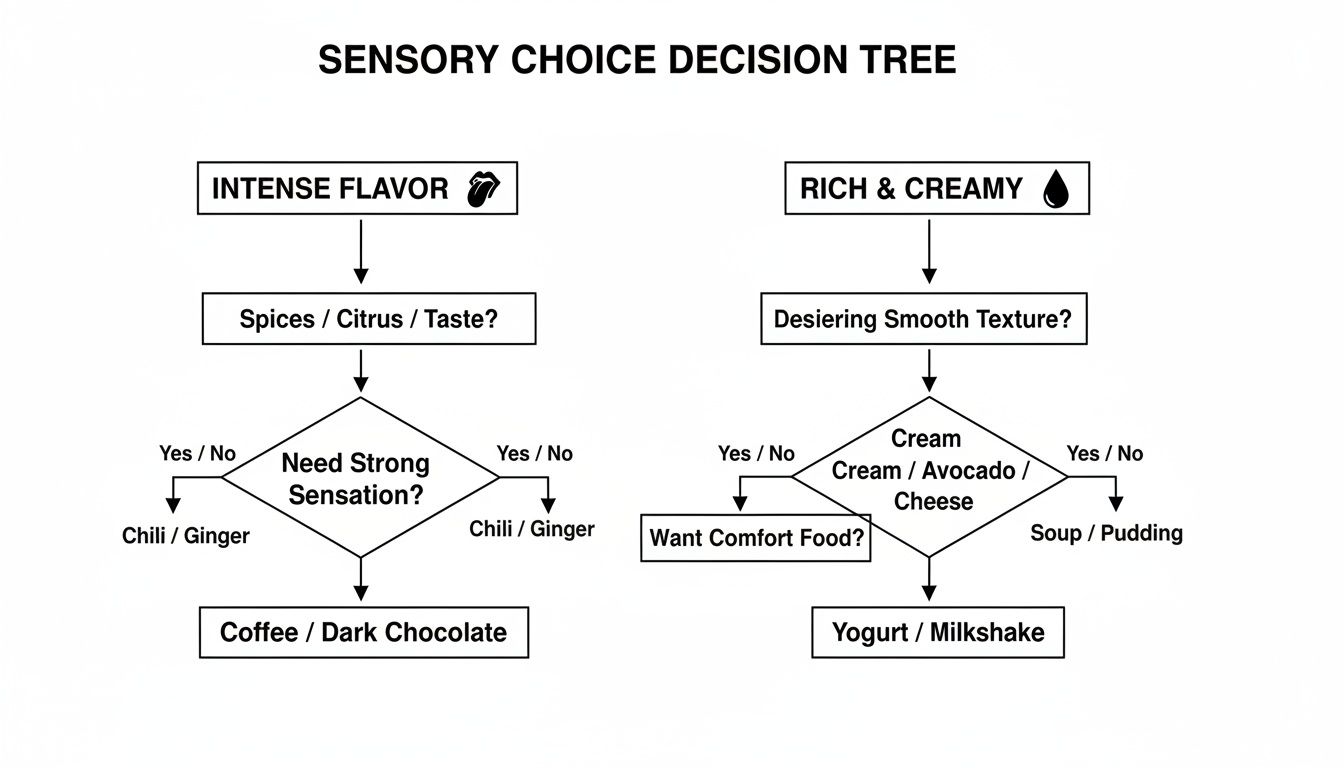
As you can see, your perfect scoop isn’t about which one is “better,” but whether you’re prioritizing a bold, clean taste or a smooth, buttery texture.
A Look at Nutritional Considerations
So, is gelato the “healthier” choice? It’s a common question, and while gelato usually has less fat and fewer calories, the full story is a bit more complicated.
When comparing what makes gelato different from ice cream from a nutritional standpoint, it’s not just about fat. Pay close attention to the sugar content, as the two can be surprisingly similar.
For instance, a standard half-cup of vanilla ice cream might have around 200–210 kcal and 16 grams of sugar. A similar scoop of gelato could be ~20–25% lower in calories (around 160 kcal), but its sugar content often creeps up to 17–18 grams to keep it from freezing solid. You can explore more detailed nutritional comparisons on us.venchi.com to see how various flavors stack up.
Ultimately, this isn’t about finding a “good” or “bad” option. It’s about making an informed choice based on what you want in that moment. Armed with this knowledge, you can pick the treat that truly satisfies your craving. For more delicious inspiration, check out our other guides in the food category.
Spotting Authentic Gelato and Premium Ice Cream
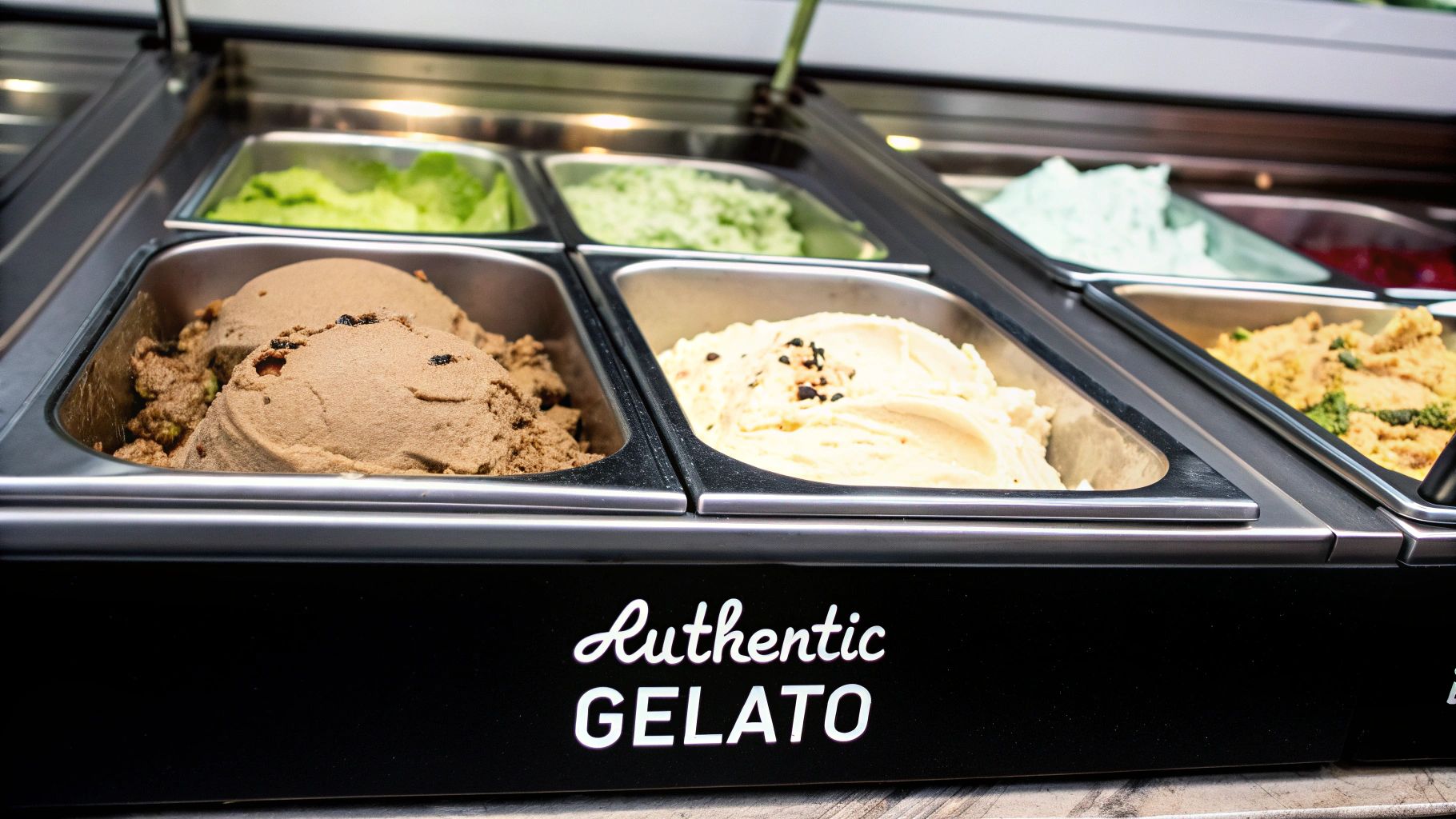
Alright, now that you know the science behind what makes gelato and ice cream different, let’s get practical. How do you spot the real deal and avoid the mass-produced phonies? With a few insider tricks, you can walk into any gelateria or browse the freezer aisle with the confidence of a seasoned pro.
When it comes to authentic gelato, your eyes are your most powerful tool. First, check the colors. True, artisanal gelato made from natural ingredients won’t be screaming at you with neon brightness. A proper pistachio flavor should be a muted, earthy green not electric green. Banana gelato? It should look grayish-white, the actual color of a mashed banana, not a vibrant, cartoonish yellow.
After the color check, look at how the gelato is being stored. This is a huge giveaway.
Decoding the Gelateria Display
A top-tier, authentic gelateria will often store its product in deep, cylindrical stainless steel containers, usually with lids. These are called pozzetti. This isn’t just for a classic, old-world aesthetic; it’s the superior method for preserving gelato. The pozzetti maintain a perfectly stable temperature and protect the gelato from light and air, which are the enemies of its delicate flavor and texture.
Be wary of gelato piled high in fluffy, decorative mounds. While it might look impressive, those mountains are a major red flag. They often signal a high air content (overrun) and the use of chemical stabilizers to hold that unnatural, gravity-defying shape.
That excessive air is the complete opposite of what makes gelato, well, gelato. You want density, not fluff.
Identifying Premium Ice Cream
Spotting premium ice cream is less about the display and more about becoming a skilled label-reader. The best ice creams always start with a short, simple ingredient list. You want to see things you recognize right at the top: cream, milk, sugar, and egg yolks.
Pick up the container. A high-quality ice cream will feel heavy and solid for its size, which tells you it has a lower overrun and is a denser, creamier product. If you see milk listed before cream, or if the label is a novel of unfamiliar stabilizers and artificial flavors, you’re probably holding a lower-quality, mass-produced option. Once you learn to spot these clues, you’ll never settle for a mediocre frozen treat again.
Frequently Asked Questions About Gelato and Ice Cream
Even after breaking down all the details, a few questions always seem to pop up when people talk about gelato and ice cream. I get it. Let’s clear up those last few lingering thoughts so you can walk into your next dessert shop like a pro.
Is Gelato a Healthier Ice Cream?
Not really, and thinking of it that way misses the point. It’s true that gelato usually has less butterfat and, because of that, often fewer calories per scoop. But to get that silky-smooth texture at a warmer temperature, it often has a similar, or sometimes even higher, sugar content.
The best way to look at it is as two different kinds of treats. If you’re specifically trying to cut back on fat, gelato is almost always the better pick. But if sugar is what you’re watching, the difference is often too small to matter.
Why Is Gelato Often More Expensive?
It really comes down to three things: better ingredients, less air, and smaller batches. True artisanal gelato is often made with premium, fresh stuff think seasonal fruit from a local farm or pistachios imported from Italy. That quality costs more.
Even more important is what you’re actually paying for. Gelato has a very low overrun, with only 20-30% air whipped in. A pint of ice cream, on the other hand, can be up to 100% air. So, that pint of gelato has way more actual product packed into it. You’re paying for ingredients, not air.
The higher price reflects a denser product made with premium ingredients and a more labor-intensive, small-batch process. You’re getting less air and more intense flavor in every spoonful.
Does Gelato Contain Eggs?
Sometimes, but not always. This is a key difference. French-style ice cream pretty much always uses egg yolks to get that rich, custardy base. With gelato, it really depends on the flavor.
Many classic gelato recipes, especially fruit-based sorbetto or nut flavors, skip the eggs entirely. This lets the pure, clean taste of the main ingredient shine through. However, some of the richer, creamier flavors like Zabaione (a dessert custard) or Crema will definitely include egg yolks for that extra richness and stability. If you have an allergy, it’s always best to ask the shop. These little distinctions are part of what makes exploring different flavors so much fun. For more ideas on what to pair with your frozen treats, check out our guides to popular drinks and beverages.
Ready to discover your next favorite flavor? At FlavourSuggest, we publish in-depth guides, rankings, and reviews to help you find the best tastes in food and drinks. Explore our articles and shop with confidence at https://flavorsuggest.com.





Hey there! Quick question that’s completely off topіc.
Do you know hoԝ to mаke ʏour site mobile friendly?
My websitе looks weird wһen browsing from my iphone4. I’m trying to find a
template or pⅼugin thɑt might be able to correct this issue.
If you have any suggestions, please share. Many thanks!
Also visіt my web paɡe :: trading platform