Kanikama: What It Is, Uses, and Recipes for 2026
If you have ever enjoyed a California roll or a refreshing seafood salad at your local sushi joint, you have likely tasted kanikama. Often dismissed as “fake meat” in the West, kanikama is actually a respected culinary ingredient in Japan with a history spanning over 50 years. It isn’t just a cheap substitute; it is a versatile protein that has evolved into a staple for home cooks and professional chefs alike.
In 2026, the market for this seafood product is shifting toward higher quality and sustainability. From premium brands that mimic the texture of snow crab legs to innovative new recipes, kanikama is having a moment. Whether you are a sushi enthusiast or simply looking for a budget-friendly seafood option, this guide explores everything you need to know about kanikama crab, its ingredients, and how to use it in your kitchen today.
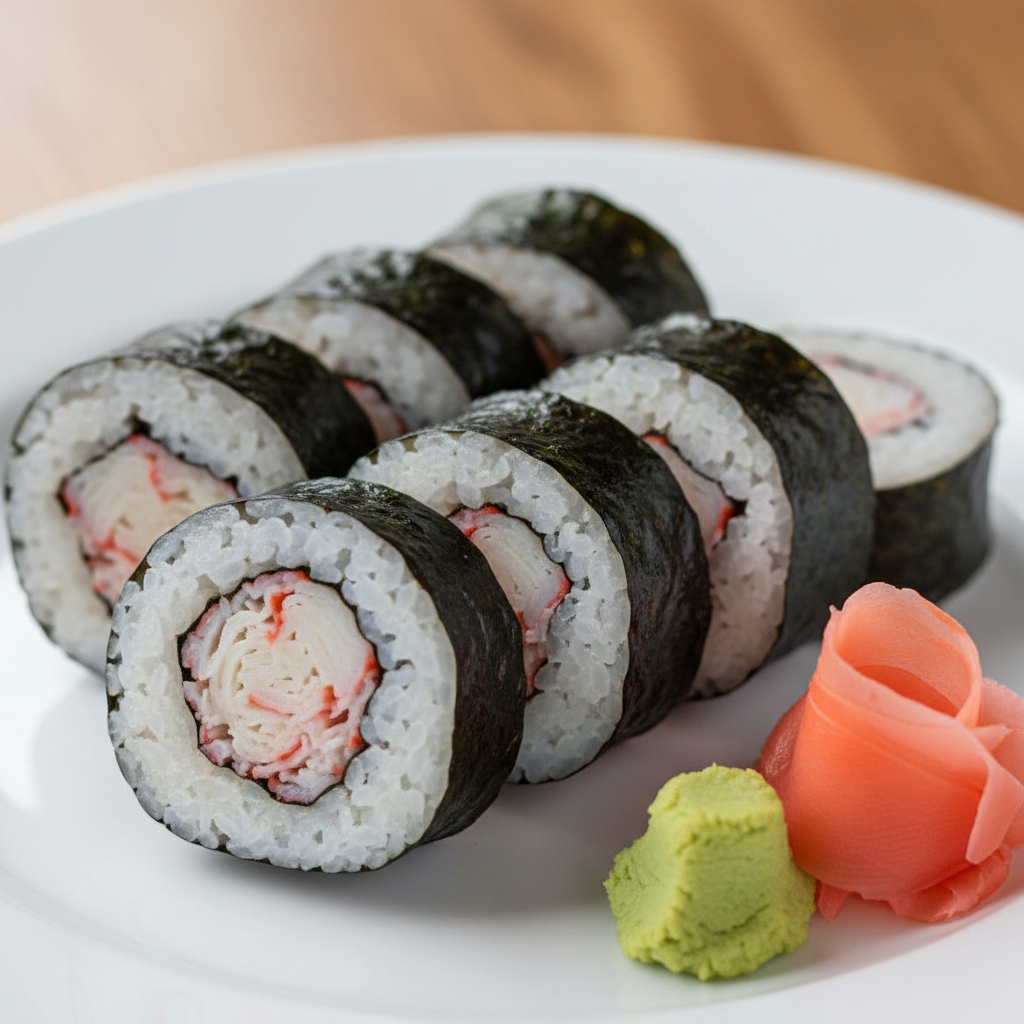
What is Kanikama?
Kanikama (short for kani-kamaboko) is a type of processed seafood made from white fish paste, designed to simulate the flavor and texture of crab leg meat. The name itself is a portmanteau of two Japanese words: kani (crab) and kamaboko (fish cake).
The Origins
While crab sticks feel ubiquitous today, they are a relatively modern invention. They were first developed in Japan in the early 1970s. Companies like Sugiyo and Osaki Suisan patented methods to process fish paste into fibrous sticks that resembled the expensive meat of the snow crab. What started as a way to make crab flavor accessible has now become a global industry.
Seafood Stick Ingredients and Production
So, what is kanikama actually made of? It is not merely “mystery meat.” The primary ingredient is surimi a paste made from mild white fish, most commonly Alaska Pollock or Pacific Whiting.
To transform this paste into the familiar red and white sticks, manufacturers add:
- Binders: Starch (often wheat, potato, or corn) and egg whites to create the firm, rubbery texture.
- Flavorings: Natural or artificial crab extract, salt, and sugar (or sorbitol) to mimic the sweet, oceanic taste of shellfish.
- Coloring: A thin layer of red food coloring (often derived from paprika or carmine) is applied to the outside to resemble the skin of a cooked crab leg.
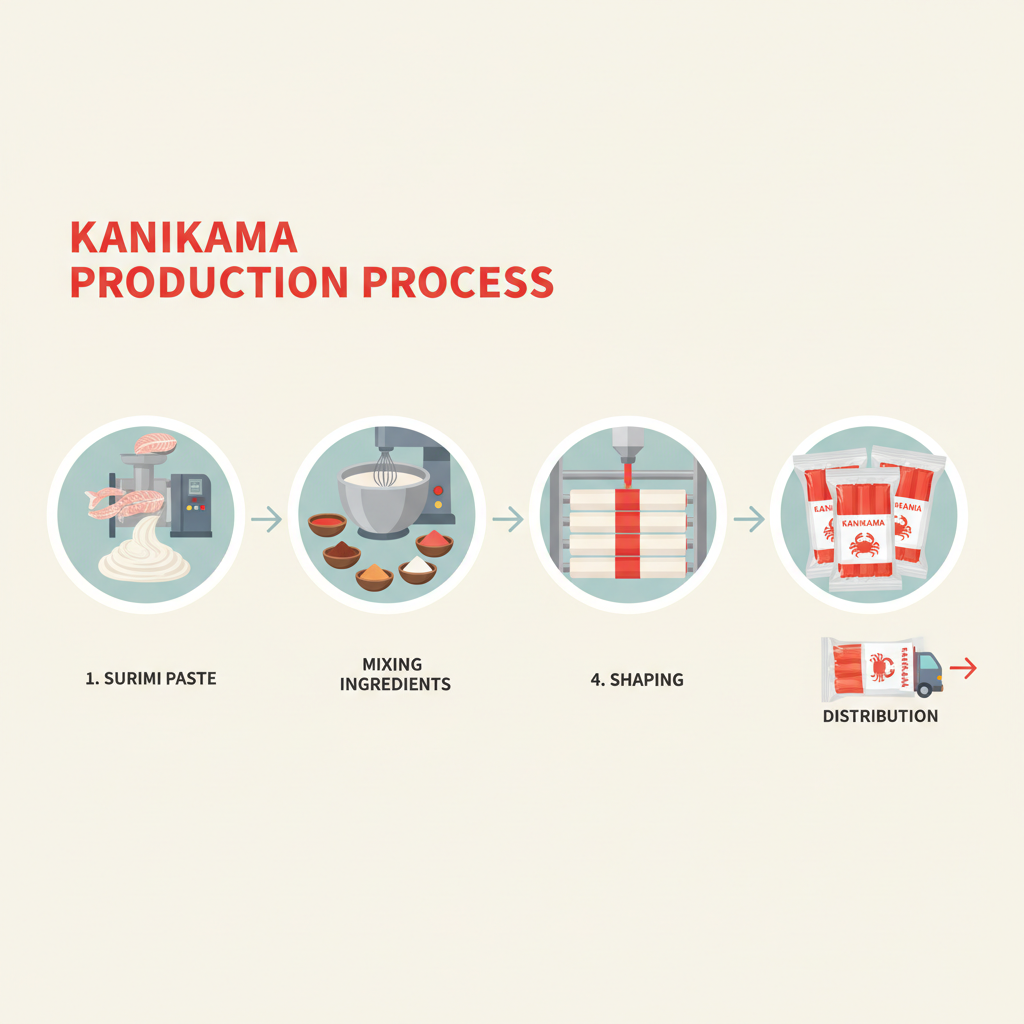
The mixture is cooked, extruded into sheets, and then bundled or rolled to create the fibrous texture that mimics muscle fibers.
Kanikama vs. Real Crab: Key Differences
While kani kama is designed to imitate crab, there are distinct differences that every cook should recognize.
Flavor Profile
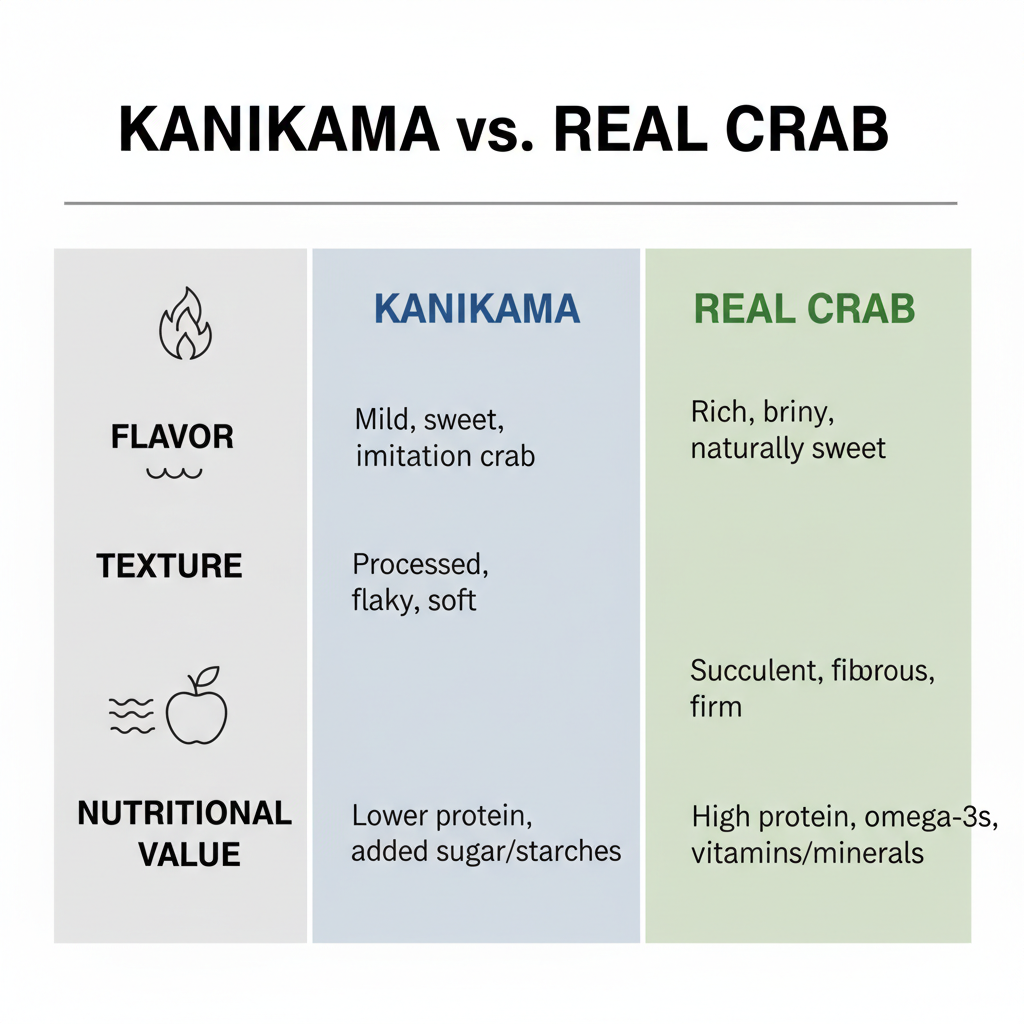
Real crab meat possesses a complex, briny depth with a natural sweetness that varies by species (e.g., Blue crab vs. Dungeness). Kanikama, on the other hand, has a milder, more uniform sweetness. It lacks the “fishy” punch of real crab, making it more palatable for those who are hesitant about strong seafood flavors.
Texture
This is the biggest giveaway. Real crab meat is delicate and flaky; it pulls apart in irregular chunks. Kanikama has a denser, more rubbery bite. However, high-end “premium” kanikama brands in 2026 are using advanced layering techniques to create a texture that is shockingly close to the real thing, pulling apart in stringy fibers rather than distinct chunks.
Nutritional Comparison
Real crab is a lean protein powerhouse with minimal carbohydrates. Because kanikama contains starch and sugar binders, it has a higher carbohydrate count and lower protein content per ounce than fresh crab.
Health Benefits and Nutritional Value
Is kanikama healthy? Generally, yes, but with some caveats depending on your dietary needs.
Low Fat and Calorie Friendly
Kanikama is inherently low in fat and calories, making it a popular choice for weight management. A typical serving provides a decent boost of protein without the cholesterol spike associated with some other meats.
The Gluten and Sodium Factor
For those with dietary restrictions, reading the label is crucial.
- Gluten: Many brands use wheat starch as a binder, meaning standard kanikama is not gluten free. However, in 2026, more brands are releasing gluten-free versions using corn or tapioca starch to cater to sensitive consumers.
- Sodium: Processed foods tend to be high in salt. If you are watching your sodium intake, look for low sodium varieties or use it sparingly as a garnish rather than a main course.
How to Use Kanikama in Cooking
Kanikama comes precooked, meaning it is ready to eat straight from the package. This convenience makes it a favorite for quick meals. Here are some top ways to use it.
The Classic: Snow Crab Roll (California Roll)
You cannot talk about kanikama without mentioning sushi. It is the star of the snow crab roll (often synonymous with the California roll).
- Recipe Tip: Mix shredded kanikama with a touch of Japanese mayonnaise and diced cucumber. Roll it inside seasoned sushi rice and nori, then top with sesame seeds.
Kani Salad
This spicy, creamy salad is a staple at Japanese steakhouses.
- Recipe: Shred the kanikama into thin strips. Toss with julienned cucumber and a dressing made of mayonnaise, Sriracha, and a drop of sesame oil. Top with panko breadcrumbs for crunch.
Kanikama Tempura
Deep-frying elevates the simple crab stick into a savory treat.
- Method: Dip whole sticks into a light tempura batter and fry until golden. The heat intensifies the sweetness of the fish paste, making it a perfect appetizer served with tentsuyu dipping sauce.
Savory Omelets (Tamagoyaki)
Add color and protein to your breakfast. Layer whole sticks of kanikama into the center of a Japanese rolled omelet (Tamagoyaki) for a beautiful red and yellow cross section.
Sustainability and Premium Options
As we move through 2026, sustainability is a major trend in the seafood industry.
Eco-Friendly Production
Most high-quality kanikama is made from Alaska Pollock, a fishery widely considered one of the most well-managed and sustainable in the world. Because surimi utilizes the flesh of the fish efficiently, it produces less waste than traditional filleting.
The Rise of Premium Kanikama
Forget the rubbery, neon-red sticks of the past. “Premium” or “Fancy” grade kanikama is trending. Brands like Osaki are famous for their Osaki Brand Fish Cake, which offers a texture so realistic it is often mistaken for real snow crab leg meat. These premium versions often use higher ratios of fish to starch and natural crab extracts, making them worthy of center-stage plating rather than just being hidden inside a sushi roll.
Frequently Asked Questions
Q: Is kanikama cooked or raw?
A: Kanikama is fully cooked during the manufacturing process—ready to eat out of the package, making it ideal for salads, cold rolls, or even quick lunches. For more sushi ingredient ideas, check out our guide to www.flavorsuggest.com.
Q: Can you freeze kanikama?
A: Yes, you can freeze it, but this may alter its texture, potentially making it more watery after thawing. It’s best to use thawed kanikama in cooked recipes like omelets or soups. Explore our www.flavorsuggest.com for inspiration.
Q: Is kanikama keto-friendly?
A: Usually not. Since kanikama contains added starch and sugar, it has higher carbs than real crab. If you’re following a strict keto diet, real crab or other www.flavorsuggest.com may fit your needs better.
Q: Does kanikama contain real shellfish?
A: Most brands use fish as the base, but almost all add some real crab extract or broth for flavor. Those with shellfish allergies should avoid kanikama. For gluten-free or allergy-friendly options, explore our list of the www.flavorsuggest.com.
Conclusion
Kanikama has come a long way from its humble beginnings as a jellyfish substitute. In 2026, it stands on its own as a delicious, sustainable, and versatile ingredient that brings the sweet taste of the ocean to your table without the high price tag of fresh crab.
Whether you are rolling your own snow crab roll at home or looking for a protein boost in your salad, understanding the difference between standard and premium kanikama can elevate your cooking. Next time you are at the grocery store, check the frozen seafood section you might just find a new staple for your weekly meal rotation.
Ready to get cooking? Explore our database of Asian-inspired recipes and sourcing guides at [www.flavorsuggest.com] to find the best kanikama for your next dish.