
Mussels Black vs. Green: The Ultimate Guide to Cooking & Eating (2026)
If you have ever stared at a seafood menu and wondered about the difference between those shiny, dark shells and their larger, greener cousins, you aren’t alone. Mussels black varieties are a staple in cuisines worldwide, celebrated for their tender texture and sweet, oceanic flavor. Yet, for many home cooks, they remain a bit of a mystery compared to shrimp or salmon.
Whether you are planning a romantic dinner or a casual seafood feast, understanding how to select, clean, and cook fresh mussels is essential. In this guide, we will dive deep into everything you need to know about black mussels seafood from their nutritional benefits to the age-old debate of green mussel vs black mussel. By the end, you will be ready to cook restaurant-quality moules marinières in your own kitchen.

What Are Black Mussels?
Black mussels (Mytilus galloprovincialis or Mytilus edulis) are bivalve mollusks found in cool waters across the globe. They are easily recognized by their dark, blue-black shells, which are relatively smooth and teardrop-shaped. Unlike some other shellfish that bury themselves in sand, live mussels attach themselves to rocks, pilings, and ropes using strong threads called “byssus” (often referred to as the “beard”).
These shellfish are filter feeders, meaning they pump water through their bodies to extract plankton and nutrients. This process not only feeds them but also helps clean the surrounding water, making mussel farming one of the most sustainable forms of aquaculture available today. According to the NOAA Fisheries, farmed mussels require no feed and improve water quality, making them an eco-friendly choice for conscientious diners.
Why Chefs Love Fresh Black Mussels
Culinary experts often prefer fresh black mussels for their reliable texture. The meat is typically soft, tender, and plump, with a savory-sweet flavor profile that absorbs sauces beautifully. They are less chewy than clams and cook in a matter of minutes, making them an ideal protein for quick, elegant meals.
Green Mussel vs Black Mussel: What is the Difference?
One of the most common questions at the fish counter is about the difference between these two popular varieties. While both are delicious, they offer distinct eating experiences.

Appearance and Size
The most obvious difference is the shell. As the name suggests, mussels black have a dark, midnight-blue shell. Green mussels (often called New Zealand Greenshell mussels) have a distinctive emerald-green lip and a brownish shell. Green mussels are also significantly larger, often growing up to twice the size of black mussels.
Flavor and Texture
This is where personal preference comes in.
- Black Mussels: Have a more intense, “ocean-y” flavor with a soft, delicate texture. They are prized for their sweetness and tenderness.
- Green Mussels: Tend to be milder and possess a firmer, meatier texture. Because they are larger, one mussel provides a substantial bite, but some find them slightly chewier.
Comparison Table
| Feature | Black Mussels | Green Mussels |
|---|---|---|
| Scientific Name | Mytilus edulis / galloprovincialis | Perna canaliculus |
| Shell Color | Dark blue, black, or violet | Brown with bright green lips |
| Size | Small to medium (2–3 inches) | Large (4–6 inches) |
| Texture | Soft, tender, delicate | Firm, meaty, chewy |
| Flavor Profile | Sweet, savory, intense seafood taste | Mild, subtle sweetness |
| Best For | Steaming, pastas, soups | Baking, grilling, stuffing |
The Health Benefits of Black Mussels Seafood
Beyond their taste, black mussels seafood dishes are nutritional powerhouses. They are incredibly nutrient-dense, providing high levels of protein with very little fat.
Rich in Omega-3 Fatty Acids
Like many cold-water seafood options, mussels are an excellent source of Omega-3 fatty acids. These essential fats are crucial for heart health, reducing inflammation, and supporting brain function.
High in Vitamin B12
Mussels are one of the best natural sources of Vitamin B12, a nutrient vital for nerve health and red blood cell production. A single serving can provide far more than your daily recommended intake.
Packed with Minerals
They are loaded with iron, zinc, and selenium. In fact, mussels often contain more iron than beef, making them a fantastic option for preventing anemia.
For detailed nutritional data, you can refer to the USDA FoodData Central, which breaks down the specific micronutrient profiles of raw and cooked mollusks.
How to Select and Buy Live Mussels
The key to a great dish starts at the market. When shopping for live mussels, freshness is non-negotiable.
The “Tap Test”
Fresh mussels should be alive when you buy them. Their shells should be closed. If you find a mussel with an open shell, give it a gentle tap against the counter or squeeze it lightly. If it closes up, it is alive and safe to eat. If it stays open, the mussel is dead and must be discarded.
Smell and Appearance
- Smell: They should smell like the ocean fresh, salty, and clean. Avoid any that smell fishy, sour, or like ammonia.
- Shells: Look for clean, moist shells. Avoid those with cracked or broken shells.
Storage Tips
Never store live mussels in water or a sealed plastic bag; they will suffocate. Instead, place them in a bowl covered with a damp cloth or paper towel and keep them in the coldest part of your refrigerator. They should be cooked within 1-2 days of purchase.
Preparing Fresh Black Mussels: Cleaning and Debearding
Many people are intimidated by the prep work, but cleaning fresh black mussels is actually quite simple once you get the hang of it.
Step 1: Rinse
Place the mussels in a colander and rinse them under cold, running water. Use a stiff brush to scrub off any sand, barnacles, or seaweed stuck to the shells.
Step 2: Debeard
You will notice a fibrous, hair-like clump sticking out of the side of the shell. This is the “beard” (byssus threads) the mussel used to attach itself to rocks. To remove it, grasp the beard firmly with your thumb and forefinger (or use a dry paper towel for grip) and give a sharp yank toward the hinge of the mussel. It should pull right out.
Note: Farm-raised mussels are often sold already debearded, but it is always good to check.
Step 3: Final Inspection
Discard any mussels with cracked shells or open shells that do not close after tapping.
How to Cook Mussels Black: Classic Techniques
The beauty of mussels black varieties lies in their simplicity. They do not require complex culinary skills to taste amazing.
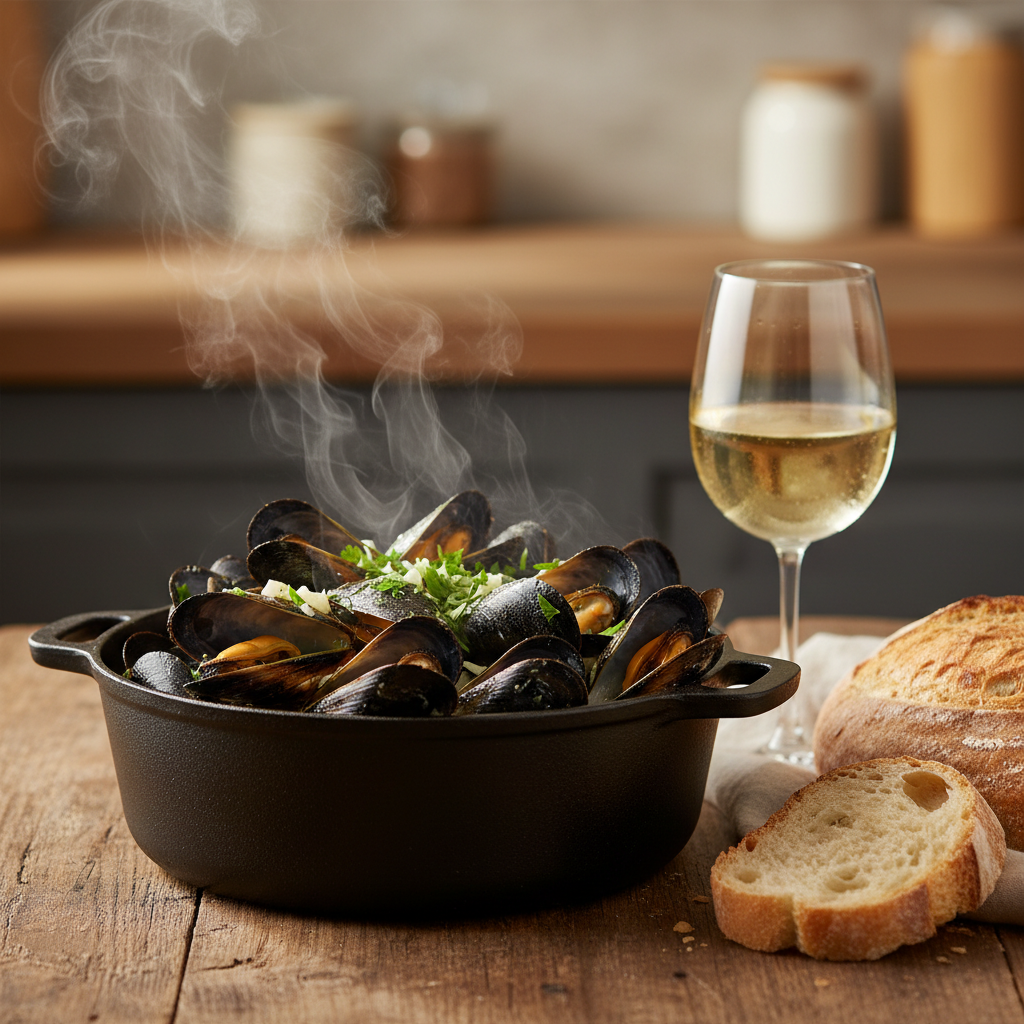
Steaming (Moules Marinières)
This is the most iconic way to prepare them.
- Sauté aromatics like shallots, garlic, and celery in butter.
- Add a cup of dry white wine (Sauvignon Blanc works well).
- Bring the liquid to a boil.
- Add the cleaned mussels and cover the pot with a tight-fitting lid.
- Steam for 5–7 minutes. Shake the pot occasionally.
- The mussels are done when their shells have opened wide. Discard any that remain closed.
- Finish with fresh parsley and a squeeze of lemon.
For more flavor pairing ideas to elevate your broth, check out our guide on www.flavorsuggest.com.
Grilling
Because black mussels are smaller and more delicate, grilling them requires care. Place them on a fine-mesh grill pan or wrap them in a foil packet with garlic butter and herbs. The smoky flavor adds a fantastic dimension to the sweet meat.
Pasta and Soups
Mussels release a delicious “liquor” (natural juice) when they open. This salty, flavorful liquid makes an instant sauce for pasta dishes like Linguine alle Vongole (often made with clams, but delicious with mussels) or seafood stews like Cioppino.
Safety Tips for Eating Shellfish
While mussels are generally safe, it is important to follow basic food safety guidelines.
- Cook Thoroughly: According to the CDC, cooking shellfish to an internal temperature of 145°F helps destroy harmful bacteria like Vibrio.
- Red Tide Warnings: If you harvest your own mussels, always check local advisories for algal blooms or “red tides,” which can make shellfish toxic.
- Allergies: Shellfish allergies can be severe. Ensure your guests do not have a crustacean or mollusk allergy before serving.
Conclusion
Whether you call them mussels black, blue mussels, or just dinner, these bivalves offer an incredible combination of flavor, nutrition, and sustainability. They are easier to cook than most people realize and provide a restaurant-quality experience at a fraction of the price. By understanding the difference between green mussel vs black mussel, and mastering the simple art of steaming, you can unlock a world of culinary possibilities.
So next time you see a bag of fresh black mussels at the market, don’t hesitate. Grab some crusty bread, a bottle of white wine, and get ready for a feast.
Frequently Asked Questions (FAQs)
1. What are black mussels?
Black mussels (Mytilus edulis or galloprovincialis) are edible bivalve mollusks with dark blue or black shells. They are found in oceans worldwide and are prized for their tender, sweet meat and high nutritional value.
2. How do I tell if black mussels are fresh?
Fresh mussels should be alive. Their shells should be closed tightly. If a shell is open, tap it gently; if it closes, it is alive. If it stays open, discard it. They should smell like the fresh ocean, not fishy or ammonia-like.
3. Do I need to soak mussels before cooking?
Most farm-raised mussels are quite clean and just need a rinse. However, if you have wild-harvested mussels, soaking them in cold water for 20 minutes can help them expel any internal sand.
4. What is the “beard” on a mussel?
The beard (byssus threads) is a clump of fibers the mussel uses to anchor itself to rocks. It is not harmful to eat but has an unpleasant, stringy texture, so it is best removed before cooking.
5. Can I eat mussels that don’t open after cooking?
The traditional advice was to discard any mussel that didn’t open. However, some chefs argue that if the mussel was fresh and alive beforehand, you can pry it open and eat it. To be safe, most home cooks prefer to discard unopened ones.
6. Are black mussels better than green mussels?
It depends on preference. Black mussels are smaller, tenderer, and have a more intense seafood flavor. Green mussels are larger, meatier, and milder. Black mussels are generally preferred for steaming and pasta dishes.
7. How long can I keep fresh mussels in the fridge?
You should cook live mussels within 1 to 2 days of purchasing them. Keep them in a bowl covered with a damp cloth in the fridge. Do not store them in water or a sealed plastic bag.
8. Are black mussels high in cholesterol?
Mussels contain a moderate amount of cholesterol but are very low in saturated fat. They are considered heart-healthy due to their high levels of Omega-3 fatty acids, which help manage cholesterol levels.
9. Why are farmed mussels considered sustainable?
Farmed mussels grow on ropes suspended in the ocean. They filter feed naturally on plankton, requiring no added feed, antibiotics, or chemicals. They actually improve the water quality around them.
10. Can I freeze cooked mussels?
Yes. You can freeze cooked mussels in their broth or shell. Remove the meat from the shells and freeze it in the cooking liquid for the best texture. They will keep for up to 3 months.





Admiring the hard work you put into your website and in depth information you offer.
It’s great to come across a blog every once in a while
that isn’t the same outdated rehashed material. Great read!
I’ve saved your site and I’m adding your RSS feeds to my Google account.