Mexican Tequila: Best Brands, Types, and Trends for 2026
The sun-drenched highlands of Jalisco hold a secret that the rest of the world has finally caught up to: authentic Mexican tequila is not just a spirit; it is an art form. Gone are the days when tequila was solely associated with rowdy spring breaks and regretful mornings. In 2026, tequila has ascended to become one of the most sophisticated and sought-after spirits globally, rivaling fine cognacs and single-malt scotches.
Whether you are a seasoned connoisseur looking for the next rare extra añejo or a curious newcomer wanting to understand the difference between a Blanco and a Reposado, navigating the world of agave can be overwhelming. This guide is your definitive roadmap to Mexican tequila in 2025. We will break down the regions, the types, the top brands dominating the market this year, and the emerging trends reshaping how we drink this liquid gold.
What Makes Mexican Tequila Unique?
Authentic tequila is the lifeblood of Mexican heritage, deeply rooted in centuries of tradition. To truly appreciate it, one must understand what sets it apart from every other spirit on the shelf.
The Denomination of Origin
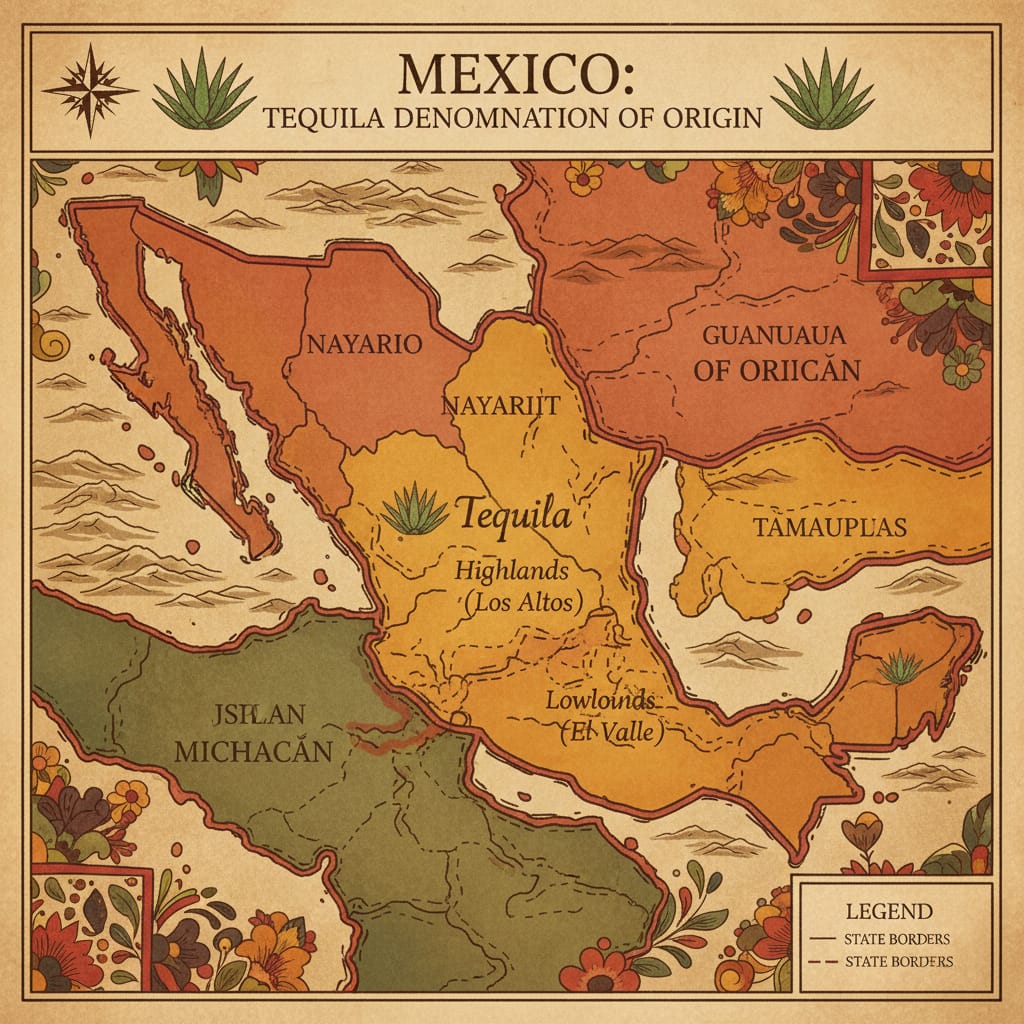
Just as Champagne must come from France, true tequila must come from Mexico. It is protected by a Denomination of Origin (DOT), which dictates that it can only be produced in five specific Mexican states: Jalisco, Nayarit, Guanajuato, Michoacán, and Tamaulipas. However, the heartland of production remains Jalisco, specifically around the town of Tequila.
The Agave Difference
The soul of tequila is the Blue Weber Agave (Agave tequilana). Unlike vodka or gin, which can be made from grains harvested annually, blue agave takes anywhere from 7 to 10 years to mature. This long growth cycle allows the plant to accumulate the complex sugars that give Mexican tequila its distinctive flavor profile ranging from sweet honey and citrus to earthy minerals and spice.
Highland vs. Lowland (Los Altos vs. El Valle)
Where the agave grows matters immensely.
- Highlands (Los Altos): The soil here is red and clay-rich. Agaves grown in this region tend to be larger and sweeter, producing tequilas that are floral, fruity, and softer on the palate.
- Lowlands (El Valle): The volcanic soil of the lowlands (the region surrounding the Tequila volcano) produces smaller, fiber rich agaves. These yield tequilas that are earthier, more herbal, and often described as having a “peppery” kick.
Types of Tequila: Decoding the Label
Walking down the spirits aisle can be confusing if you don’t speak the language. The classification of tequila from Mexico is based primarily on age and how long the spirit rests in oak barrels.
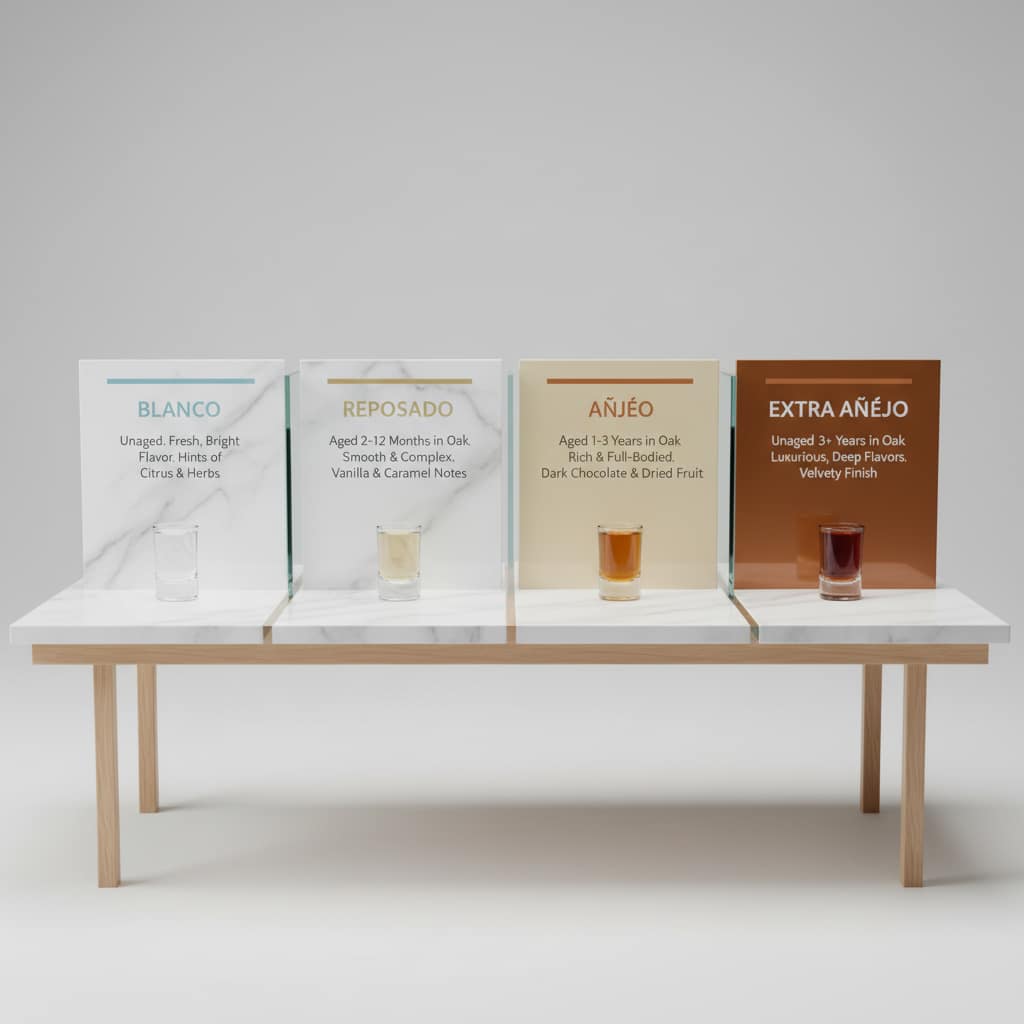
Blanco (Silver or Plata)
- Aging: Unaged (0-2 months).
- Profile: This is the purest expression of the agave plant. It is bottled immediately after distillation or rested in stainless steel for up to 60 days.
- Taste: Bright, crisp, and vegetal. You will taste pure cooked agave, citrus, black pepper, and fresh herbs.
- Best For: Cocktails like Margaritas and Palomas, or sipping if it’s a high-quality brand.
Reposado (Rested)
- Aging: 2 months to 1 year in oak barrels.
- Profile: The “Goldilocks” tequila. The aging process softens the bite of the blanco while retaining the agave flavor.
- Taste: Notes of vanilla, caramel, and oak begin to appear alongside the agave, creating a smoother finish.
- Best For: versatile sipping or sophisticated cocktails like a Tequila Old Fashioned.
Añejo (Aged)
- Aging: 1 to 3 years in small oak barrels (often ex-bourbon).
- Profile: Darker and more complex. The wood influence is significant here.
- Taste: Rich flavors of butterscotch, chocolate, dried fruits, and tobacco. The agave takes a backseat to the barrel notes.
- Best For: Sipping neat, preferably in a snifter glass.
Extra Añejo (Ultra Aged)
- Aging: Over 3 years.
- Profile: The luxury category. These are often dark mahogany in color and extremely smooth.
- Taste: Deep complexity similar to fine cognac or whiskey, with heavy notes of leather, dark chocolate, cinnamon, and smoke.
- Best For: Special occasions. Never mix this; sip it slowly.
Top Mexican Tequila Brands in 2025
The landscape of Mexican tequila brands is shifting. While giants remain, 2025 is seeing a surge in artisanal, additive-free producers gaining cult followings. Here are the standouts for this year.
1. Fortaleza (The Purist’s Choice)
- Type: Artisanal / Traditional
- Why it ranks: Fortaleza continues to be the benchmark for “tequila made the old way”. They use a tahona (stone wheel) to crush agave and copper pot stills.
- Tasting Notes (Blanco): Intense cooked agave, olives, butter, and citrus.
- Price Range: $60 – $90
- Learn more: History of Forteleza
2. G4 Tequila (The Innovator)
- Type: Highland / Mineral-Forward
- Why it ranks: Created by master distiller Felipe Camarena, G4 is famous for using a mix of rainwater and spring water, resulting in a clean, crisp profile.
- Tasting Notes (Reposado): Peach, licorice, grapefruit, and white pepper.
- Price Range: $50 – $75
- Learn more: Expert review by Tequila Matchmaker
3. Tequila Ocho (The Terroir Specialist)
- Type: Single Estate
- Why it ranks: Ocho introduced the concept of “terroir” to tequila. Each bottle lists the specific field (“rancho”) where the agave was harvested and the year, proving that vintage matters.
- Tasting Notes (Plata): Extremely bright, floral, and full of sweet agave nectar.
- Price Range: $45 – $65
- Learn more: Tequila Ocho official site
4. Siete Leguas (The Historic Standard)
- Type: Traditional
- Why it ranks: One of the oldest distilleries in Jalisco, Siete Leguas was the original producer of Patron. It remains family-owned and offers incredible consistency.
- Tasting Notes (Añejo): Maple, cooked agave, and dried cherries.
- Price Range: $55 – $80
- Learn more: Interview with Siete Leguas master distiller
5. Cascahuín (The Heritage Brand)
- Type: Lowland / Traditional
- Why it ranks: A favorite among bartenders and industry insiders in 2025. Their high-proof (48% ABV) Plata 48 is legendary for its bold flavor.
- Tasting Notes (Tahona Blanco): Mineral-rich, earthy, with a creamy mouthfeel.
- Price Range: $65 – $95
- Learn more: Cascahuín at Tequila Matchmaker
6. Volans (The Ultra-Premium)
- Type: Highland
- Why it ranks: Produced at the famous El Pandillo distillery, Volans is known for its incredible smoothness and use of deep well water, rain water, and spring water.
- Tasting Notes (Extra Añejo): Vanilla bean, oak, roasted nuts, and subtle agave.
- Price Range: $100 – $450+
- Learn more: Volans profile on Tequila Aficionado
7. Lalo (The Modern Classic)
- Type: Blanco Only
- Why it ranks: Founded by the grandson of Don Julio González, Lalo produces only one expression: a Blanco. They focus on perfecting one thing, and in 2025, they are succeeding wildly.
- Tasting Notes: Clean, crisp, essence of agave with no additives.
- Price Range: $45 – $55
- Learn more: Forbes on Lalo Tequila
8. Clase Azul (The Luxury Gift)
- Type: Premium / Collector
- Why it ranks: While polarizing among purists due to its sweetness, Clase Azul remains the king of luxury marketing. The hand-painted ceramic decanters are iconic.
- Tasting Notes (Reposado): Very sweet, with heavy vanilla, cream soda, and caramel.
- Price Range: $150 – $200+
- Learn more: Clase Azul’s artistry and process
How to Choose the Best Tequila
With hundreds of bottles lining the shelves, how do you pick the best tequila in Mexico for your palate? Look for these three key indicators on the label.
1. “100% de Agave”
This is the golden rule. If the bottle says “Tequila” but is missing “100% Agave,” it is a Mixto. Mixtos only need to be 51% agave sugars; the rest can be cheap cane sugar or high-fructose corn syrup. These are the culprits behind nasty hangovers. Always buy 100% agave.
2. Check the NOM
Every bottle of authentic Mexican tequila has a NOM (Norma Oficial Mexicana) number on the label. This four-digit code identifies the specific distillery where it was made. You can use apps like Tequila Matchmaker to look up the NOM and see if that distillery creates mass-market juice or artisanal spirits.
3. Production Method (Diffuser vs. Tahona/Roller Mill)
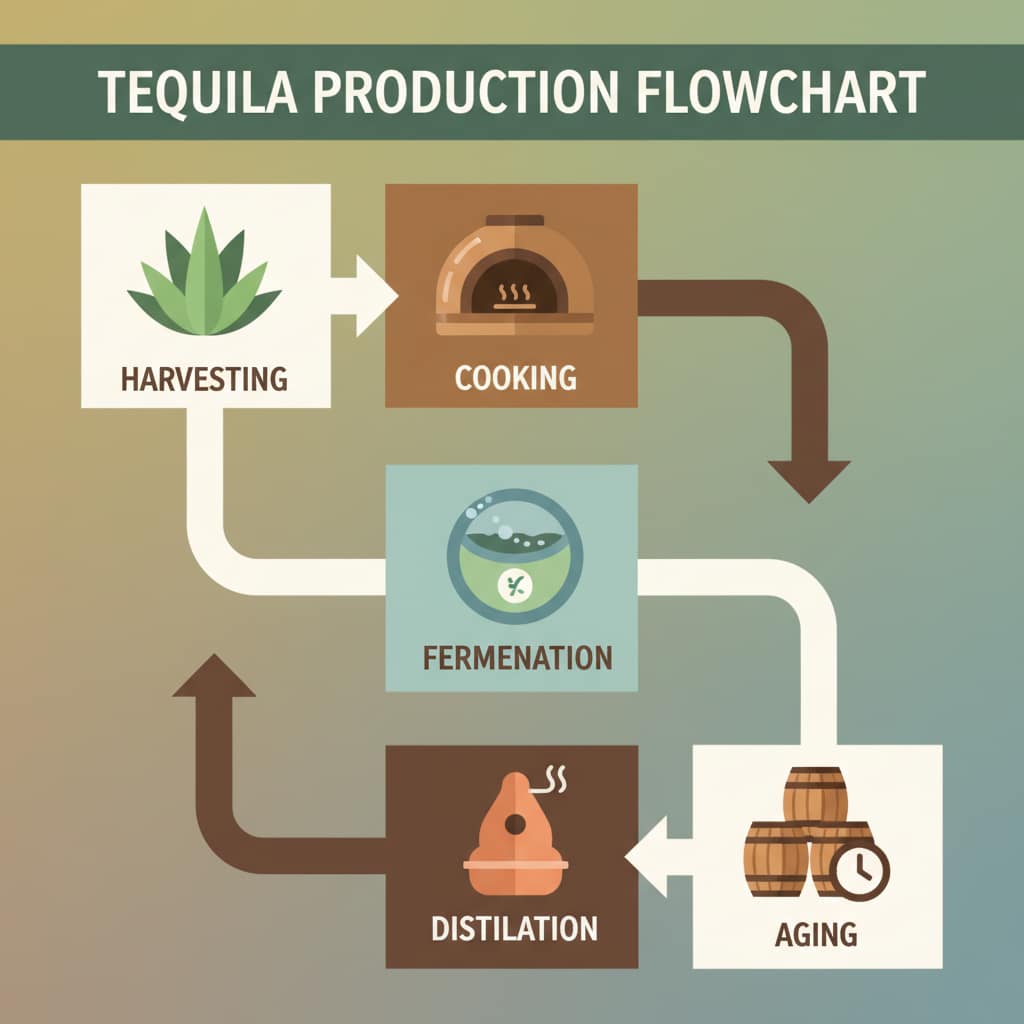
- Avoid Diffusers: This industrial method uses chemicals to extract sugars from raw agave, often resulting in a medicinal, flat taste.
- Seek Tahona or Roller Mill: These traditional methods crush cooked agave to extract the juices, preserving the rich, complex flavors of the plant.
Tequila Trends for 2025
The tequila industry is evolving rapidly. Here is what is shaping the market this year.
The Rise of “Additive Free”
In 2025, transparency is king. Consumers are becoming educated about additives (like glycerin, oak extract, and jarabe syrup) used to manipulate flavor and texture. Brands that certify as “Additive-Free” are seeing explosive growth as drinkers seek purity.
Cristalino Tequila
This category continues to boom. Cristalino is an aged tequila (usually Añejo or Extra Añejo) that has been filtered through charcoal to remove the color. The result is a clear spirit that retains the complexity of wood aging but with a smoother, lighter body. It appeals to vodka drinkers looking to switch to agave.
Sustainability and Bat-Friendly Agave
The Tequila Interchange Project is gaining traction. Agaves are pollinated by bats, but industrial farming often harvests plants before they flower, hurting the bat population. Brands are now designating themselves as “Bat-Friendly,” allowing a portion of their crop to flower naturally. In 2025, eco-conscious consumers are prioritizing these brands.
High Proof Blancos
Standard tequila is bottled at 40% ABV (80 proof). However, “Still Strength” or high-proof tequilas (often 46% to 55% ABV) are trending. These spirits are not watered down after distillation, offering a more robust and intense flavor experience that mixologists love.
The world of Mexican tequila in 2025 is richer and more diverse than ever before. Whether you are exploring the mineral-rich terroir of a blanco from the Lowlands or savoring the cognac-like depth of a highlands Extra Añejo, there is a bottle out there with your name on it.
As you explore these Mexican tequila brands, remember to look beyond the fancy packaging. Seek out the “100% Agave” label, respect the process, and sip slowly. The spirit of Mexico isn’t meant to be rushed it’s meant to be experienced.
Ready to upgrade your home bar? Browse our curated selection of top rated tequilas at Flavorsuggest and taste the difference of authentic agave today.