The Ultimate Guide to Bratwurst in 2026: Recipes, Tips, and Cooking Methods
Bratwurst, a beloved German sausage, has earned its place as a global culinary icon. Whether you’re firing up the grill for a summer barbecue, looking for a quick weeknight meal, or experimenting with modern cooking gadgets, mastering the art of bratwurst is a rewarding skill. This guide covers everything you need to know about this versatile sausage, from its rich history and diverse types to detailed cooking techniques that ensure you achieve perfect, juicy results every single time.
This guide will explore the history of bratwurst, compare popular varieties, and provide step-by-step instructions for grilling, air frying, and pan-searing. We will also cover the critical importance of internal temperature for food safety and flavor, share some creative recipes, and answer your most frequently asked questions.
Key Takeaways
- What is Bratwurst?: A German sausage typically made from pork, beef, or veal, with a history dating back to the 14th century.
- Cooking is Key: The best methods for cooking bratwurst are grilling, using an air fryer, or pan-searing on the stovetop. Each method offers a unique texture and flavor.
- Temperature is Crucial: For safety and perfect juiciness, always cook bratwurst to an internal temperature of 160°F (71°C). A meat thermometer is your best friend.
- Versatility: Bratwurst can be enjoyed in many ways beyond a simple bun, including in tacos, salads, or as a creative “bratwurst hot dog.”
What is Bratwurst?
The term “bratwurst” originates from two Old High German words: brät, meaning finely chopped meat, and wurst, which simply means sausage. This traditional sausage has been a staple in German cuisine for centuries, with the first documented evidence tracing back to the city of Nuremberg in 1313. Originally, making bratwurst was a way to use leftover scraps of meat, combining them with salt and spices to preserve them.
While pork is the most common meat used, bratwurst can also be made from beef, veal, or a combination thereof. What truly distinguishes one bratwurst from another are the regional variations in spices. Common seasonings include marjoram, caraway, nutmeg, ginger, and coriander. These blends give each type of bratwurst its unique flavor profile, from mild and savory to peppery and complex.
Today, there are over 40 different varieties of German bratwurst, each tied to a specific region and culinary tradition. It’s a food that is deeply embedded in German culture, often associated with celebrations, street food markets, and family gatherings. Its popularity has spread far beyond Germany’s borders, making it a favorite for grilling enthusiasts and food lovers around the world.
Types of Bratwurst: Thuringer, Beef, and More
Exploring the world of bratwurst means discovering a wide array of flavors and textures. While the classic pork version remains a favorite, other varieties like Thuringer and beef bratwurst offer exciting alternatives.
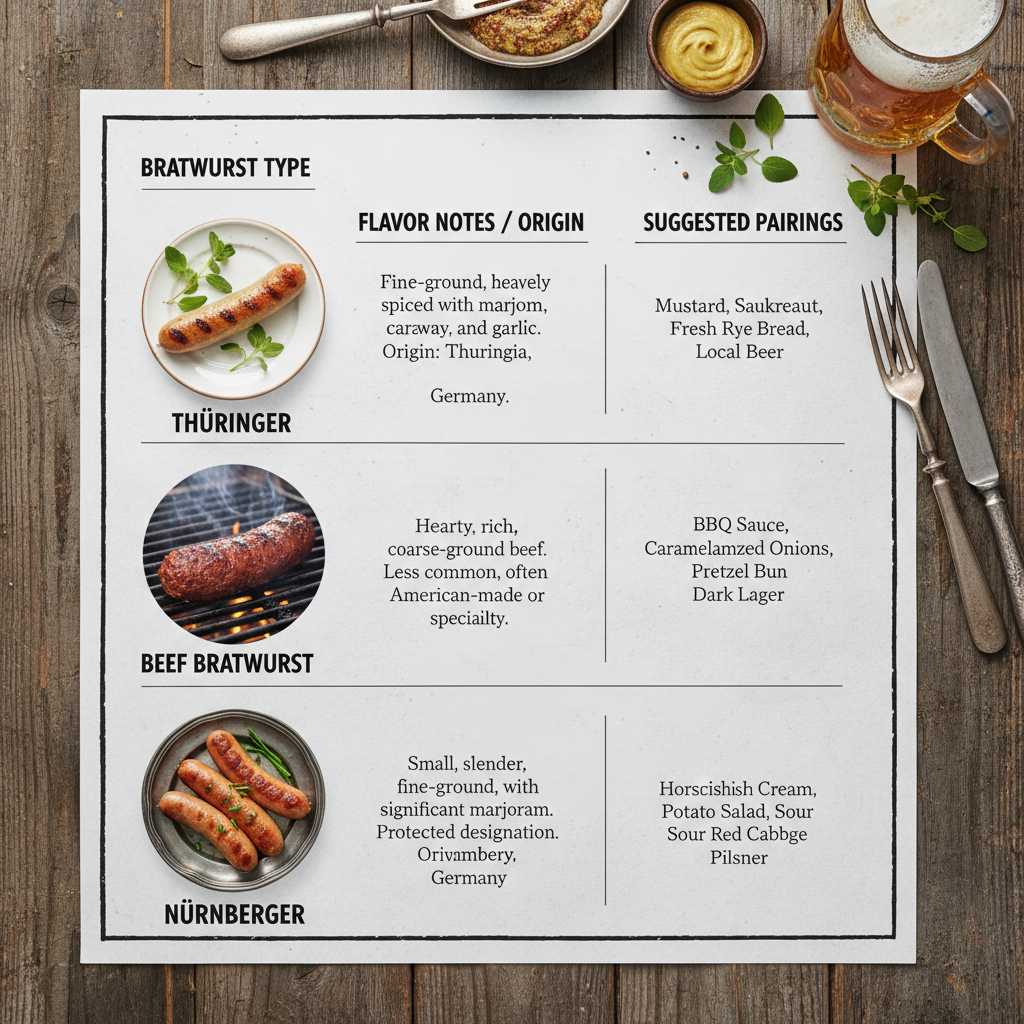
Thuringer Bratwurst
The Thüringer Rostbratwurst is a true German classic, so much so that it has a protected geographical indication (PGI) status from the EU. This means that a sausage can only be called a Thuringer if it’s produced in the German state of Thuringia using traditional methods. It is one of Germany’s oldest and most famous brots.
What makes it special? Thuringer bratwurst must be at least 6 inches long and is made from finely minced pork (and sometimes veal or beef). Its distinctive flavor comes from a robust spice blend that includes salt, pepper, caraway, marjoram, and garlic. Traditionally, these sausages are roasted over a charcoal grill and served in a hard roll with authentic German mustard.
Beef Bratwurst
For those who prefer beef or avoid pork, the beef bratwurst is an excellent and increasingly popular choice. Made entirely from beef, these sausages offer a richer, more robust flavor compared to their pork counterparts. The texture is often a bit denser, and they hold up exceptionally well to high-heat cooking methods like grilling and searing.
Beef bratwurst pairs wonderfully with bold flavors. Think caramelized onions, spicy mustard, or even a dollop of barbecue sauce. It’s a modern twist on the classic that satisfies the craving for a hearty, savory sausage.
Other Notable Varieties
- Nürnberger Rostbratwurst: Another PGI-protected sausage, these are small, thin bratwursts from Nuremberg, typically no longer than a finger. They are seasoned with marjoram and are often served in sets of six or twelve.
- Coburger Bratwurst: Hailing from the city of Coburg, this bratwurst is notable for being seasoned with only salt, pepper, nutmeg, and lemon zest. It’s traditionally grilled over pinecones, which imparts a unique smoky flavor.
- Frankonian Bratwurst: A longer, thicker sausage from the Franconia region, it is often served as the star of a main course rather than in a bun.
- Sheboygan-Style Bratwurst: A popular American take from Wisconsin, these bratwursts are often simmered in beer with onions before being grilled. They are typically served on a hard roll with mustard and onions.
How Do You Cook Bratwurst? Methods and Tips
Cooking bratwurst correctly is essential for achieving a juicy interior and a perfectly browned, snappy casing. The key is to cook them gently to avoid splitting the casing, which lets all the delicious juices escape. Here are three reliable methods for cooking bratwurst.
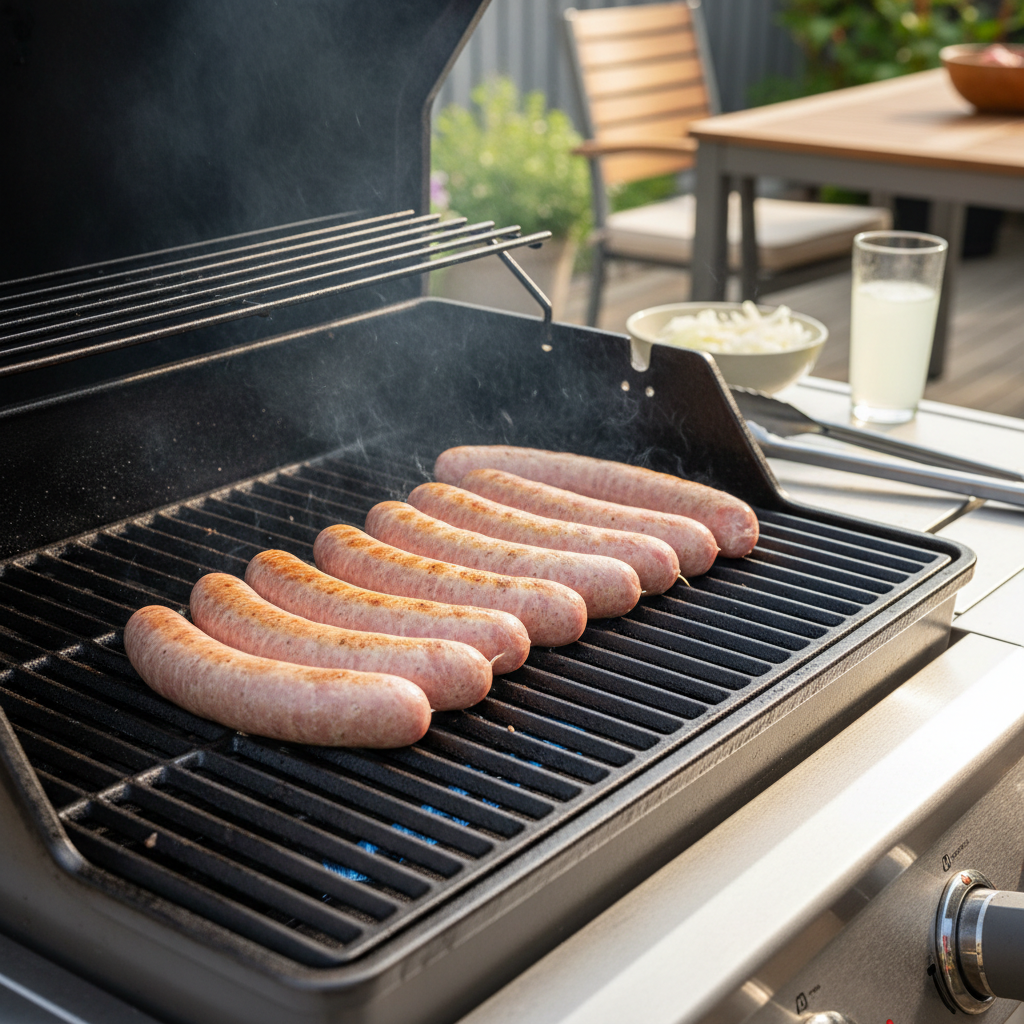
Grilling
Grilling is the most traditional and arguably the most flavorful way to cook bratwurst. The smoky char from the grill adds an irreplaceable layer of complexity.
Step-by-Step Instructions:
- Preheat Your Grill: Set up a two-zone fire. This means having one side of the grill on medium-high heat (for searing) and the other on low heat (for gentle cooking). This prevents the bratwurst from burning on the outside before it’s cooked through.
- Sear the Brats: Place the bratwurst on the hot side of the grill. Sear them for about 1-2 minutes per side, just until they develop golden-brown grill marks. Do not let them char or split.
- Move to Indirect Heat: Transfer the seared bratwurst to the cooler side of the grill. Close the lid and let them cook for 15-20 minutes, turning them occasionally to ensure even cooking.
- Check for Doneness: Use a meat thermometer to check the internal temperature. The bratwurst are ready when they reach 160°F (71°C).
- Rest Before Serving: Let the bratwurst rest for about 5 minutes before serving. This allows the juices to redistribute, ensuring a moist and flavorful sausage.
How to Cook Bratwurst in Air Fryer
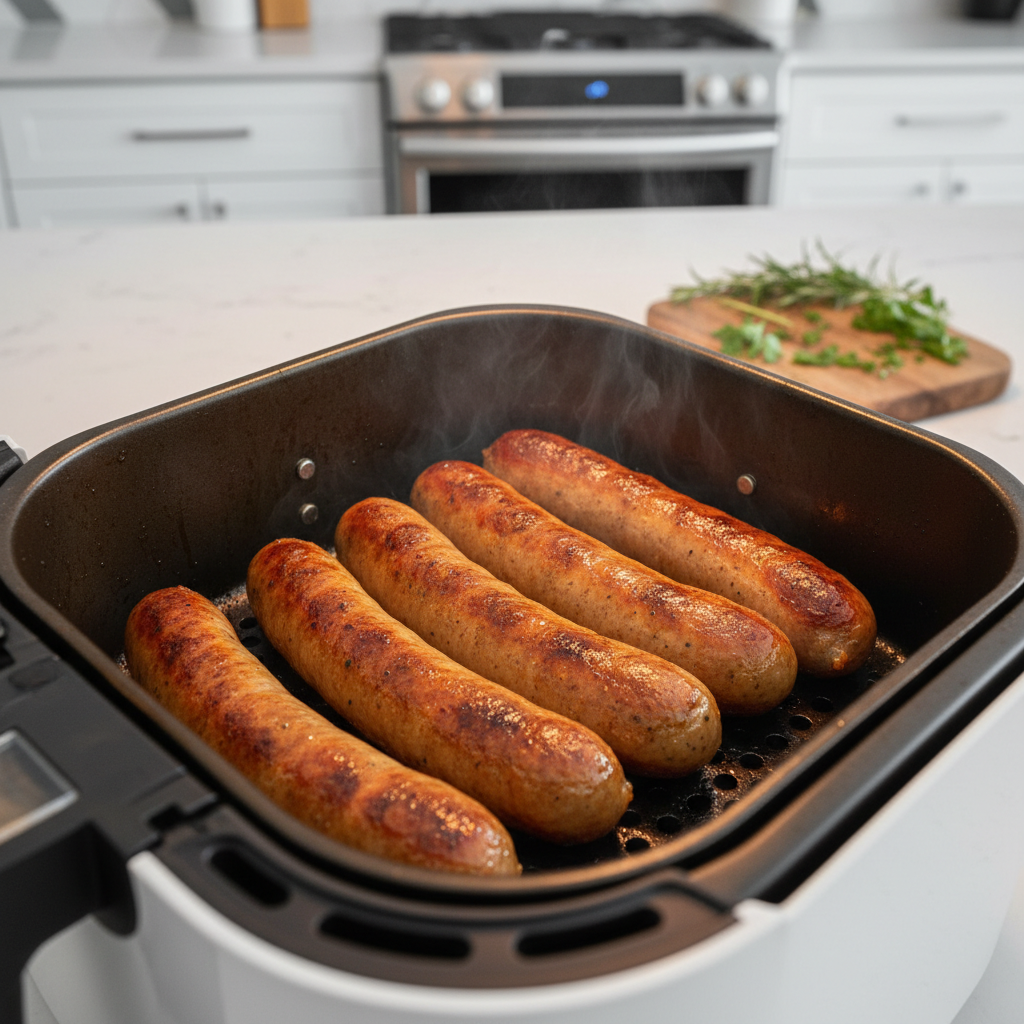
The air fryer is a fantastic tool for cooking bratwurst, offering a quick and hands-off method that results in a perfectly browned and juicy sausage without the need for a grill.
Step-by-Step Instructions:
- Preheat the Air Fryer: Set your air fryer to 375°F (190°C). Letting it preheat ensures the bratwurst start cooking immediately.
- Arrange the Bratwurst: Place the bratwurst in a single layer in the air fryer basket. Be sure not to overcrowd the basket, as this can prevent them from browning evenly. Cook in batches if necessary.
- Cook and Flip: Air fry for 12-15 minutes, flipping the sausages halfway through the cooking time. The exact time will depend on the size of your bratwurst and the model of your air fryer.
- Check the Internal Temp: Use a meat thermometer to ensure the internal temperature has reached 160°F (71°C).
- Serve Immediately: Air-fried bratwurst are best served hot, straight from the basket.
Stovetop (Pan-Searing)
Pan-searing on the stovetop is a reliable indoor method that gives you a beautiful, caramelized crust. The “beer bath” is a popular technique that infuses the bratwurst with flavor while ensuring they are cooked through.
Step-by-Step Instructions:
- Simmer First (Optional Beer Bath): Place the bratwurst in a large skillet or pot. Add enough beer (a lager or pilsner works well) or water to almost cover them. You can also add sliced onions for extra flavor. Bring the liquid to a gentle simmer and cook the bratwurst for about 10 minutes. This step gently cooks the inside.
- Sear for Color: Remove the bratwurst from the liquid. Heat a tablespoon of oil or butter in a separate skillet over medium-high heat.
- Brown the Brats: Place the simmered bratwurst in the hot skillet. Sear them for 2-3 minutes per side, until they develop a deep, golden-brown crust.
- Final Temperature Check: Confirm with a meat thermometer that the bratwurst internal temp is 160°F (71°C).
- Serve: Serve hot with the cooked onions from the beer bath, if you used them.
Bratwurst Internal Temp: The Key to Perfection
Regardless of your chosen cooking method, the single most important factor for success is reaching the correct internal temperature. Undercooked bratwurst can pose a health risk, while overcooked bratwurst will be dry and tough.
The target bratwurst internal temp is 160°F (71°C).
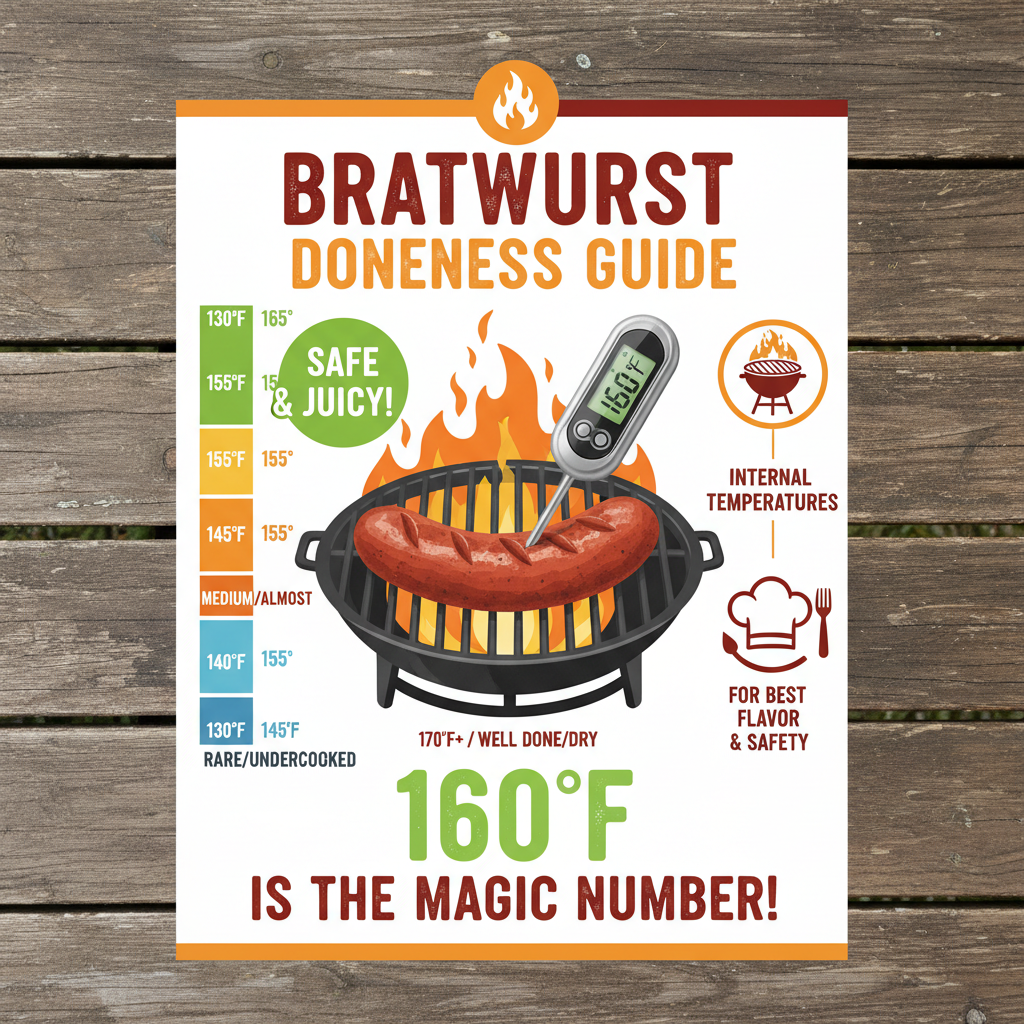
Why is this so important? Cooking to this specific temperature, as recommended by food safety authorities like the USDA, ensures that any harmful bacteria are destroyed. From a culinary perspective, it’s also the sweet spot where the meat is perfectly cooked, firm, and juicy.
To measure the temperature accurately, insert an instant-read meat thermometer into the thickest part of the sausage, being careful not to push it all the way through. Once you hit 160°F, remove the bratwurst from the heat immediately.
Bratwurst Recipes: Classic and Modern Twists
Bratwurst is incredibly versatile. While serving it on a bun is classic, there are many other ways to enjoy this delicious sausage. Here are a few bratwurst recipe ideas to inspire you.
Classic Bratwurst with Sauerkraut and Onions
This is the quintessential way to enjoy bratwurst.
- Ingredients:
- 4 cooked bratwurst
- 4 crusty rolls
- 1 cup sauerkraut, drained
- 1 large onion, thinly sliced
- 1 tbsp butter
- Spicy brown mustard
- Instructions:
- While your bratwurst are cooking, melt the butter in a skillet over medium heat. Add the sliced onions and cook until soft and caramelized, about 15-20 minutes.
- Warm the sauerkraut in a small saucepan.
- Place a cooked bratwurst in each roll. Top generously with the caramelized onions, sauerkraut, and a drizzle of spicy mustard.
Beef Bratwurst Sheet Pan Dinner
This easy weeknight meal is packed with flavor and requires minimal cleanup.
- Ingredients:
- 4 beef bratwurst, cut into 1-inch pieces
- 1 red bell pepper, chopped
- 1 green bell pepper, chopped
- 1 red onion, cut into wedges
- 2 cups baby potatoes, halved
- 2 tbsp olive oil
- 1 tsp paprika
- Salt and pepper to taste
- Instructions:
- Preheat your oven to 400°F (200°C).
- On a large baking sheet, toss the bell peppers, onion, and potatoes with olive oil, paprika, salt, and pepper.
- Roast for 20 minutes.
- Add the sliced beef bratwurst to the baking sheet, tossing to combine with the vegetables.
- Return to the oven and roast for another 15-20 minutes, or until the potatoes are tender and the bratwurst is cooked through.
Explore even more great ways to use this sausage with our collection of bratwurst recipes at FlavorSuggest.
Bratwurst Hot Dogs: A Creative Take
Elevate the classic hot dog by swapping the standard frankfurter for a flavorful bratwurst. The “bratwurst hot dog” offers a more substantial and gourmet experience. Because of their larger size and richer flavor, bratwurst can handle more adventurous toppings.
Creative Topping Ideas for a Bratwurst Hot Dog:
- The Bavarian: Top with sauerkraut, spicy mustard, and crispy fried onions on a pretzel bun.
- The Tex-Mex: Add pico de gallo, pickled jalapeños, cotija cheese, and a drizzle of crema.
- The Sweet & Spicy: Top with caramelized onions, bacon jam, and a touch of sriracha.
- The Californian: Add sliced avocado, fresh tomato, and a sprinkle of everything bagel seasoning.
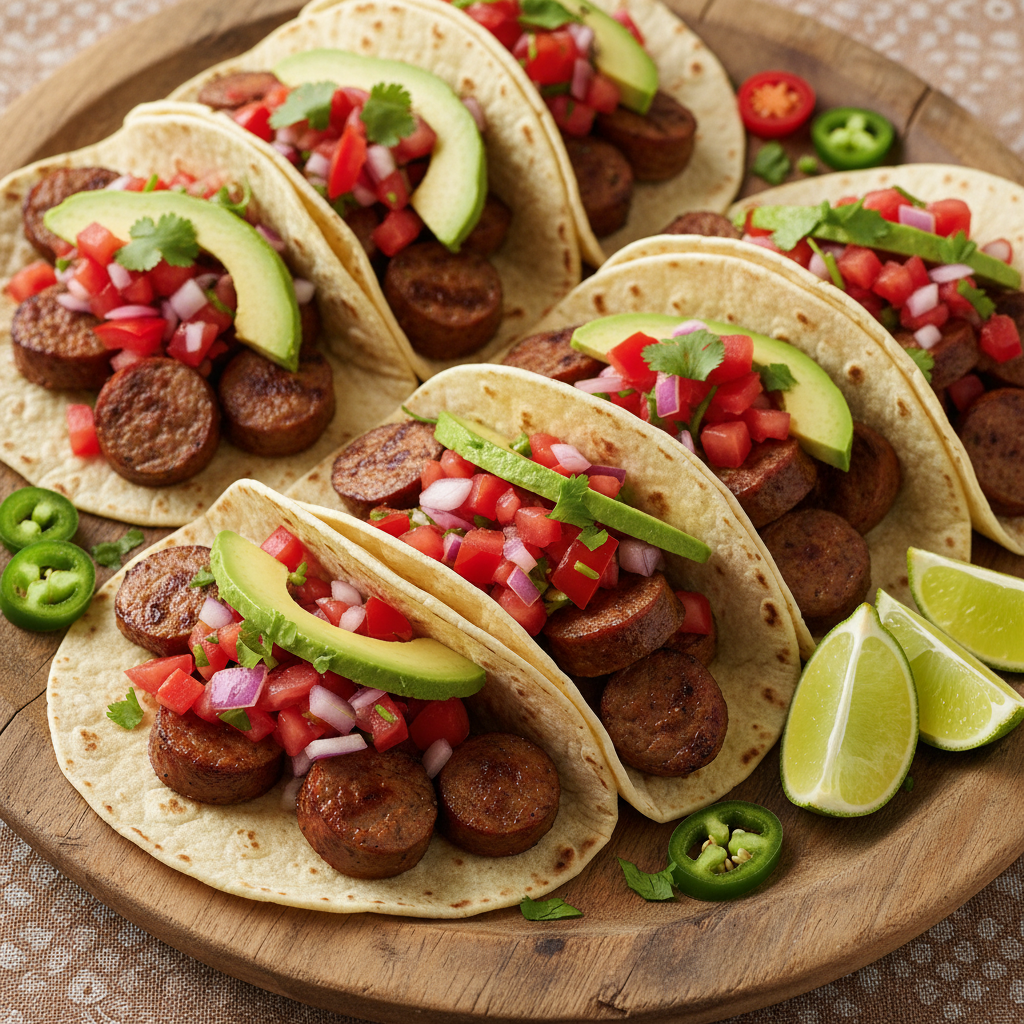
The key is to use a sturdy, high-quality bun that can hold up to the bratwurst and all the toppings. A crusty roll or pretzel bun is an excellent choice.
FAQs About Bratwurst
What is the best way to cook bratwurst?
The best method depends on your preference. Grilling provides a classic smoky flavor, pan-searing with a beer bath adds rich flavor, and the air fryer offers a quick, convenient option with a great texture.
Should you boil bratwurst before grilling?
Boiling or, more accurately, simmering bratwurst in liquid like beer or water before grilling is a popular technique. It helps cook the sausage through gently, reducing the risk of splitting the casing on the hot grill. However, it’s not strictly necessary if you use a two-zone fire for grilling.
What is the difference between a bratwurst and a sausage?
“Sausage” is a broad category of ground meat mixed with fat, salt, and spices, typically stuffed into a casing. “Bratwurst” is a specific type of fresh-link sausage that originated in Germany. So, all bratwurst are sausages, but not all sausages are bratwurst.
Can you eat bratwurst raw?
No, you should never eat raw bratwurst. Most bratwurst sold in stores are fresh and uncooked (unless the package specifically states “cooked” or “smoked”). They must be cooked to an internal temperature of 160°F (71°C) to be safe to eat.
Conclusion
The humble bratwurst is far more than just a simple sausage. It’s a food with a rich history, a wide range of regional flavors, and a versatility that makes it a favorite in kitchens and backyards around the world. By understanding the different types, mastering a few key cooking techniques, and always paying attention to that crucial internal temperature, you can unlock the full potential of bratwurst.
Whether you prefer a traditional Thuringer bratwurst hot off the grill, a modern beef bratwurst in an easy sheet pan dinner, or a creative bratwurst hot dog piled high with toppings, there’s a perfect way for everyone to enjoy this culinary classic. So, fire up your grill, preheat your air fryer, and get ready to cook the best bratwurst of your life. For more food history and delicious recipes, check out an educational article on German food culture. You can also find additional cooking tips and food science insights at Serious Eats.