The Ultimate Guide to Broasted Chicken in 2026
If you’ve ever enjoyed a piece of impossibly crispy, incredibly juicy chicken at a classic American diner or supper club, you may have encountered a culinary marvel: broasted chicken. It looks like fried chicken, it crunches like fried chicken, but one bite reveals something more. The meat is more tender, the flavor is sealed deep within, and it somehow feels less greasy.
So, what is this magical poultry, and what does broasted chicken mean? It’s not just a folksy term for “fried.” Broasting is a specific, trademarked cooking method that combines pressure cooking and deep-frying into one ingenious process. This technique, born from mid century American ingenuity, creates a distinct texture and taste that has earned it a cult following from Wisconsin to the Middle East.
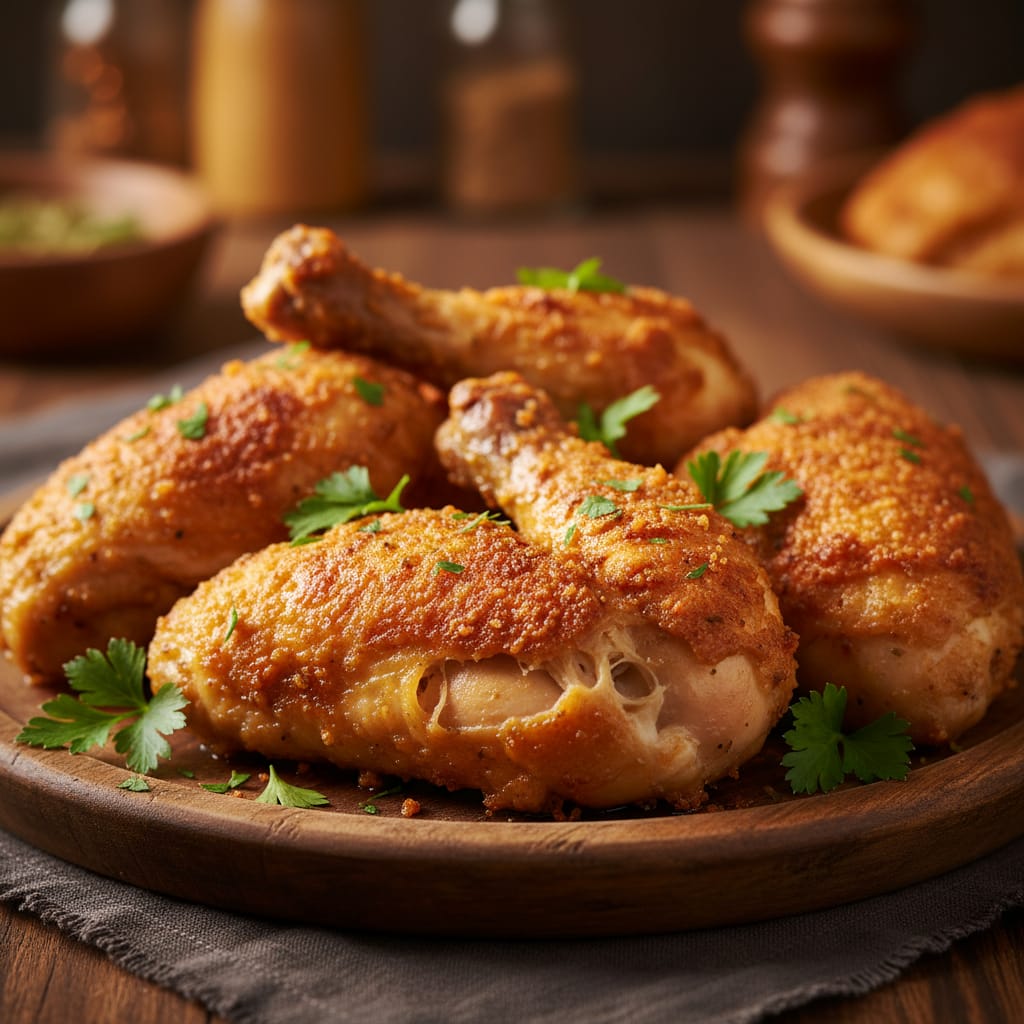
In this ultimate guide for 2026, we’ll dive deep into everything you need to know about broasted chicken. We will cover the history, the science behind the crunch, and the key differences in the broasted vs fried chicken debate. We’ll even provide a safe, home-friendly broasted chicken recipe so you can learn how to make broasted chicken without the commercial equipment.
What is Broasted Chicken, Exactly?
The term “broasted chicken” often causes confusion. Is it broiled and roasted? Is it just another name for fried chicken? The answer is a definitive no. To be called “Genuine Broaster Chicken,” the food must be prepared using a specific three part system developed and trademarked by the Broaster Company of Beloit, Wisconsin.
This system, first invented in 1954 by American entrepreneur L.A.M. Phelan, consists of:
- Specialized Marinades & Coatings: The chicken is first marinated and then coated in the company’s proprietary ingredients. This step is crucial for both flavor and creating the signature crispy crust.
- The Broaster Pressure Fryer: This is the heart of the operation. It’s a commercial grade piece of equipment that functions as both a pressure cooker and a deep fryer.
- A Controlled Cooking Process: The chicken is fried in hot oil under pressure. This unique environment cooks the chicken much faster than traditional methods.
The pressure prevents the chicken’s natural juices from escaping while simultaneously blocking the cooking oil from penetrating the meat. The result is chicken that is remarkably moist and flavorful on the inside with a perfectly crisp, golden-brown skin on the outside. Because it absorbs less oil, it is often described as a lighter, less greasy alternative to traditional fried chicken.
Broasted vs Fried Chicken: The Showdown
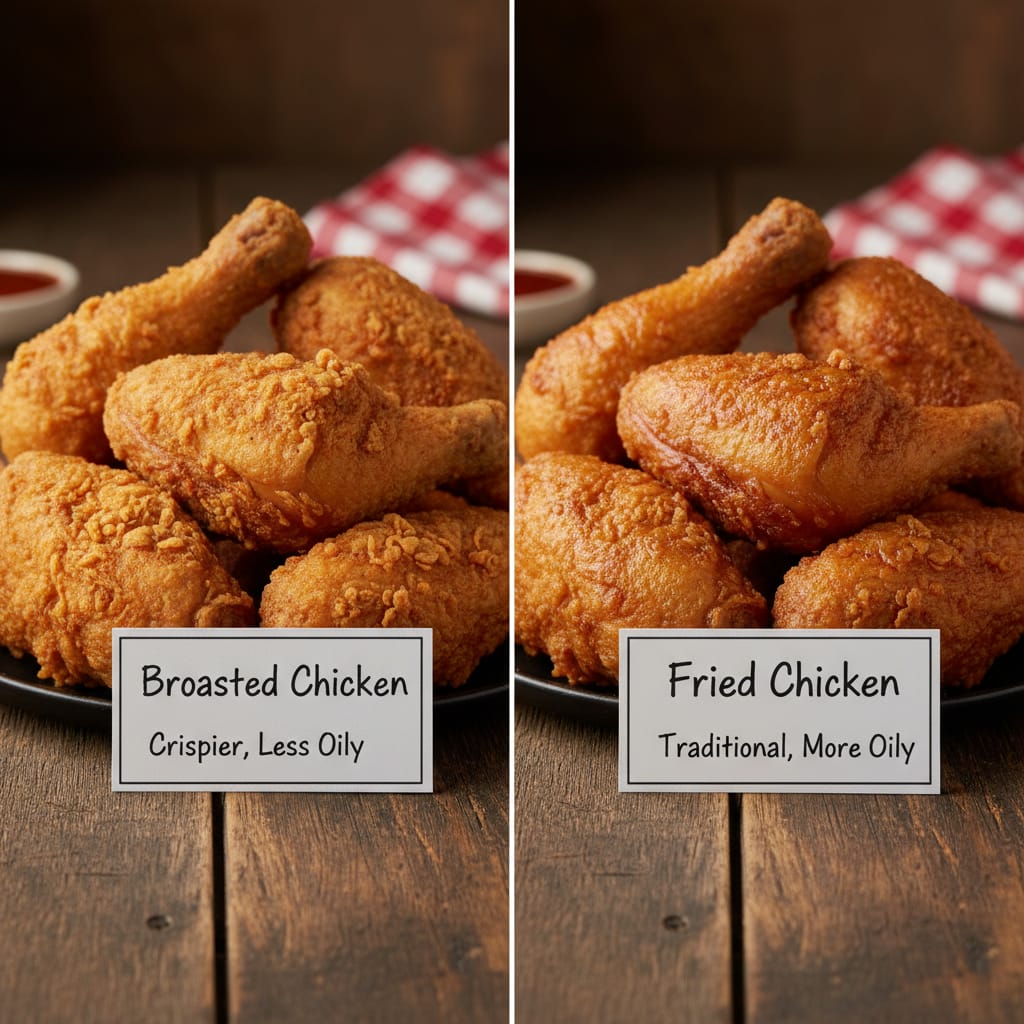
While both methods produce delicious, crispy chicken, the process and the final product have significant differences. Understanding these distinctions is key to appreciating what makes broasted chicken so special.
| Feature | Broasted Chicken | Traditional Fried Chicken |
|---|---|---|
| Cooking Method | Deep fried under pressure in a specialized pressure fryer. | Deep-fried in an open vat of hot oil (pan-frying, deep-frying). |
| Cooking Time | Significantly faster. A batch can cook in about 10-12 minutes. | Slower. Typically takes 15-25 minutes, depending on the piece. |
| Oil Absorption | Minimal. The pressure creates a seal, reducing oil penetration. | Higher. The chicken is fully submerged in oil and absorbs more fat. |
| Moisture Level | Exceptionally high. The pressure-cooking aspect steams the chicken from the inside, locking in juices. | Good, but moisture loss is more significant due to the longer, open-air cooking process. |
| Texture | Ultra-crispy skin with incredibly tender, fall-off-the-bone meat. | Crispy skin (can vary from flaky to crunchy) with juicy meat. |
| Health & Nutrition | Generally lower in calories and fat due to less oil absorption. | Higher in calories and fat. |
| Equipment | Requires a specific, commercial-grade Broaster pressure fryer. | Can be made with a standard deep fryer, Dutch oven, or even a cast-iron skillet. |
Essentially, the “broasting” process steams the chicken in its own juices while simultaneously frying the exterior to a perfect crispness. This combination is what sets it apart in the world of crispy poultry.
How to Make Broasted Chicken at Home: A Recipe
Since commercial Broaster pressure fryers are not available for home use, it’s impossible to make “Genuine Broaster Chicken” in your kitchen. However, we can simulate the effect by using a two-step process: pressure cooking first to lock in moisture, followed by a quick fry to achieve that signature crust.
This broasted chicken recipe gives you the best of both worlds the tenderness of pressure cooked chicken and the crunch of fried.
Yields: 4 servings
Prep time: 20 minutes
Cook time: 30 minutes
Ingredients
For the Chicken Brine:
- 4 cups water
- ¼ cup salt
- 2 tablespoons sugar
- 1 whole chicken (about 3-4 lbs), cut into 8 pieces
For the Spice Dredge:
- 2 cups all-purpose flour
- 2 tablespoons cornstarch
- 2 teaspoons paprika
- 2 teaspoons garlic powder
- 1 teaspoon onion powder
- 1 teaspoon black pepper
- 1 teaspoon salt
- ½ teaspoon cayenne pepper (optional, for a little heat)
For the Egg Wash:
- 2 large eggs
- ½ cup milk or buttermilk
For Frying:
- 4-6 cups of a high smoke point oil (like peanut, canola, or vegetable oil)
Step-by-Step Instructions
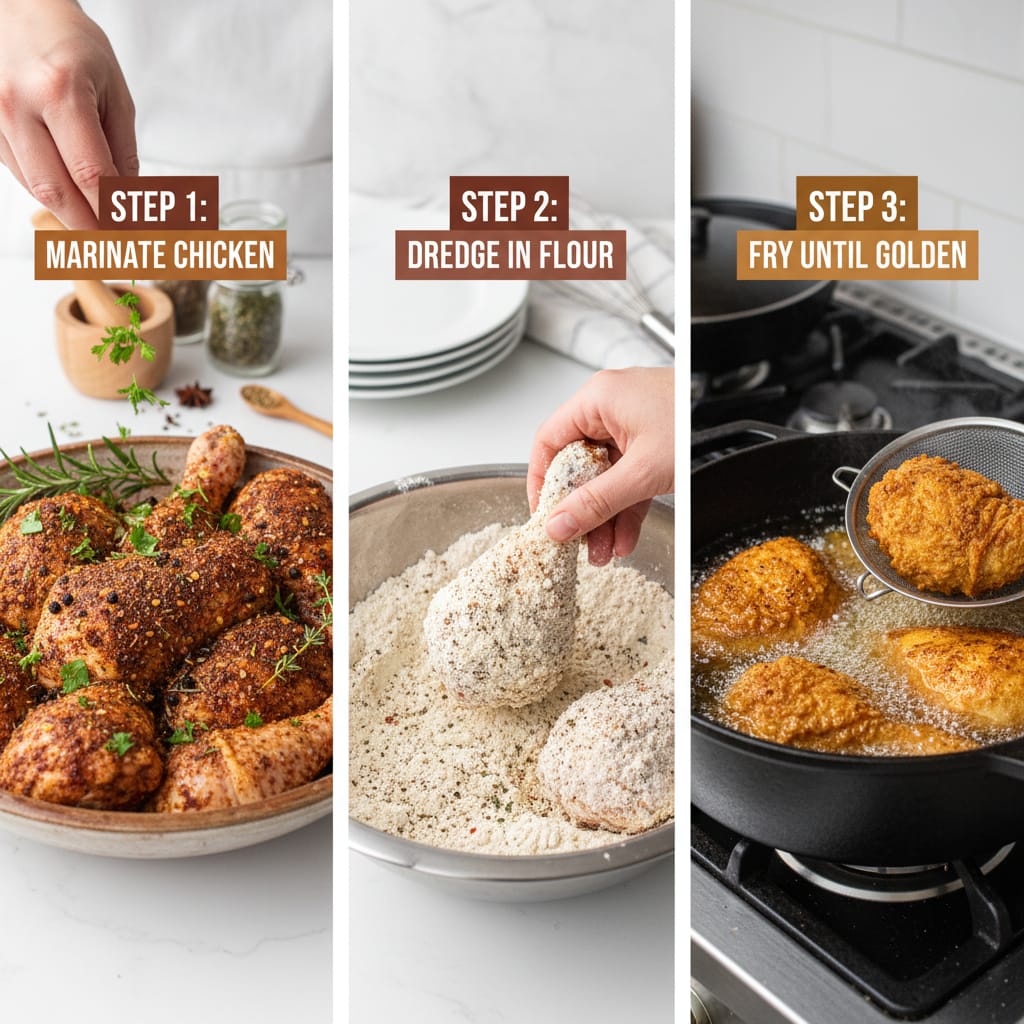
- Brine the Chicken (Optional but Recommended): In a large bowl, dissolve the salt and sugar in the water. Submerge the chicken pieces in the brine. Cover and refrigerate for at least 1 hour, or up to 4 hours. This step ensures the chicken is well-seasoned and moist.
- Prepare the Dredge and Egg Wash: In a wide, shallow dish, whisk together the flour, cornstarch, and all the spices for the dredge. In a separate dish, whisk the eggs and milk together for the egg wash.
- Pressure Cook the Chicken: Remove the chicken from the brine and pat it completely dry with paper towels. Place a trivet in the bottom of your electric pressure cooker (like an Instant Pot) and add 1 cup of water. Arrange the chicken pieces on the trivet, ensuring they are not overcrowded (you may need to do this in two batches). Secure the lid, set the valve to “Sealing,” and pressure cook on high for 6 minutes.
- Quick Release and Dry: Once the cooking time is complete, perform a quick release of the pressure. Carefully remove the chicken pieces with tongs and place them on a wire rack. It is CRITICAL to let the chicken cool and the skin dry for at least 15-20 minutes. Patting it with paper towels can speed this up. Do not attempt to fry wet chicken, as this is extremely dangerous.
- Coat the Chicken: Set up your breading station. Working with one piece at a time, dredge the cooked chicken in the flour mixture, shake off the excess, dip it into the egg wash, and then press it firmly back into the flour mixture for a thick, even coat. Place the coated chicken back on the wire rack.
- Heat the Oil: In a large, heavy-bottomed pot or Dutch oven, heat your oil to 350°F (175°C). Use a thermometer for accuracy.
- Fry to Golden Perfection: Carefully place a few pieces of chicken into the hot oil, being sure not to overcrowd the pot. Fry for 3-5 minutes, turning occasionally, until the crust is deep golden brown and crispy.
- Drain and Serve: Remove the chicken from the oil and place it on a clean wire rack to drain. This keeps the bottom from getting soggy. Serve your homemade broasted chicken immediately.
Is Broasted Chicken Healthier? A Modern Look
One of the longest standing claims about broasted chicken is that it’s a healthier option than its deep-fried cousins. The science supports this, at least in part. Studies on food preparation show that pressure frying can significantly reduce oil uptake in foods compared to atmospheric frying. A 2024 analysis published in the Journal of Food Science and Technology confirmed that foods cooked under pressure absorb up to 40% less fat.
This means fewer calories and less saturated fat per serving. While it’s still a fried food, choosing broasted chicken over traditional fried chicken can be a smarter choice if you’re mindful of your fat intake.
Furthermore, the sealed-in moisture means the chicken’s natural nutrients are better preserved. This method offers a delicious way to enjoy a classic comfort food with a slightly better nutritional profile.
The Cultural Significance and Global Reach of Broasted Chicken
What started as a Wisconsin supper club staple has become a global phenomenon. The Broaster Company’s trademark program allowed independent restaurants to serve high-quality, consistent chicken without becoming a full-blown franchise. This helped preserve the unique character of local diners and supper clubs across the American Midwest, where “broasted chicken” on a menu is still a sign of nostalgic comfort food.
Interestingly, the biggest market for “broasted chicken” (often spelled broaste chicken) today is the Middle East and South Asia. In countries like Saudi Arabia, the UAE, and Pakistan, “broast” is almost synonymous with fried chicken. The preparation method aligns well with cultural preferences for tender, well-cooked meat and the demand for halal-prepared foods. Local chains have adapted the flavor profiles, serving it with garlic sauce (toum), hummus, and flatbreads, creating a unique culinary fusion.
Frequently Asked Questions (FAQs)
1. What does broasted chicken taste like?
Broasted chicken tastes incredibly juicy and tender on the inside with a very crispy, savory crust. Because it absorbs less oil, the natural flavor of the chicken shines through more than in traditional fried chicken.
2. Is “broasted” a real word?
Yes and no. It’s a portmanteau of “broil” and “roast” created by L.A.M. Phelan for his invention. While it started as a marketing term, it has become a widely understood word for this specific style of pressure-fried food.
3. Can you broast fish or potatoes?
Absolutely. The Broaster method is famously used for potato wedges, often called “broasted potatoes” or “jojos.” The process gives them a fluffy, almost baked-potato interior and a crispy, fried exterior. Fish, pork chops, and other vegetables can also be broasted.
4. Why isn’t broasted chicken more common?
The primary reason is the equipment. A commercial Broaster pressure fryer is a significant investment and requires specific training to operate safely. Therefore, you will only find it in restaurants that are licensed operators.
5. How is broasted chicken different from KFC?
While Colonel Sanders also famously used pressure fryers, “Genuine Broaster Chicken” is a distinct, trademarked system with its own proprietary marinades and coatings. Flavor profiles and textures differ, though both rely on the magic of pressure frying.
6. Is the Broaster Company still around in 2026?
Yes, the Broaster Company is still headquartered in Beloit, Wisconsin, and continues to manufacture its equipment and license its food programs to operators worldwide, maintaining its legacy over 70 years later.
7. Can I use an air fryer to make broasted chicken?
An air fryer is excellent for making crispy chicken, but it won’t replicate the broasting process, which relies on the combination of hot oil and pressure. An air fryer cooks with circulating hot air, resulting in a different texture that is more akin to baking or roasting.
8. What is “broaste chicken”?
“Broaste chicken” is a common alternative spelling, particularly popular in the Middle East and South Asia. It refers to the same pressure-fried chicken but is often associated with local flavor variations like spicy coatings and garlic dipping sauces.
9. Is it safe to fry in a home pressure cooker?
No. It is extremely dangerous to put large amounts of oil in a standard home electric or stovetop pressure cooker. They are not designed to function as deep fryers. The recipe provided uses the pressure cooker only for the initial steaming step with water, not oil. The frying is done separately in an open pot.
10. What’s the best way to reheat broasted chicken?
For the best results, reheat broasted chicken in an oven or an air fryer at around 375°F (190°C) for 10-15 minutes. This will help re-crisp the skin without making the meat dry. Avoid the microwave, which will make the skin soggy.
The Final Word on a Crispy Classic
Broasted chicken is more than just a meal; it’s a piece of American culinary history that has found a home across the globe and is supported by decades of innovation in food technology (USDA Food Safety and Inspection Service, UW-Madison: The Science of Pressure Frying, Journal of Food Science and Technology). It represents a perfect marriage of science and flavor, resulting in a product that is undeniably superior in texture and taste. By locking in moisture and locking out oil, as shown in laboratory analyses and food science research, the broasting process creates a fried chicken experience that is both indulgent and surprisingly refined.
Whether you seek it out at a local diner or try our home-friendly version, you’ll be enjoying a tradition that has stood the test of time. Now that you know exactly what broasted chicken is, we encourage you to explore it for yourself. Discover a local spot or get in the kitchen and experience the crunch that has captivated chicken lovers for decades.
For more deep dives into your favorite foods and cooking techniques, be sure to explore other articles at www.flavorsuggest.com. Interested in mastering other cooking methods visit for more reciepes and flavors?