
Coffee Flavor Powders: Explore coffee flavor powders for your brew
Tired of the same old morning brew? Imagine turning that standard cup of coffee into a vanilla latte or a rich mocha in seconds, right in your own kitchen. That’s the simple magic of coffee flavor powders.
These are concentrated, shelf-stable blends designed to instantly add a burst of flavor and often a touch of sweetness with just a scoop. Think of them as the easiest alternative to messy syrups and refrigerated creamers.
Your Gateway to a World of Flavor
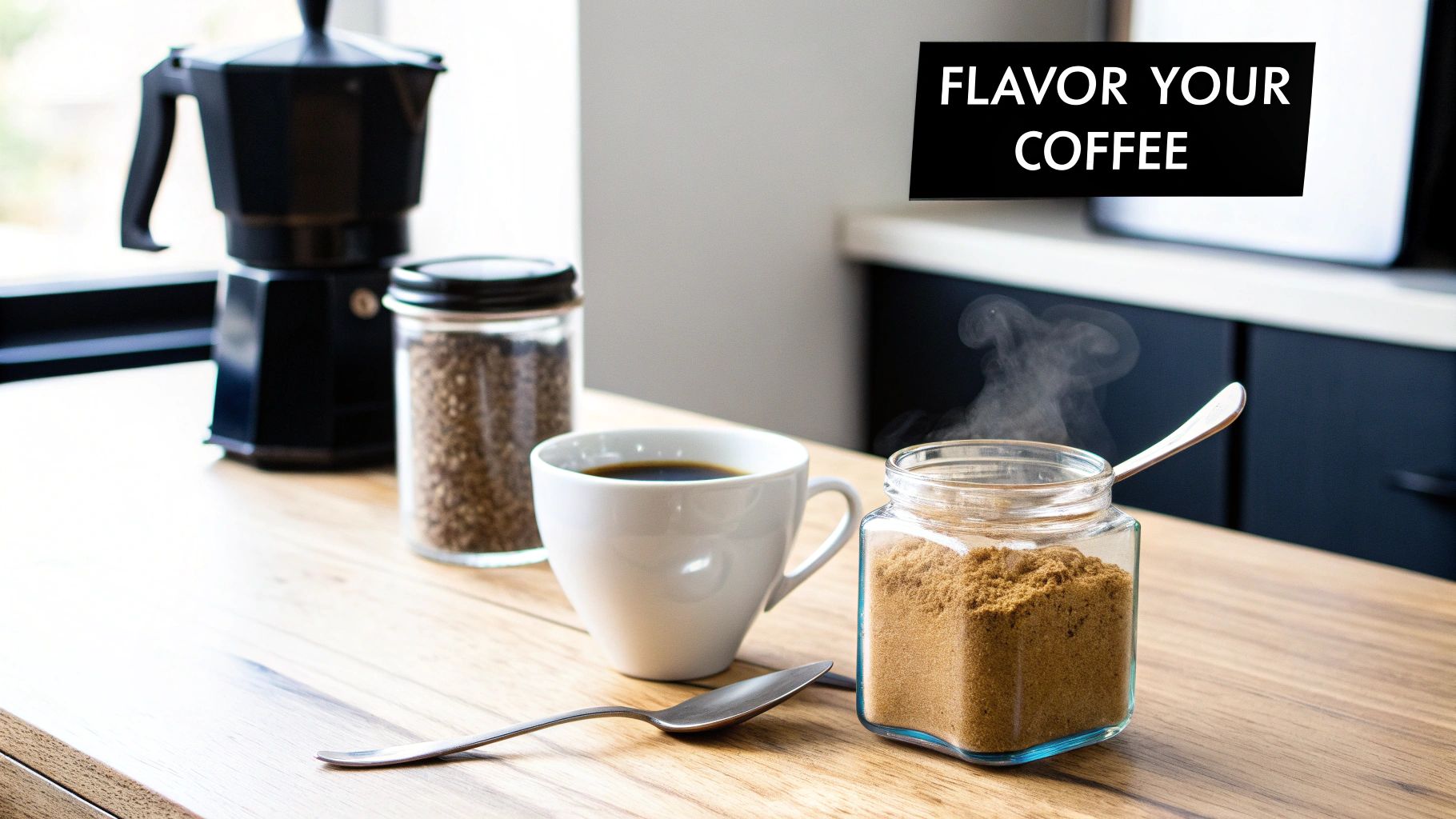
Let’s be honest, most of us run on coffee. It’s a ritual. But rituals can get boring. Coffee flavor powders are the perfect way to break the monotony and start treating your daily cup like a personalized café experience. It’s all about making your coffee work for you.
The appeal is pretty straightforward. It boils down to three things everyone loves: convenience, variety, and a little creative freedom. Unlike those bulky syrup bottles that need a pump or creamers that go bad in a week, these powders are compact and last for ages. They are the ultimate grab and go solution for a better brew.
The Endless Possibilities in a Scoop
This is where the real fun begins. The sheer spectrum of flavors available means you can become your own barista without any training. You can easily find powders that nail the classic coffee shop staples we all know and love.
The most popular flavors usually fall into a few key categories:
- Classic & Comforting: You can’t go wrong with vanilla, caramel, or hazelnut. They’re like a warm hug in a mug.
- Rich & Decadent: Think mocha, chocolate, and toffee. These turn your coffee into a full-blown dessert.
- Spiced & Aromatic: Cinnamon, pumpkin spice, and cardamom add that warm, cozy vibe, especially when the weather turns cool.
- Unique & Exotic: For the more adventurous, flavors like lavender or peppermint open the door to some truly refreshing creations.
This kind of variety means you can match your coffee to your mood, the season, or whatever you’re craving. One morning it’s a simple French vanilla, the next you’re experimenting with a white chocolate mocha. For more ideas on crafting your perfect cup, check out the flavor pairings in our drinks category.
The true magic of coffee flavor powders is their ability to empower the user. You control the intensity, mix and match flavors, and create a beverage that is perfectly suited to your personal palate.
More Than Just Flavor
These days, it’s not just about taste. Many modern coffee flavor powders are now packed with functional ingredients, blending your daily caffeine fix with your wellness goals.
It’s becoming more and more common to find powders that are sugar-free, using natural sweeteners like stevia instead. Others might throw in a scoop of collagen for skin and joint support or add MCT oil for a sustained energy boost. This guide will walk you through all of it, helping you navigate the options to make every single cup you brew a little more special.
What Exactly Are Coffee Flavor Powders?
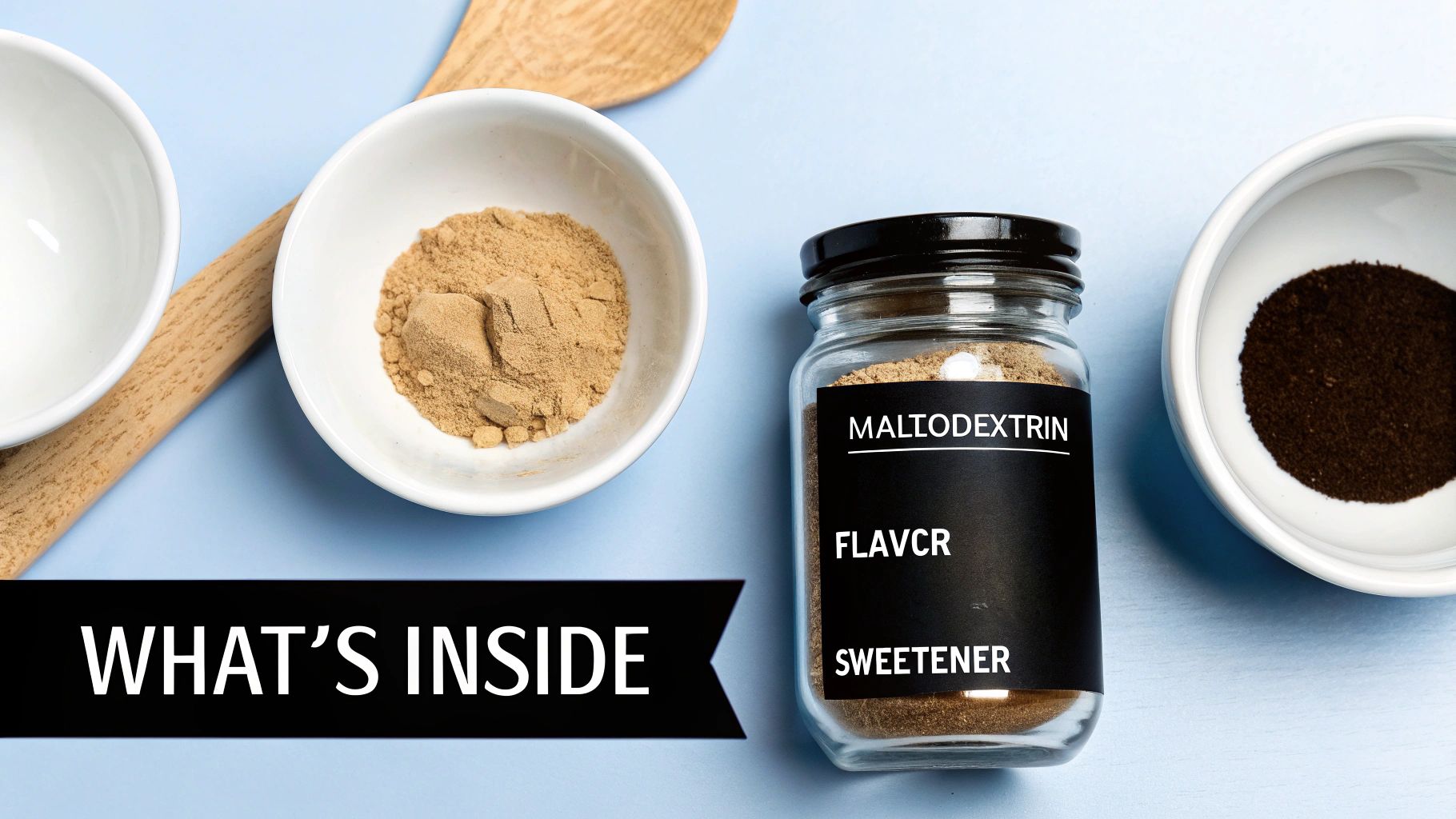
Let’s pull back the curtain and see what’s actually inside that jar of coffee flavor powder. It’s easy to think of them as a single ingredient, but it’s more accurate to see them as a carefully crafted “flavor toolkit” for your morning brew. Each component has a very specific job to do.
Think of it like baking a cake. You don’t just use flour. You need sugar for sweetness, baking powder for lift, and vanilla for that classic flavor. In the same way, coffee powders are a blend of ingredients designed to work together, delivering a consistent and delicious experience in every single scoop.
At their core, these powders are made to dissolve quickly and evenly into your coffee. They give you a concentrated punch of flavor without the mess of syrups or the short shelf life of refrigerated creamers. Let’s break down the three main players you’ll find in almost any blend.
The Foundation: The Base Ingredients
The first component is the base ingredient, which acts as a carrier for everything else. Its main purpose is to help the powder dissolve smoothly in liquid without clumping up. It also adds a bit of bulk, which makes measuring out a consistent scoop much easier. You can think of it as the delivery truck for the flavor.
One of the most common base ingredients you’ll see on a label is maltodextrin, a food-grade powder made from starch. It’s incredibly soluble in both hot and cold liquids, which is why it’s so popular. Other options you might see include corn syrup solids or various starches that all do a similar job.
The Star of the Show: The Flavorings
Next up are the flavorings, and these are the true stars of the blend. This is what creates that specific taste you’re after, whether it’s a rich hazelnut, a creamy French vanilla, or a warm cinnamon spice. These flavor compounds are highly concentrated and are what make one powder different from another.
Flavorings generally fall into two camps:
- Natural Flavors: These are derived from actual food sources, like vanilla extract pulled from vanilla beans or cocoa from cacao. They often provide a more authentic and subtle taste.
- Artificial Flavors: These are created in a lab to mimic natural tastes. They can be more potent and stable, which allows for a wider and more consistent range of flavor profiles.
This consumer demand for variety has fueled massive market growth. In fact, the global flavored coffee market, where powders play a key role, is valued at USD 7,605.510 million in 2025 and is projected to hit USD 9,491.186 million by 2030. You can explore the full market analysis of flavored coffee trends to see just how big this is getting.
The Sweet Finish: The Sweeteners
Finally, most coffee flavor powders include some type of sweetener. This helps balance the natural bitterness of coffee and rounds out the overall flavor profile. The type and amount of sweetener can vary dramatically between products, catering to different dietary needs and taste preferences.
Common sweeteners include traditional sugar, but many brands now use alternatives to appeal to health-conscious consumers. You’ll often find sugar-free options that use plant-based sweeteners like stevia or monk fruit, which provide that sweet kick without the calories.
By understanding these three core components base, flavoring, and sweetener, you can start to read ingredient labels with confidence. It empowers you to choose a product that not only tastes great but also aligns with your personal health and dietary goals.
Exploring the Spectrum of Flavors and Types
Walking into the world of coffee flavor powders feels a bit like being a kid in a candy store. The sheer number of options is exciting, but let’s be honest, it can also be a little overwhelming. The best way to get a handle on it all is to break the huge selection down into a few distinct flavor families.
Think of it like building a playlist. Some mornings call for a comforting classic, while other afternoons demand something bold and adventurous. The same idea applies to your coffee mug. Getting to know these categories is your first step to becoming your own at-home barista and nailing that perfect signature drink.
Once you understand the personality of each flavor family, you can start mixing and matching with confidence. You’ll get a feel for what pairs best with your favorite roast, transforming your daily coffee ritual into a fun little experiment.
H3: Coffee Flavor Powder Categories and Pairings
To make your choices even clearer, this table breaks down the main flavor families. It gives you a few examples of what to look for and some guidance on which coffee roasts and drink styles they shine in.
| Flavor Category | Example Flavors | Best Paired With (Roast) | Ideal For (Drink Type) |
|---|---|---|---|
| Classic & Nutty | French Vanilla, Hazelnut, Almond | Light to Medium Roasts | Lattes, Drip Coffee, Cold Brew |
| Rich & Decadent | Mocha, Caramel, White Chocolate | Medium to Dark Roasts | Mochas, Macchiatos, Frappes |
| Spiced & Warm | Cinnamon, Pumpkin Spice, Cardamom | Medium Roasts | Cappuccinos, Seasonal Lattes |
| Fruity & Floral | Raspberry, Lavender, Coconut | Light Roasts, Single-Origins | Iced Lattes, Cold Brew, Iced Coffee |
| Functional Blends | Powders with Collagen, MCT Oil | Any Roast | Daily Drip, Post-Workout Coffee |
This is just a starting point, of course. The best part about flavor powders is the freedom to experiment, so don’t be afraid to try an unexpected pairing!
Classic and Nutty Staples
This is the foundation of the flavored coffee world. These are the timeless, comforting flavors that just work. They don’t try to steal the show; instead, they beautifully enhance the natural notes of the coffee, making them the perfect entry point if you’re new to coffee flavor powders.
You can think of these as the “greatest hits” you’d find at any good café:
- French Vanilla: Smooth, creamy, and just a little sweet. It adds a touch of class to any cup.
- Hazelnut: Toasty and aromatic, this flavor brings a wonderful nutty richness that complements almost any roast.
- Almond: A bit more subtle than its nutty cousin, almond offers a delicate sweetness that’s incredibly versatile.
These flavors are your reliable go-tos. They’re fantastic in everything from a hot latte to a simple drip coffee, giving your daily brew a little something extra.
Rich and Decadent Delights
When you want your coffee to feel less like a routine and more like a dessert, this is your category. These flavors are bold, indulgent, and perfect for kicking a sugar craving to the curb. They can turn a basic cup of joe into a luxurious treat.
These powders are all about creating a deep, satisfying experience. Think Mocha, that perfect marriage of rich chocolate and coffee, or Caramel, with its buttery sweetness. Another favorite, White Chocolate, offers a creamier, sweeter alternative to classic mocha.
The desire to create these personalized coffee experiences at home is a huge deal. The ground coffee powder market, often used as a base for these custom blends, was valued at a massive USD 15 billion in 2023. It’s projected to hit USD 25 billion by 2032, showing just how much people love playing barista in their own kitchens. You can dive deeper into the global ground coffee powder market trends to see how this movement is shaping the industry.
Spiced and Warm Sensations
This group is all about cozy comfort. Evoking autumn days and crackling fireplaces, spiced powders add an aromatic complexity that feels like a warm hug in a mug. They lean on warming spices that have been adding depth to food and drinks for centuries.
Some of the most beloved options here include:
- Cinnamon: The undisputed classic, adding a sweet and woody warmth.
- Pumpkin Spice: The official flavor of fall, blending cinnamon, nutmeg, ginger, and clove.
- Cardamom: A wonderfully aromatic spice with a complex profile, famous in Middle Eastern coffee traditions.
Spiced powders are perfect for adding a seasonal twist to your coffee or for those chilly days when you need to warm up from the inside out.
Pro Tip: Spiced powders and medium-roast coffees are a match made in heaven. The coffee’s balanced body is the perfect canvas to let those complex spice notes really sing.
Fruity, Floral, and Functional Flavors
Here’s where things get really interesting. While less traditional, fruity and floral notes are popping up more and more, offering a bright and unexpected twist. Flavors like raspberry or even lavender can lighten up your cup, adding an aromatic quality that’s especially amazing in iced drinks.
But it’s not just about taste anymore. A whole new category of functional coffee flavor powders is taking off. These are blends that do more than just taste good—they’re infused with beneficial ingredients. You can now find powders with added collagen for skin support or MCT oil for a boost of sustained energy, merging your coffee break with your wellness routine.
Mastering the Art of Mixing Your Coffee
You’ve found the perfect flavor now for the fun part. Transforming your daily coffee is an art, but avoiding those stubborn clumps or a sickeningly sweet first sip? That’s more of a science.
With just a couple of simple techniques, you can get that perfect, café-quality blend every single time. It’s less about having fancy barista skills and more about understanding how the powder and liquid work together. Get this right, and you’ll be making flawlessly smooth and flavorful drinks without a second thought.
Start Low and Go Slow with Dosage
If you remember one thing, make it this: start with less than you think you need. You can always add more flavor, but you can’t take it out once it’s in there.
Every brand has a different concentration, and your personal taste is what really matters. Think of the “recommended serving” on the label as a suggestion, not a rule. I always start with about half a scoop or half a teaspoon, give it a good stir, and then taste. Too subtle? Add just a tiny bit more. This little bit of patience is the key to avoiding a cup of coffee that’s so sweet it completely buries the rich coffee notes you love.
Pro Mixing Techniques for a Clump-Free Cup
Nothing ruins a great cup of coffee faster than a gritty, clumpy mouthful. The good news is this is an easy fix. The first step is to ditch the lazy spoon-stirring method.
For a perfectly smooth drink, try one of these game-changing techniques:
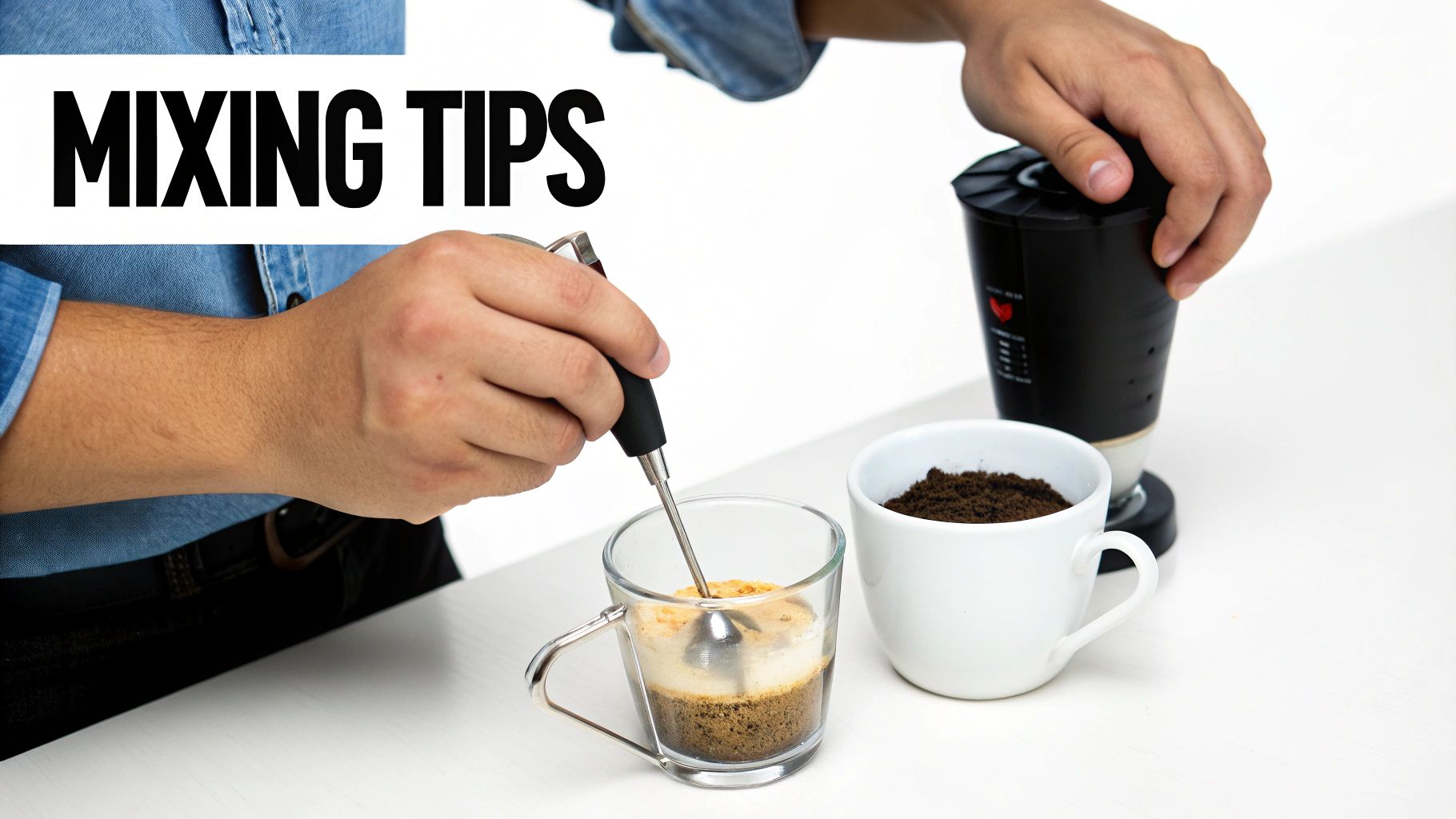
- Create a ‘Slurry’ First: Before you pour your coffee, put the powder in your empty mug. Add just a splash of hot coffee or hot water about an ounce is perfect and whisk it like you mean it with a fork or a small whisk. This creates a smooth, concentrated paste that dissolves instantly when you pour in the rest of your coffee.
- Use a Milk Frother: A handheld milk frother is your secret weapon here. Just add the powder to your coffee, dip the frother in, and give it a 5-10 second blast. It creates a little vortex that pulls the powder right into the liquid, leaving you with a perfectly mixed and slightly airy drink.
A well-mixed drink isn’t just about avoiding clumps; it’s about flavor activation. Properly dissolving the powder ensures every single particle contributes to the overall taste, giving you a richer and more consistent experience from the first sip to the last.
Beyond the Morning Mug
The real magic of coffee flavor powders is how versatile they are. Their concentrated, shelf-stable nature makes them a brilliant ingredient for all sorts of recipes, not just your morning cup. It’s this convenience that’s helped drive the massive growth of the instant coffee market, which often serves as the base for these products. In fact, the global instant coffee powder market hit USD 30.53 billion in 2024, showing just how much we all love a quick and easy beverage.
Ready to get creative? Here are a few ideas to get you started:
- Iced Lattes: Dissolving powder in cold liquid is tough. Make a flavor slurry with a little bit of hot water first, then add your cold milk and espresso. It will mix in perfectly.
- Whipped Cold Foam: Add a scoop of your favorite powder to heavy cream or oat milk before you froth it. You’ll get a decadent, flavored topping that takes your iced coffee to another level. For more ideas on rich toppings, see how a toffee crunch syrup flavor can elevate your drink.
- Baking Boost: Try adding a teaspoon of vanilla, caramel, or hazelnut powder to your pancake batter, brownie mix, or cookie dough. It’s a fantastic secret ingredient that adds a subtle layer of delicious complexity.
How to Choose a High Quality Flavor Powder
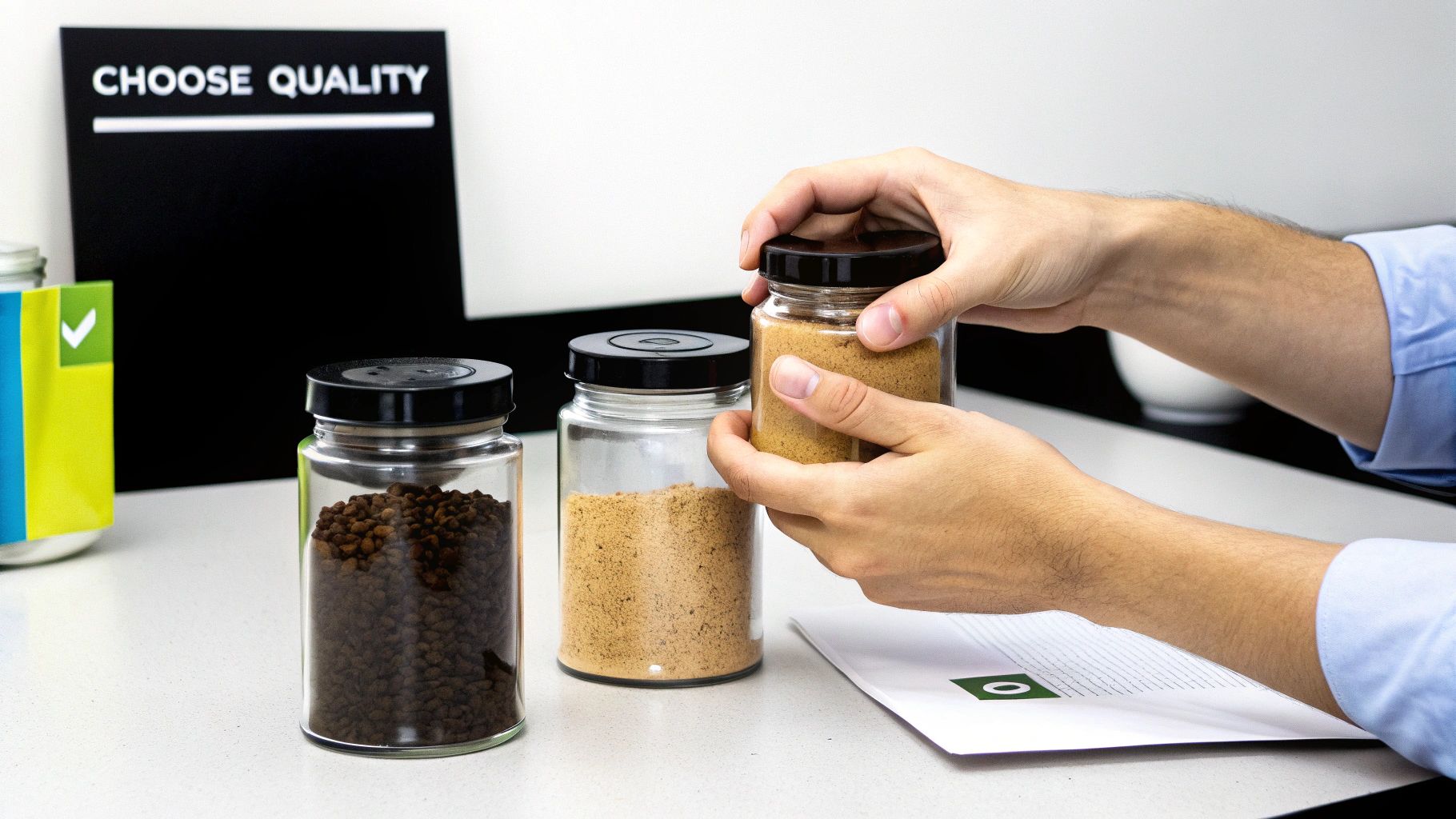
Walking down the coffee aisle can feel a bit overwhelming. You’re faced with a wall of coffee flavor powders, all with flashy labels and tempting descriptions. How do you tell the difference between a genuinely great product and one that’s just all hype?
The secret isn’t on the front of the jar; it’s hidden in the fine print on the back. Learning to read an ingredient list is the single most valuable skill you can have when picking a powder. It’s where brands show their hand, revealing exactly what you’re about to scoop into your morning brew.
Decode the Ingredient List
First things first, look for the source of the flavor. The best powders proudly list natural flavors, which are derived from the real deal think actual vanilla beans, cocoa, or cinnamon. These deliver a more authentic, nuanced taste that complements your coffee instead of bulldozing it.
On the flip side, you’ll see artificial flavors. These are created in a lab and can sometimes have a more potent, candy-like kick. They aren’t necessarily bad, but if you’re chasing that gourmet café experience at home, natural is almost always the way to go.
Next, check out the sweeteners. Premium brands lean towards natural, calorie-free options like stevia or monk fruit. Budget-friendly powders might use artificial sweeteners or corn syrup solids, which can sometimes leave a strange, lingering aftertaste.
Finally, keep an eye out for unnecessary fillers or anti-caking agents. A short, simple ingredient list filled with words you can actually recognize is a huge green flag. It’s almost always a sign of a higher-quality product.
Packaging and Brand Reputation Matter
Beyond what’s inside, take a look at the container itself. Flavor and aroma are delicate, and their biggest enemies are air and moisture. Look for powders sold in airtight, opaque containers like tins or dark plastic jars. This kind of packaging is a shield, protecting the contents from light and humidity so your last scoop is just as fresh as the first.
A brand’s reputation can also offer some solid clues. Companies that are transparent about their sourcing, stick to minimal ingredients, and have a track record of positive reviews are usually a safe bet. They know that quality is what keeps customers coming back. If you want a curated look at some trusted options, you can explore various products reviewed on our site.
A high-quality flavor powder should enhance your coffee, not mask it. The goal is to find a blend with clean ingredients that delivers a balanced, authentic taste, turning your daily brew into a truly special experience.
Comparing Premium vs. Budget Flavor Powders
To make the choice even clearer, let’s break down the key differences you’ll usually find between premium and budget-friendly powders. Knowing these distinctions helps you decide where your priorities are whether it’s pure flavor, clean ingredients, or simply the price tag.
| Feature | Premium Powders | Budget Powders |
|---|---|---|
| Flavor Source | Often uses natural flavors for authentic taste. | More likely to use artificial flavors for potency. |
| Sweeteners | Typically uses natural sweeteners (stevia, monk fruit). | Often contains artificial sweeteners or sugar alcohols. |
| Ingredient List | Generally shorter with recognizable components. | May include fillers, anti-caking agents, and preservatives. |
| Solubility | Formulated to dissolve easily with minimal clumping. | Can be prone to clumping if not mixed vigorously. |
| Packaging | Usually comes in airtight, opaque containers. | Often sold in simple plastic bags or clear jars. |
Ultimately, this table isn’t about saying one is “good” and one is “bad.” It’s about helping you spend your money wisely to get the exact coffee experience you’re looking for.
Storing Powders to Maximize Freshness
You’ve found the perfect flavor, and that first cup of coffee was a game-changer. So, how do you make sure the last scoop is just as incredible as the first? Proper storage is the secret.
Think of your powder as a delicate spice. Its worst enemy, its absolute kryptonite is moisture. Once humidity worms its way into the container, that fine, fluffy powder can turn into a solid, useless brick. But it’s not just about clumping; keeping it fresh is about protecting the flavor you paid for.
The Three Enemies of Freshness
To keep your coffee flavor powders tasting their best, you need to shield them from three main culprits. It’s pretty simple once you know what you’re up against.
- Humidity: This is public enemy number one. Moisture from the air will make the powder particles stick together, creating hard clumps that refuse to dissolve. The golden rule is to seal the container tightly the second you’re done with it.
- Heat: Stashing your powder next to the coffee maker, the stove, or in a sunny spot on the counter is a bad idea. Heat will actively break down the delicate flavor compounds, making the taste fade much faster.
- Light: Direct sunlight acts a lot like heat, degrading the quality of the flavorings over time. This is why opaque containers are always your best friend.
The ideal home for your flavor powder is a cool, dark place, like a pantry or a kitchen cabinet—well away from the steam of a boiling kettle or the heat of the oven. And whatever you do, don’t put it in the fridge! Condensation is a fast track to unwanted moisture.
Understanding Dates and Spotting Spoilage
You’ll likely see a “best by” or “best before” date on the packaging. Think of this less as a strict expiration date and more as the manufacturer’s guarantee of peak quality. A well-stored powder can easily last and taste great long past that date.
That said, your own senses are the best judge. It’s probably time to toss the powder if you notice any of these red flags:
- An Off Smell: If that rich vanilla or hazelnut aroma has vanished or, worse, been replaced by a musty scent, it’s past its prime.
- Hard Clumps: A little bit of minor clumping you can break up with a spoon is normal. Rock-hard chunks that put up a fight are a sign moisture has gotten in and won.
- Strange Taste: This one’s the most obvious. If your coffee tastes weak, bland, or just plain weird, the powder is done.
Stick to these simple habits, and you’ll get to enjoy the full, vibrant flavor from every single jar of your coffee flavor powder.
Got Questions About Coffee Flavor Powders?
Even after you’ve got the basics down, a few practical questions always pop up. Getting a straight answer can be the difference between a decent cup of coffee and a truly fantastic one. This section is designed to tackle those common “what ifs” and “how tos” so you can use your powders like a pro.
Think of this as your go-to cheat sheet. We’ll cover everything from iced coffee hacks to why your powder might be clumping, reinforcing some of the key tips we’ve already gone over.
Can I Use Coffee Flavor Powders in Cold Brew?
Absolutely! This is one of the best ways to use them, but it requires a little finesse. Just dumping the powder into your chilled cold brew is a fast track to a clumpy, gritty mess that just won’t dissolve in the cold liquid.
Here’s the trick: create a concentrated “flavor shot” first. Mix your powder with a tiny bit of hot water just enough to form a smooth, thick liquid, almost like a syrup. Once it’s fully dissolved, you can pour that concentrate right into your cold brew or iced coffee. It’ll mix in perfectly every time.
Are Coffee Flavor Powders Healthier Than Syrups?
They definitely can be, but the nutrition label tells the real story. The biggest advantage powders have is the sheer number of sugar-free and low-calorie options out there, often using natural sweeteners like stevia or monk fruit. This makes them a fantastic swap if you’re trying to avoid the 20+ grams of sugar you can easily get from a single pump of traditional coffee syrup.
That said, “powder” doesn’t automatically mean “healthy.” Some budget-friendly brands still pack in sugar or corn syrup solids. A quick scan of the ingredients is all you need to make sure it aligns with what you’re looking for.
Will Flavor Powders Make My Coffee Taste Artificial?
That’s a fair concern, and it almost always comes down to the quality of the ingredients. Premium coffee flavor powders that use natural flavorings think extracts from real vanilla beans, cocoa, or nuts tend to give you a much more authentic, layered taste. They’re designed to complement your coffee, not steamroll it.
On the other hand, lower-quality powders that lean on artificial flavors can sometimes have that strong, candy-like profile that some people just don’t love. If you’re worried about an artificial aftertaste, just start with half the recommended serving. You can always add more to find that sweet spot for your palate.
A common cause of clumping is storing the powder in a humid environment, like right next to a steaming coffee maker or kettle. Always keep the container in a cool, dry pantry to maintain its fine, powdery texture.
How Do I Stop My Flavor Powder From Clumping?
Moisture is the number one enemy of any powder. The best habit you can form is to seal that container up tight right after you use it. Store it in a cool, dry spot, far away from any steam—so not next to the coffee pot, dishwasher, or stove.
If you do find a few clumps have formed, don’t worry. You can usually break them up easily with a fork or a small whisk before you scoop. A little bit of prevention goes a long way in keeping your powder fresh and easy to use down to the very last spoonful.
At FlavourSuggest, we’re dedicated to helping you discover the best tastes for your kitchen. Explore our guides to find your next favorite flavor. https://flavorsuggest.com