The Ultimate Guide to the Best Instant Coffee (2026)
For decades, coffee snobs turned their noses up at instant coffee. It was the emergency backup, the travel compromise, or the “better than nothing” option found in hotel rooms. But in 2026, the narrative has shifted dramatically. The days of burnt, bitter sludge are behind us. Thanks to advancements in technology and a surge in specialty coffee roasters entering the market, the best instant coffee available today rivals a freshly brewed pour-over.
Whether you are a busy professional needing a quick caffeine fix, a camper looking to shed weight in your pack, or simply someone who values convenience without sacrificing flavor, modern instant coffee delivers. It is no longer just about speed; it is about quality, sustainability, and surprising versatility.
In this comprehensive guide, we will explore the best brands on the market, dive into the science of freeze-drying, and share expert tips on how to elevate your instant cup. Get ready to rethink everything you know about soluble coffee.
Why Instant Coffee is Having a Renaissance
The resurgence of instant coffee isn’t accidental. It is driven by a demand for convenience that matches the quality of artisanal coffee culture.
Convenience Meets Quality
We live in a fast-paced world. While the ritual of a slow drip or French press is lovely on a Sunday morning, a Tuesday rush hour demands efficiency. Modern instant coffee dissolves in seconds in hot or cold water, offering a premium experience without the grinder, filters, or cleanup.
The Rise of Specialty Roasters
Big commercial brands no longer dominate the shelf. Specialty roasters who obsess over bean origin, roasting profiles, and fair trade practices—are now freezing their top-tier brews. They are proving that freeze dried instant coffee can retain the delicate floral, fruity, and nutty notes of high-quality Arabica beans.
Sustainability and Waste Reduction
Instant coffee is surprisingly eco-friendly. Because it is lighter and more compact than whole beans or ground coffee, it has a lower shipping carbon footprint. Plus, there are no spent grounds to toss out after brewing, and many brands are moving toward compostable or recyclable packaging.
Top Contenders: The Best Instant Coffee Brands of 2026
Navigating the coffee aisle can be overwhelming. To help you choose, we have categorized the top picks based on flavor profile, use case, and brewing method. For more options and recommendations, check out our best coffee brands guide.
1. The Specialty Choice: Swift Cup Coffee
If you are looking for the absolute gold standard, Swift Cup is often cited as the pinnacle of craft instant coffee. They partner with high end roasters to freeze dry small batches.
- Flavor Profile: Complex, bright, and true to the original roast. You will find notes of berry, chocolate, and citrus depending on the origin.
- Best For: The coffee connoisseur who wants pour-over quality on the go.
2. The Everyday Essential: Mount Hagen Organic Fairtrade
Widely available and consistently delicious, Mount Hagen has set the bar for organic instant coffee. It is freeze-dried and made from 100% Arabica beans grown at high altitudes.
- Flavor Profile: Smooth, mild, and nutty with low acidity.
- Best For: Daily drinking at home or the office.
3. Best Instant Coffee for Camping: Alpine Start
When every ounce in your backpack counts, Alpine Start delivers. Their “Original Blend” is specifically designed for adventure. It dissolves instantly in hot or cold water, making it perfect for alpine starts (hence the name).
- Flavor Profile: Medium roast with notes of caramel and dark chocolate. It is robust enough to wake you up but smooth enough to drink black.
- Best For: Backpacking, hiking, and van life.
4. Best Tasting Decaf Coffee: Blue Bottle Craft Instant Espresso Decaf
Finding a decaf that doesn’t taste flat is a challenge. Blue Bottle’s “Night Light” Decaf defies the odds. Using the Swiss Water Process, they remove caffeine without stripping flavor.
- Flavor Profile: Rich and creamy with notes of crème brûlée and vanilla.
- Best For: Late night cravings and those sensitive to caffeine.
5. Best for Iced Lattes: Café Bustelo Espresso Style
Sometimes you need a bold kick to cut through milk and ice. Café Bustelo offers a dark, intense roast that mimics espresso.
- Flavor Profile: Bold, robust, and full bodied.
- Best For: Homemade iced lattes, baking, and instant iced coffee packets enthusiasts.
If you want to perfect your instant coffee or any other brew, don’t miss our actionable coffee brewing tips to get the best out of every cup.
You will often see the term “freeze dried” on premium packaging. But what does it mean, and why is it superior to the older “spray dried” method?
The Spray-Drying Method
This is the traditional industrial method. Liquid coffee concentrate is sprayed into hot air, which rapidly evaporates the water, leaving behind dry powder.
- Pros: Cheap and fast.
- Cons: The high heat “cooks” the coffee a second time, often burning the natural oils and aromatics. This results in that bitter, burnt taste associated with old-school instant coffee.
The Freeze-Drying Method
This is the gold standard for modern instant coffee.
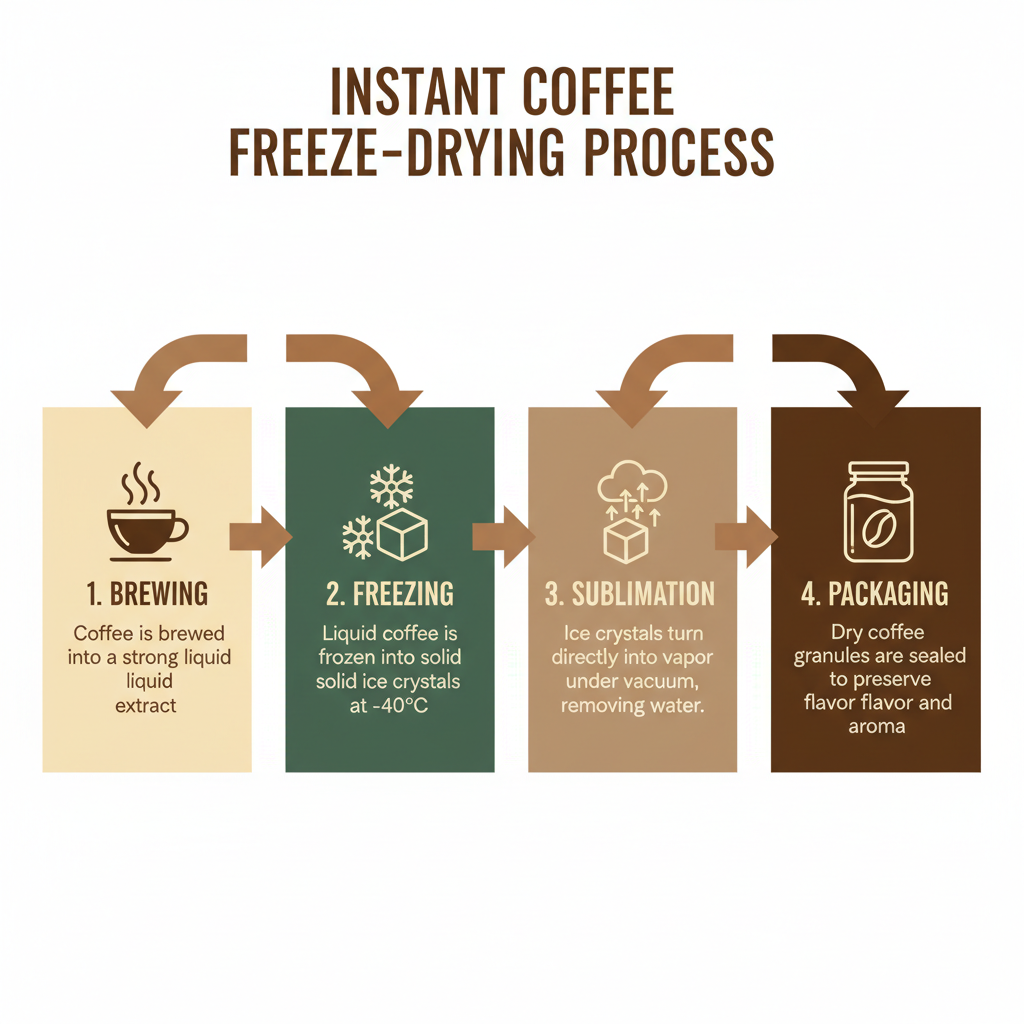
- Brewing: High-quality coffee is brewed into a strong concentrate.
- Freezing: The concentrate is frozen to roughly -40°F (-40°C).
- Sublimation: The frozen coffee is placed in a vacuum chamber. The ice turns directly into vapor (skipping the liquid phase), leaving behind perfectly preserved coffee crystals.
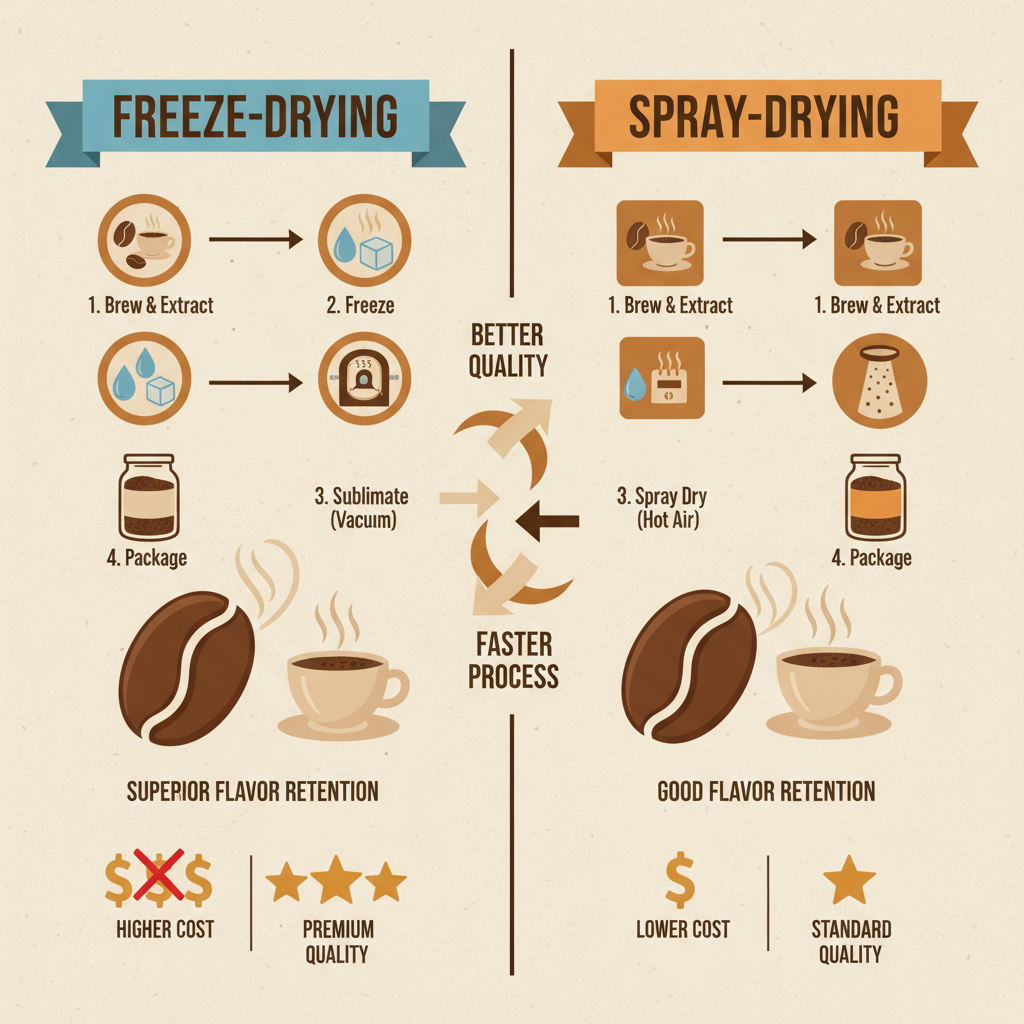
- Visual: A flow chart starting with green beans roasting.
- Step 1: Brewing – A giant vat of rich, dark liquid coffee.
- Step 2: Freezing – The liquid turning into a solid slab of coffee ice on a conveyor belt.
- Step 3: Grinding – The frozen slab is broken into small granules.
- Step 4: Vacuum Chamber – Granules enter a futuristic-looking chamber where moisture evaporates.
- Step 5: The Result – Large, jagged, gold-brown crystals fall into a jar.
- Key Takeaway: Low heat = High flavor retention.
Because freeze dried instant coffee avoids high heat during the drying process, it preserves the volatile compounds that give coffee its aroma and complexity.
How to Choose the Best Instant Coffee for You
Not all jars are created equal. Here is a checklist to ensure you buy a winner.
1. Check the Bean Type
Always look for “100% Arabica.” Robusta beans are cheaper and have higher caffeine, but they often taste rubbery and bitter. Arabica beans provide the smooth, complex flavors you actually want to taste.
2. Look at the Packaging
Glass jars are great for home, but single-serve sachets are superior for freshness. Once a jar is opened, humidity can degrade the crystals. If you travel often, instant iced coffee packets or single-serve sticks are the way to go.
3. Read the Origin
Just like whole beans, single-origin instant coffees (e.g., Ethiopia, Colombia) will have distinct flavor profiles. A “blend” is usually designed for consistency, while a single origin offers a unique tasting experience.
4. Decaf Considerations
If you are sensitive to acid, you might wonder, is decaffeinated coffee acidic? Generally, decaf coffee is slightly less acidic than regular coffee because the decaffeination process often removes some acidic compounds along with the caffeine. However, the roast level matters more. Darker roasts tend to be lower in acid than light roasts.
Comparison Table: Top Instant Coffee Brands
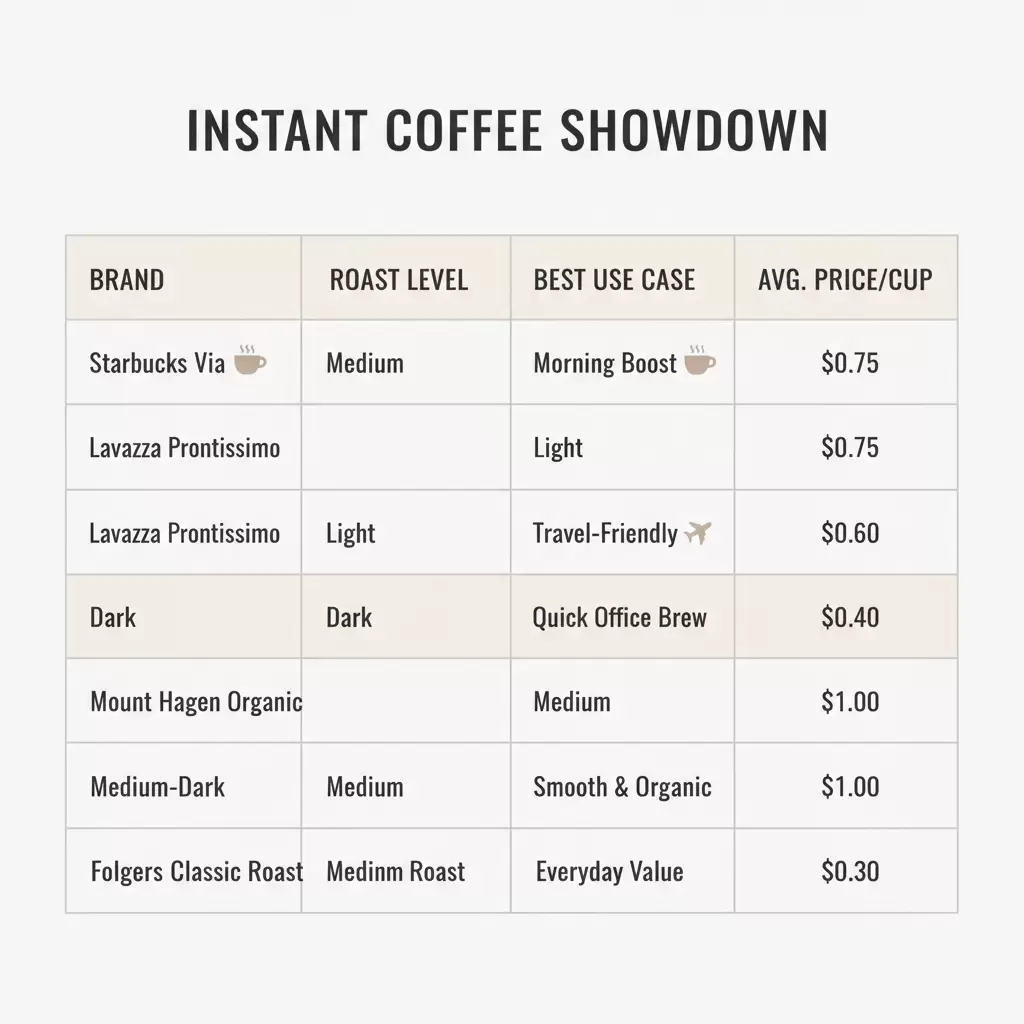
| Brand | Roast Level | Process | Best Use Case | Avg. Price Per Cup |
|---|---|---|---|---|
| Swift Cup | Light-Medium | Freeze-Dried | Pour-over replacement | $2.50 |
| Mount Hagen | Medium | Freeze-Dried | Daily organic drinker | $0.40 |
| Alpine Start | Medium | Spray-Dried (Premium) | Camping & Hiking | $1.20 |
| Blue Bottle | Espresso | Freeze-Dried | Premium Decaf/Lattes | $2.00 |
| Café Bustelo | Dark | Spray-Dried | Iced Coffee/Baking | $0.15 |
| Starbucks Via | Medium/Dark | Microground | Office/Travel | $0.85 |
5 Ways to Hack Your Instant Coffee
Even the best instant coffee can be improved with a few simple tricks. Stop settling for mediocrity and start brewing like a barista.
1. Dissolve in Cold Water First
This sounds counterintuitive, but trust the process. Pour a teaspoon of cold water over your granules and stir into a paste before adding hot water. This protects the granules from being shocked by boiling water, which can sometimes bring out a bitter taste.
2. Watch Your Temperature
Never use boiling water (212°F). It scorches the coffee. Aim for water around 195°F–205°F. If you don’t have a variable temperature kettle, just let your boiled water sit for a minute before pouring.
3. Add a Pinch of Salt
If you are stuck with a cheaper brand that tastes overly bitter, add a tiny pinch of salt. Salt blocks the bitter receptors on your tongue, making the coffee taste smoother and bringing out natural sweetness.
4. The Instant Mocha
Combine your instant coffee with a packet of hot chocolate mix for a backcountry mocha. This is a favorite trick for hikers using the best instant coffee for camping.
5. Froth It Up
You don’t need an espresso machine to make a latte. Dissolve your instant coffee in a small amount of hot water to make a “shot.” Then, froth heated milk (or oat milk) using a handheld frother or a French press and pour it over the coffee shot.
Health Benefits of Instant Coffee
Is instant coffee good for you? The short answer is yes. It contains nearly the same antioxidants and nutrients as regular coffee.
- Antioxidants: Instant coffee is high in antioxidants, which fight inflammation and free radicals.
- Lower Caffeine (Usually): Instant coffee generally contains slightly less caffeine per cup than brewed coffee, which can be beneficial for those trying to moderate their intake.
- Metabolism Boost: Like regular coffee, the caffeine in instant coffee can boost metabolic rate and help burn fat.
- Brain Function: It improves brain function and alertness, just like your standard drip brew.
Conclusion: The Instant Revolution is Here
The stigma is gone. The best instant coffee of 2026 is a triumph of food science and culinary passion. It offers a bridge between the convenience we need and the quality we crave. Whether you are waking up in a tent on a mountain ridge, rushing to a morning meeting, or simply enjoying a quiet moment at home, there is a freeze-dried option that will delight your palate.
It is time to clear space in your pantry next to the grinder and the filters. Instant coffee has earned its place at the table.
Ready to explore the world of premium flavors and find the perfect roast for your morning routine? Visit www.flavorsuggest.com for in-depth reviews, brewing guides, and curated recommendations for every coffee lover.
Frequently Asked Questions (FAQ)
1. What is the absolute best instant coffee?
While taste is subjective, Swift Cup and Blue Bottle are widely regarded as the highest quality due to their careful sourcing and freeze-drying methods. For a grocery store staple, Mount Hagen is a top contender.
2. Is freeze-dried coffee better than spray-dried?
Yes. Freeze dried instant coffee is processed at low temperatures, which preserves the natural oils and flavor compounds of the bean. Spray-dried coffee is exposed to high heat, which often results in a burnt, bitter taste.
3. Does instant coffee have less caffeine?
Generally, yes. A cup of instant coffee usually has about 60-80mg of caffeine, while a cup of fresh-brewed coffee contains roughly 80-120mg. However, this varies by brand and serving size.
4. How long does instant coffee last?
Instant coffee has an incredibly long shelf life. An unopened jar can last for years (often 2-20 years depending on packaging). Once opened, it should be consumed within a few months to prevent moisture from spoiling the flavor.
5. Can I make iced coffee with instant coffee?
Absolutely. Many brands sell instant iced coffee packets specifically for this, but regular freeze-dried granules work great too. Dissolve the granules in a splash of warm water first, then add cold water and ice.
6. Is decaffeinated coffee acidic?
Is decaffeinated coffee acidic? Yes, but slightly less so than regular coffee. The decaffeination process often reduces acidity levels. Dark roast decaf will be the least acidic option for sensitive stomachs.
7. What is the best instant coffee for camping?
Alpine Start is a favorite among campers because it dissolves easily in cold water and comes in lightweight, durable packets. Starbucks Via is another popular, accessible choice.
8. Why does my instant coffee taste sour?
Sourness usually indicates under-extraction (in brewing) or high acidity beans. In instant coffee, it might mean the water wasn’t hot enough, or the brand uses high-acid beans. Try using slightly hotter water or switching to a darker roast.
9. Can I use instant coffee for baking?
Yes! Instant coffee is actually preferred for baking (like in brownies or chocolate cake) because it dissolves into the batter without adding excess liquid, intensifying the chocolate flavor.
10. Is instant coffee bad for your kidneys?
For most people, moderate consumption is safe. However, instant coffee contains roughly twice as much acrylamide (a chemical formed during roasting) as fresh coffee, though amounts are still within safe limits. As always, consult a doctor for specific health concerns.