Granulated Garlic vs Garlic Powder: Uses, Benefits, and Trends for 2026
You reach for the garlic in your spice cabinet, but your hand hovers between two bottles: granulated garlic and garlic powder. They look similar, but are they the same? This small choice can make a big difference in your final dish, affecting everything from flavor distribution to texture. Many home cooks and even professional chefs use them interchangeably, missing out on the unique strengths each form offers.
This guide will settle the “granulated garlic vs garlic powder” debate once and for all. We’ll explore what makes each one unique, how to use them for the best results, and why choosing the right one is a secret weapon in the kitchen. By the end, you’ll know exactly which form of this essential spice to grab for any recipe, from dry rubs to delicate sauces.

What is Granulated Garlic?
Granulated garlic is a dehydrated form of garlic that has been ground into coarse particles, similar in texture to cornmeal or sand. For a detailed look at how garlic is dehydrated, see the UC Davis Postharvest Technology Center’s guide on garlic dehydration. The UC Davis Postharvest Technology Center provides a detailed overview of garlic dehydration and processing methods. Learn more about the commercial dehydration process for garlic from UC Davis Postharvest Technology Center. It offers a convenient way to add garlic’s signature flavor to dishes without the hassle of peeling and mincing fresh cloves.
How are Garlic Granules Made?
The process begins with fresh garlic cloves, which are dehydrated to remove their moisture content. Once thoroughly dried, the cloves are ground into small, uniform granules. Unlike garlic powder, the grinding process is stopped before the particles become a fine dust. This careful processing ensures that granular garlic retains a more robust, less-intense flavor compared to its powdered counterpart.
Key Characteristics
- Texture: Coarse and sandy.
- Flavor: Mellow, well-rounded garlic flavor that is less pungent than garlic powder.
- Dispersal: Mixes well in liquids without clumping, making it ideal for sauces, soups, and marinades.
Granulated Garlic vs Garlic Powder: A Detailed Comparison
While both come from dried garlic, their differences in texture and production lead to distinct culinary applications. Understanding these nuances is key to mastering your spice rack.
The Core Differences
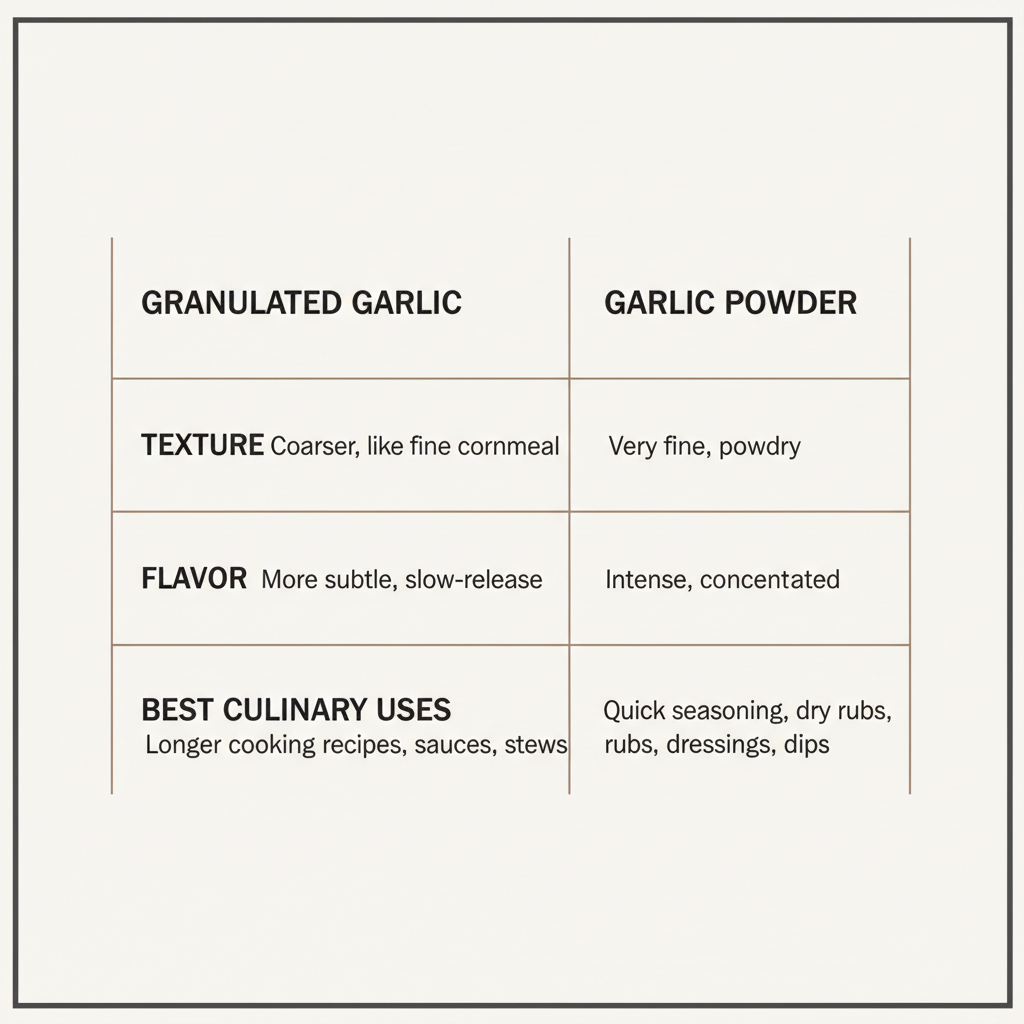
| Feature | Granulated Garlic | Garlic Powder |
|---|---|---|
| Texture | Coarse, like cornmeal or sand | Fine, like flour or talcum powder |
| Flavor Profile | Mellow, balanced, and slightly sweet garlic taste | Intense, sharp, and potent garlic punch |
| Best For | Liquid-based recipes, dry rubs, and general seasoning | Quick-cooking dishes and when you need a strong flavor |
| Clumping | Less prone to clumping in liquids or high humidity | Clumps easily, especially when added to hot liquids |
Substitution Tips
You can substitute one for the other, but you need to adjust the quantity. Since garlic powder has a finer grind, its flavor is more concentrated.
- Substituting Powder for Granules: If a recipe calls for 1 teaspoon of granulated garlic, use only ½ to ¾ teaspoon of garlic powder.
- Substituting Granules for Powder: If a recipe calls for 1 teaspoon of garlic powder, use 1 ½ teaspoons of granulated garlic to achieve a similar flavor intensity.
Benefits of Granulated Garlic and Garlic Powder
Beyond convenience, both forms of dried garlic offer significant advantages in the kitchen and for your health.
Culinary Benefits
- Long Shelf Life: When stored properly in a cool, dark place, both can last for up to 3-4 years, far longer than fresh garlic.
- Consistent Flavor: Dried garlic provides a reliable and consistent flavor profile, which can be difficult to achieve with fresh cloves that vary in size and intensity.
- No Prep Time: Skip the peeling, chopping, and sticky fingers. Dried garlic is ready to use straight from the jar.
- Reduces Burning: Fresh minced garlic can burn quickly in hot oil, creating a bitter taste. Granulated garlic and garlic powder are more forgiving, especially in high-heat applications like grilling.
Health Benefits
Dried garlic retains many of the health benefits found in fresh garlic. The key compound, allicin, is still present, although in different concentrations. Regular consumption of garlic, in any form, has been linked to improved heart health, boosted immune function, and anti-inflammatory properties.
How to Use Granulated Garlic in Cooking
Granulated garlic is incredibly versatile. Its coarse texture makes it a go-to for recipes where you want even flavor distribution without the risk of clumping.
Perfect Pairings and Recipe Ideas
- Dry Rubs and Spice Blends: The larger particles of granular garlic mix evenly with other spices like paprika, cumin, and black pepper. It’s an essential ingredient for barbecue rubs for chicken, pork, and beef.
- Soups and Stews: Sprinkle it into broths and stews during the simmering process. The granules will dissolve slowly, infusing the entire dish with a gentle garlic flavor.
- Marinades and Dressings: Because it resists clumping, granulated garlic is perfect for whisking into oil-and-vinegar-based marinades and salad dressings.
- Garlic Bread and Toppings: Mix granulated garlic with melted butter to brush over bread. It also works wonderfully sprinkled over roasted vegetables or potatoes before they go into the oven.
Organic Garlic Powder: Why It’s Worth It
In recent years, the demand for organic garlic powder has soared, as highlighted by research on the benefits of organic spices from reputable sources. Consumers are increasingly aware of how their food is produced, and the organic label provides an assurance of quality and purity.
Benefits of Choosing Organic
- No Synthetic Pesticides or Fertilizers: Organic garlic is grown without the use of harmful chemicals, which is better for both the environment and your body, as supported by Harvard’s Nutrition Source on organic foods.
- Non-GMO: Certified organic products are, by definition, not genetically modified. You can be confident you are getting a natural product.
- Often Better Flavor: Many chefs and home cooks report that organic spices, including garlic powder, have a more vibrant and authentic flavor profile. This is often because they are grown in healthier, nutrient-rich soil.
Top Organic Brands for 2025
When shopping for organic garlic powder, look for brands that prioritize transparency and quality sourcing. Brands like Simply Organic, McCormick Gourmet Organic, and Frontier Co-op consistently receive high marks for their potent flavor and commitment to sustainable practices.
Frequently Asked Questions (FAQs)
Q: Is granulated garlic the same as garlic salt?
A: No. Granulated garlic is 100% dehydrated garlic. Garlic salt is a blend of granulated garlic (or garlic powder) and salt, often with an anti-caking agent. Do not use them interchangeably, as garlic salt will make your dish much saltier.
Q: Can you rehydrate garlic granules?
A: Yes. You can rehydrate garlic granules by soaking them in a small amount of warm water for a few minutes. This can be useful for recipes where you want a texture closer to fresh minced garlic, like in a salsa or dip.
Q: Which is better for rubs, granulated garlic or garlic powder?
A: Most professional pitmasters prefer granulated garlic for rubs. Its larger particles adhere well to meat and distribute more evenly with other spices, preventing clumping and ensuring a balanced flavor crust.
Q: Does organic garlic powder have more health benefits?
A: While the core nutritional profile is similar, organic garlic powder ensures you are not ingesting residual pesticides. For those focused on a clean diet, the peace of mind and potentially richer nutrient content from healthier soil make it a worthwhile choice.
Conclusion
The choice between granulated garlic and garlic powder is not about which one is better, but which one is right for the job. Granulated garlic shines in liquids and rubs with its non-clumping nature and mellow flavor, while garlic powder delivers a quick, intense punch perfect for fast-cooking dishes. For more on the best ways to use each, check out this comprehensive culinary guide on dried garlic forms (opens in a new tab). By understanding their distinct characteristics, you can elevate your cooking and use this pantry staple to its full potential.
Stocking both in your spice cabinet ensures you’re prepared for any culinary challenge. Take a moment to experiment with each, and you’ll quickly discover how this simple knowledge can profoundly impact the flavor and texture of your favorite meals.
Ready to find the perfect spice for your next creation? Explore our collection of premium spices at [www.flavorsuggest.com] and take your cooking to the next level.