The Ultimate Guide to Bene Olive Oil (2026)
In a world filled with countless olive oils, it is rare to find one that truly stands out. Many promise quality, but few deliver an experience that delights both the palate and the eye. This is where Bene Olive oil carves its own niche. Hailing from the sun-drenched groves of Spain, Beneoliva combines award-winning extra virgin olive oil with stunning, hand-painted ceramic bottles, creating a product that is as much a piece of art as it is a culinary staple.
This is not just another bottle to hide in your pantry. It is a centerpiece, a conversation starter, and a gateway to understanding what makes premium olive oil so special. Whether you are a seasoned chef or a home cook looking to elevate your dishes, this guide will explore everything you need to know about Bene Olive Oil. We will uncover its unique qualities, its surprising health benefits, and even what to do with those beautiful painted olive oil bottles once they are empty.
What Makes Bene Olive Oil So Special?
The secret to Bene Olive’s exceptional quality lies in its commitment to a single, superior olive variety and a meticulous production process. While many brands blend different oils, Beneoliva focuses on perfecting one: the Arbequina.
The Arbequina Advantage
The Arbequina olive is a small, highly aromatic olive native to Spain. It is prized for producing a smooth, buttery oil with a distinctively fruity and slightly sweet profile. According to the International Olive Council, Arbequina olives are especially valued for yielding delicate, aromatic oils with mild bitterness and exceptional flavor stability. Unlike more pungent, peppery oils, Beneoliva olive oil is light and delicate, making it incredibly versatile.
- Flavor Profile: You will notice notes of apple, banana, and a hint of almond. It has a very low bitterness and a gentle, peppery finish that does not overpower food.
- Aroma: It has a fresh, fruity fragrance that smells like a freshly cut olive grove.
- Versatility: Its mild flavor makes it perfect for everything from drizzling over salads to baking cakes.
From Grove to Bottle: The Production Process
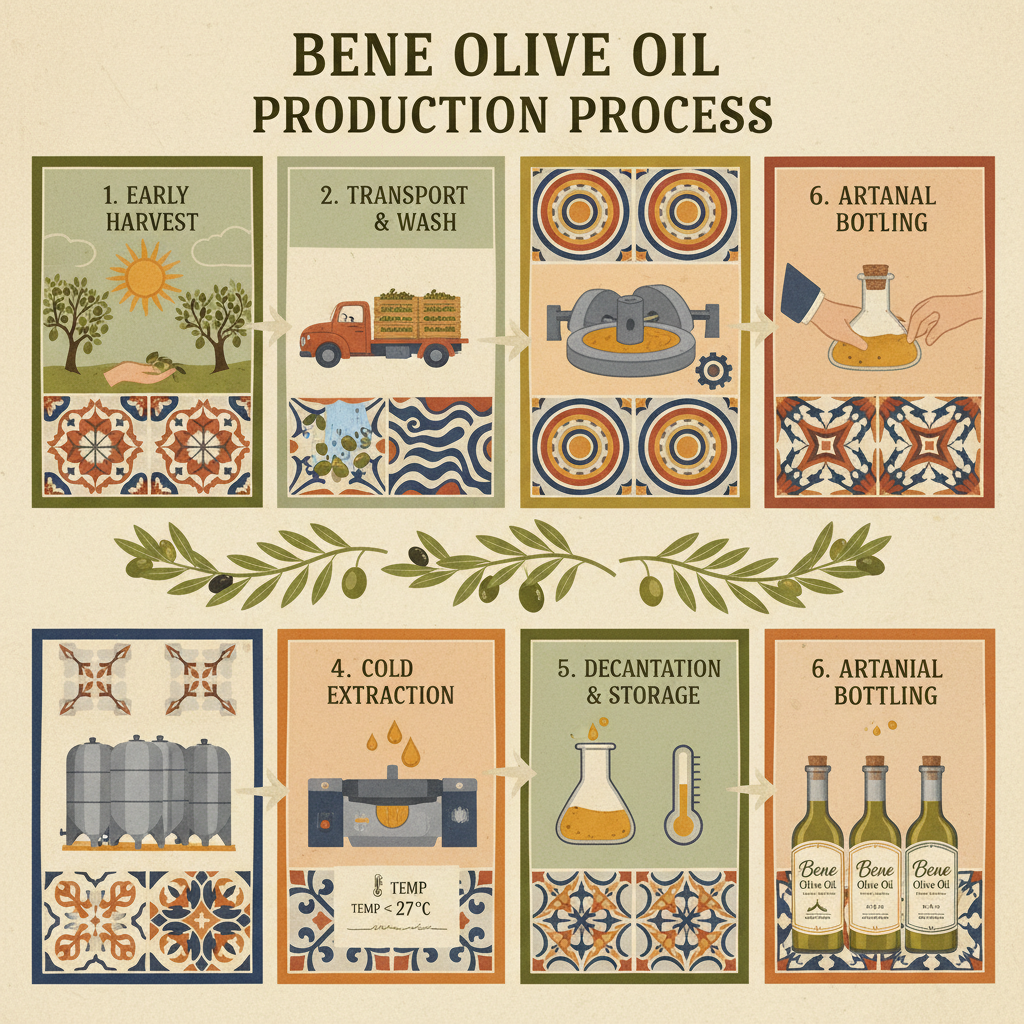
Beneoliva takes pride in its “cold extraction” method, a modern term for what used to be called “cold pressed.” This process ensures the oil is never heated above 27°C (80.6°F) during extraction.
(Infographic Description: A visual flow chart showing the Bene Olive Oil production process.)
- Step 1: Early Harvest. Olives are picked while still green, when their polyphenol content is highest, resulting in a healthier and more flavorful oil.
- Step 2: Immediate Pressing. Within hours of harvesting, the olives are taken to the mill to prevent oxidation and preserve freshness.
- Step 3: Cold Extraction. The olives are crushed into a paste and slowly churned. The oil is then separated using a centrifuge, all without the use of heat or chemicals.
- Step 4: Storage. The fresh oil is stored in stainless steel tanks in a temperature-controlled environment to protect it from light and air.
- Step 5: Artisanal Bottling. The final product is bottled in beautiful, opaque ceramic containers that not only look good but also protect the oil from light damage.
The Art of the Painted Olive Oil Bottles
Let’s be honest: the bottle is what first catches your eye. These hand-painted ceramic containers are more than just pretty packaging. Opaque materials like ceramic are ideal for preserving olive oil, as they block the two things that degrade its quality fastest: light and heat. Each bottle is a keepsake, designed to be refilled or repurposed, adding a touch of Spanish charm to your kitchen.
Health Benefits of High-Quality Extra Virgin Olive Oil
The praise for extra virgin olive oil is not just culinary hype; it is backed by science. A high-quality oil like Bene Olive is packed with compounds that can significantly benefit your health.
Rich in Heart-Healthy Monounsaturated Fats
The primary fatty acid in olive oil is a monounsaturated fat called oleic acid, which makes up about 73% of its content. Studies show that oleic acid can help reduce inflammation and may have beneficial effects on genes linked to cancer. It is a cornerstone of the Mediterranean diet, long associated with longevity and lower rates of heart disease. For an in-depth, science-backed overview of these benefits, see the Harvard T.H. Chan School of Public Health’s guide to olive oil and cardiovascular health.
Loaded with Antioxidants and Polyphenols
Extra virgin olive oil contains powerful antioxidants, particularly polyphenols. These compounds fight oxidative stress in the body, which is a major driver of chronic diseases like heart disease and type 2 diabetes. The slight peppery kick you taste in the back of your throat is from a polyphenol called oleocanthal, which has anti-inflammatory properties similar to ibuprofen.
May Help Protect Against Cognitive Decline
Some research suggests that a diet rich in extra virgin olive oil may support brain health. The antioxidants can combat the oxidative stress that contributes to the degeneration of brain cells. This is a key reason why the Mediterranean diet is often recommended for protecting against conditions like Alzheimer’s disease.
How to Choose the Best Olive Oil: A Quick Guide
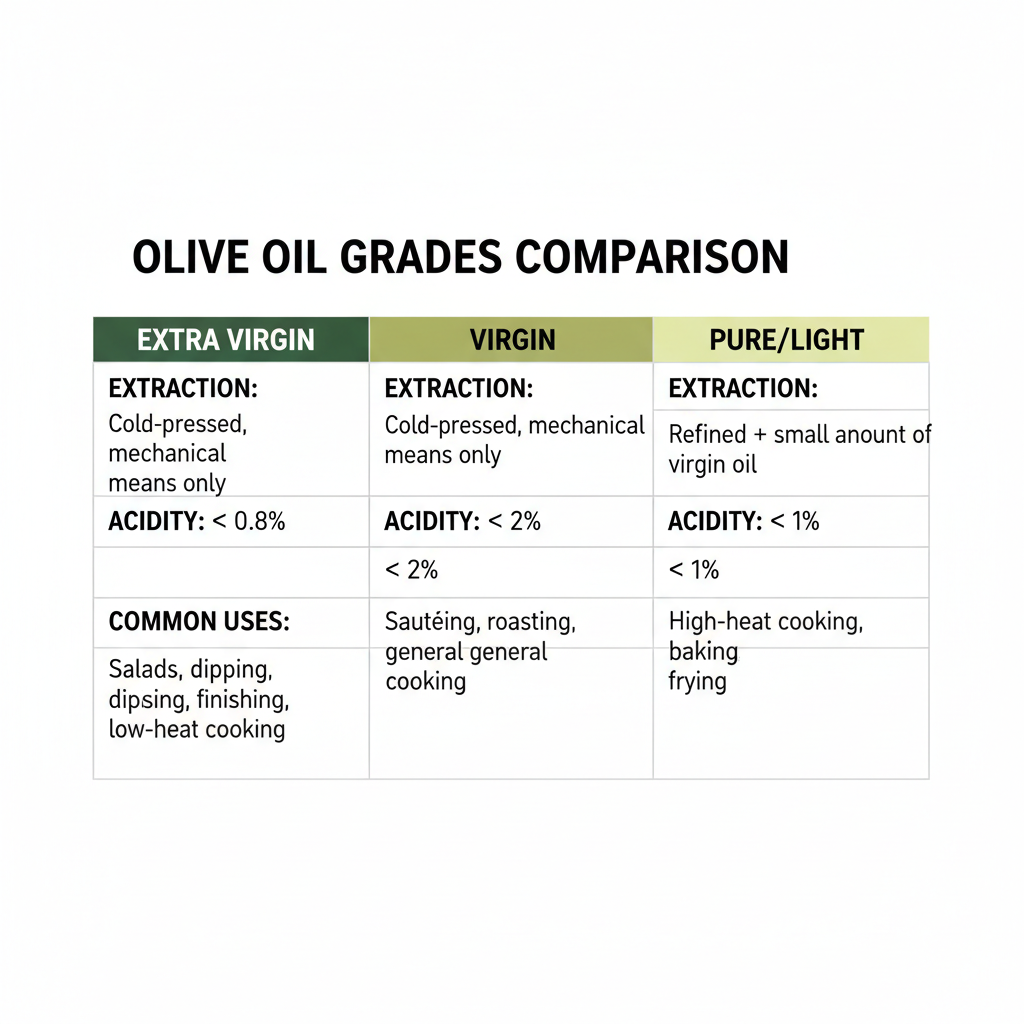
The olive oil aisle can be confusing. “Light,” “pure,” “virgin,” “extra virgin” what does it all mean? Here’s a simple breakdown to help you choose wisely. For a thorough overview of olive oil grades and quality, see this guide from the UC Davis Olive Center.
Olive Oil Grades Explained
| Oil Grade | Extraction Method | Acidity Level | Common Uses |
|---|---|---|---|
| Extra Virgin | Cold-pressed, no chemicals | < 0.8% | Drizzling, dressings, dipping, low-heat sautéing |
| Virgin | Cold-pressed, no chemicals | < 2.0% | General cooking |
| Pure / Light | Heat/chemical processing | > 2.0% | High-heat cooking, frying |
For the best flavor and maximum health benefits, always choose Extra Virgin Olive Oil. This is the highest grade, indicating the oil is unrefined and of the purest quality. Beneoliva olive oil is an extra virgin oil, ensuring you get the best of both taste and nutrition.
Tips for Buying and Storing
- Check the Bottle: Always buy olive oil in a dark glass or opaque container (like Bene Olive’s ceramic bottles). Clear bottles expose the oil to light, which causes it to go rancid quickly.
- Look for a Harvest Date: A harvest or “best by” date gives you an idea of freshness. Olive oil is best consumed within 18-24 months of harvesting.
- Store It Properly: Keep your olive oil in a cool, dark place like a pantry. Do not store it next to the stove, as heat will degrade its quality.
Creative Uses for Painted Olive Oil Bottles
Once you have enjoyed the delicious bene olive oil, you are left with a beautiful ceramic bottle. Instead of recycling it, why not give it a new life? These painted olive oil bottles are perfect for upcycling.
Here are a few creative ideas:
- A Stylish Flower Vase: The narrow neck is perfect for holding a few elegant stems.
- A Refillable Soap Dispenser: Simply add a pump top, and you have a chic dispenser for your kitchen or bathroom.
- A Candle Holder: The sturdy base makes it a great holder for long, tapered dinner candles.
- DIY Kitchen Herb Garden: Fill the bottle with water and place herb cuttings like basil or mint inside to root.
- A Centerpiece Collection: Group several empty bottles of different designs together to create a rustic, artistic centerpiece for your dining table.
Frequently Asked Questions (FAQs)
1. What does Beneoliva olive oil taste like?
It has a very smooth, buttery, and fruity flavor profile with notes of apple and almond. It is not bitter or overly peppery, making it extremely versatile and palatable.
2. Is Bene Olive Oil good for cooking?
Yes, but it is best for low-to-medium heat cooking, such as sautéing vegetables or making sauces. Its delicate flavor is best preserved when used as a finishing oil for drizzling over salads, pasta, or fish.
3. Are the painted bottles dishwasher safe?
It is best to hand-wash the ceramic bottles to preserve the hand-painted designs. Use warm, soapy water and a bottle brush to clean the inside.
4. Where is Bene Olive Oil produced?
Beneoliva is produced in the Vega Baja del Segura region of Alicante, Spain, an area known for its citrus and olive groves.
5. What is the difference between Arbequina and Picual olives?
Arbequina olives (used in Beneoliva) produce a sweet, fruity oil. Picual olives, another popular Spanish variety, produce a more robust, peppery oil with a bitter finish.
6. Why is extra virgin olive oil more expensive?
The cost reflects the labor-intensive harvesting process, the low-yield “cold extraction” method, and the superior quality and health benefits of the final product.
7. Does olive oil expire?
Yes, olive oil is best used within two years of its harvest date. Over time, it loses its flavor and antioxidant properties. Always store it away from light and heat.
8. Can I use Bene Olive Oil for baking?
Absolutely! Its mild, buttery flavor works wonderfully in baked goods like cakes, muffins, and even brownies, often creating a moister result than butter.
9. Are there flavored versions of Bene Olive Oil?
Yes, Beneoliva offers a range of aromatic oils infused with natural flavors like white truffle, black truffle, lemon, garlic, and chili.
10. Where can I buy Bene Olive Oil?
You can find it at specialty food stores, select retailers like World Market, and various online shops.
Conclusion: More Than Just Oil
Bene Olive proves that a kitchen staple can be both functional and beautiful. From its premium, single-origin Arbequina oil to its stunning, reusable ceramic bottles, every detail is crafted with care. It offers a taste of Spanish tradition, a wealth of health benefits, and a piece of art for your countertop.
Whether you use it to create a delicate vinaigrette, sauté fresh vegetables, or simply dip a piece of crusty bread, Beneoliva olive oil elevates the everyday. It is a reminder that the best products are born from quality ingredients, thoughtful processes, and a touch of beauty.
Ready to explore more exquisite flavors and find your next favorite ingredient? Visit www.flavorsuggest.com for more guides, recipes, and culinary inspiration.