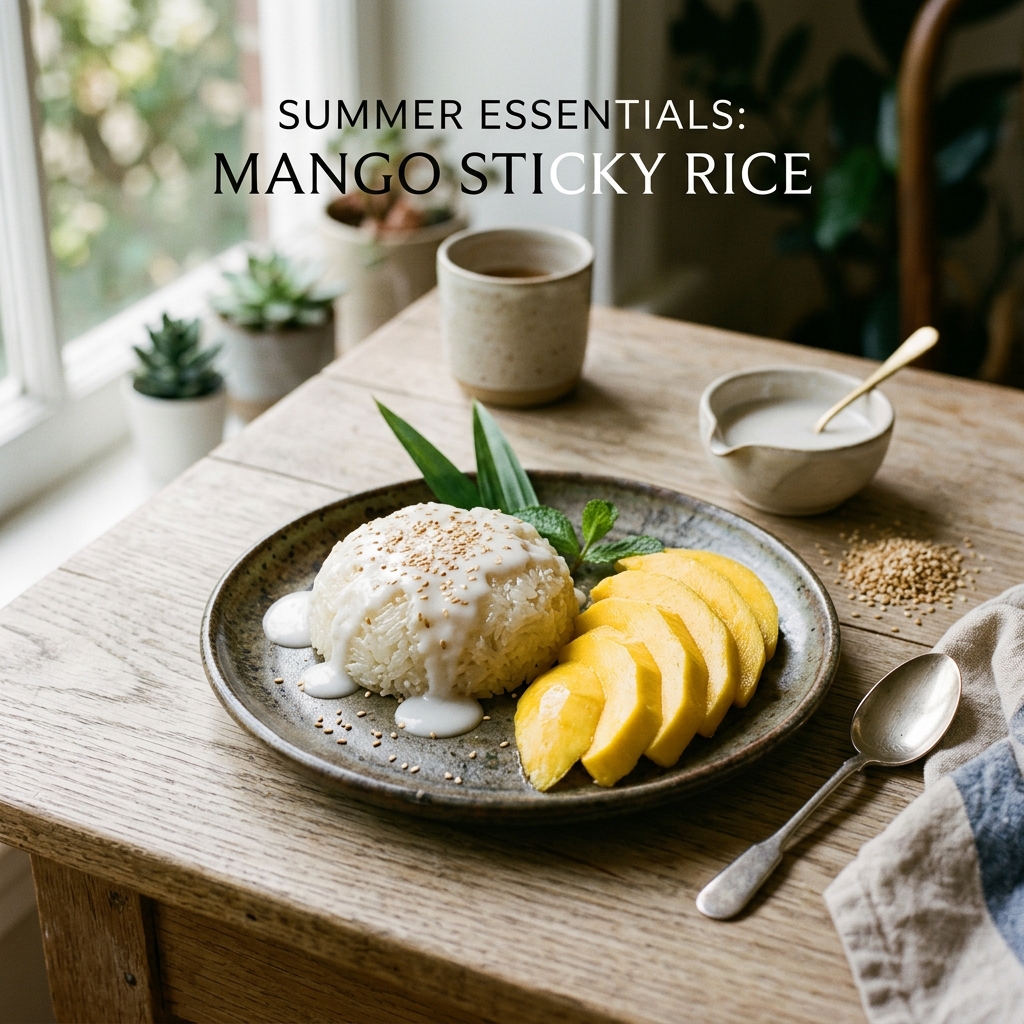
Mango Sticky Rice: The Flavor-First Guide to Thailand’s Sweetest Treat
The first bite of real mango sticky rice tends to stop people mid-sentence. The rice is warm, chewy, and softly sweet. The coconut drizzle on top tastes a little salty, which sounds odd until your tongue tells you it is exactly right. Then a slice of ripe mango melts against all of it, bright and juicy. That mix of sweet, salty, soft, and fragrant is why this dish has fans all over the world.
Mango sticky rice is a classic Thai dessert made from steamed glutinous (sticky) rice soaked in sweet coconut milk, topped with a salty coconut sauce, and served beside fresh ripe mango. In Thai it is called khao niao mamuang. At FlavorSuggest, where we rank and break down flavors all day, we think it is one of the most perfectly balanced desserts on the planet.
Here is what you will find below: a real flavor breakdown, the best mango types, both an authentic and an easy recipe, honest calorie info, tips for finding good versions locally, and what to stock in your kitchen.
What Is Mango Sticky Rice?
Mango sticky rice is a Thai dessert built from three or four simple parts. You steam glutinous rice, soak it in warm sweet coconut milk, top it with a thicker salted coconut sauce, and serve it next to slices of fresh mango. Some cooks add crispy mung beans or toasted sesame seeds for crunch.
The rice is not regular rice. It is sticky (glutinous) rice, sometimes labeled “sweet rice,” and it gets steamed instead of boiled. That gives it a plump, chewy, almost mochi-like bite that holds the coconut without turning to mush.
The dish is popular across Southeast Asia and shows up on most Thai menus in the United States, especially in spring and summer when mangoes peak. The flavor is gentle and layered, not loud, which is part of why it wins people over so fast.

The Flavor Profile: Why It Tastes So Good
Coconut mango sticky rice works because of contrast. Most desserts go all-in on sugar. This one builds tension between sweet and salty, then lets ripe mango break the tie.
Here is how each part plays on your palate:
- The rice: Warm, chewy, gently sweet. It carries a soft coconut aroma and gives the dish its satisfying weight.
- The salty coconut sauce: This is the secret. A pinch of salt in the coconut cream stops the dessert from tasting flat. It adds richness and makes everything taste deeper.
- The mango: Bright, floral, and juicy. Ripe mango brings acidity and perfume that cut through the creamy rice.
- The crunch (optional): Crispy mung beans or toasted sesame seeds add a toasty snap against all that softness.
When the mango is perfect, the whole plate sings. When the mango is bland or stringy, even great rice cannot save it. Flavor lives or dies on that fruit. That is also why the texture matters so much. The chew of the rice, the silk of the sauce, and the juicy give of the mango create a back-and-forth that keeps each spoonful interesting.
Best Mango for Mango Sticky Rice
The best mangoes are sweet, soft, low-fiber types like Ataulfo (also called Manila or Champagne mango). In Thailand, cooks reach for nam dok mai or ok rong mangoes. In the United States, Ataulfo is the closest and easiest match.
Skip the large, firm, fibrous mangoes like Tommy Atkins. They taste flat and stringy here, and they drag the whole dessert down.
A ripe mango should give slightly when you press it, smell sweet near the stem, and may show a few wrinkles. If your mangoes are still firm, tuck them in a paper bag for a few days.
| Mango Type | Texture | Sweetness | Best for Sticky Rice? |
|---|---|---|---|
| Ataulfo / Manila / Champagne | Smooth, low fiber | Very sweet, floral | Yes, top pick in the US |
| Nam Dok Mai (Thai) | Silky, no fiber | Sweet, fragrant | Yes, the classic choice |
| Ok Rong (Thai) | Soft | Rich, honeyed | Yes, traditional favorite |
| Tommy Atkins | Firm, fibrous | Mild, sometimes tart | No, too stringy |
| Kent / Keitt | Juicy, some fiber | Sweet | Okay in a pinch |
The aroma is your best clue. A great mango smells like sweet perfume from a foot away. If it smells like nothing, the flavor will be just as quiet on the plate.
Authentic Thai Mango Sticky Rice Recipe
This thai mango sticky rice recipe stays close to how it is made in Thailand. It needs some soaking time, but the steps are simple. Plan ahead for the rice soak.
Serves 4 to 6
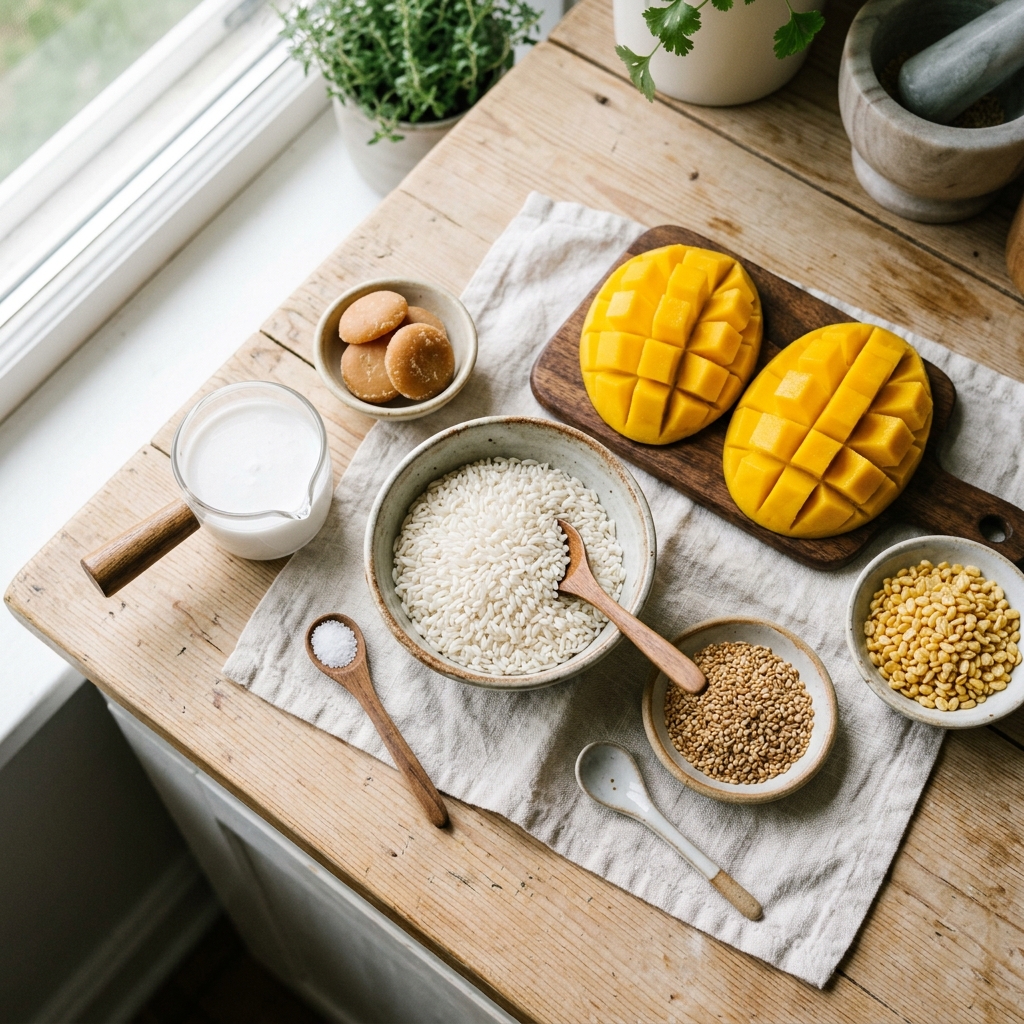
Ingredients:
- 1 cup Thai white glutinous (sweet) rice
- 1 (14 oz) can full-fat coconut milk, divided
- 1/2 cup sugar, divided
- 1/2 teaspoon salt, divided
- 1 teaspoon rice flour or cornstarch
- 2 to 3 ripe Ataulfo mangoes, sliced
- Toasted sesame seeds or crispy split mung beans (optional)
Steps:
- Soak the rice. Rinse until the water runs mostly clear, then soak in room-temperature water for at least 4 hours or overnight. This step sets up the right chew.
- Steam the rice. Drain well. Line a bamboo steamer with a damp cloth or cheesecloth, add the rice, and steam over boiling water for 20 to 25 minutes until tender.
- Make the sweet syrup. Warm about two-thirds of the coconut milk with most of the sugar and a pinch of salt. Heat just until it bubbles, then turn off.
- Soak the rice in syrup. Move the hot rice to a bowl, pour the hot syrup over it, stir, cover, and rest 20 minutes. Both rice and syrup should be hot for proper absorption.
- Make the salty sauce. Simmer the rest of the coconut milk with a larger pinch of salt and the rice flour slurry until it thickens. This drizzle should taste salty, not sweet.
- Serve. Mound the rice, lay sliced mango alongside, drizzle the salty sauce, and finish with sesame seeds or mung beans.
The reward is that authentic balance: plump sweet rice, a salty-creamy top, and bright mango. Taste as you go. The sweet syrup should be rich, and the top sauce should taste noticeably salty on its own, since the mango brings the sweetness back into line.
Easy Mango Sticky Rice (No Steamer Needed)
You do not need fancy gear for easy mango sticky rice. If you do not own a steamer, you can rig one or lean on a rice cooker.
No-steamer method: Place three balls of foil in the bottom of a pot, add a little water, set a heatproof plate of soaked rice on the foil, cover, and steam 20 to 30 minutes once it boils. A square of cheesecloth under the rice keeps it from sticking to the plate.
Rice cooker method: Soaked sticky rice cooks well in many rice cookers using the steam setting or a roughly equal rice-to-water ratio. Check at 20 minutes for that tender, chewy bite.
For the fastest easy mango sticky rice, make one combined batch of sweetened coconut milk, stir most of it into the cooked rice, and save a salty splash for the top. It is not as layered as the two-sauce method, but it still tastes great when your mango is ripe. Even with shortcuts, the flavor rules hold: keep salt in the coconut, and use sweet, soft mango. A handful of toasted sesame seeds on top adds an easy nutty crunch that makes a quick version feel finished.
Mango Sticky Rice Calories and Nutrition
Mango sticky rice calories usually land between about 280 and 420 per serving, depending on portion size, sugar, and how much coconut milk you use. Restaurant plates tend to sit at the higher end because they are generous with coconut cream and sugar.
The number swings for real reasons:
- Coconut milk is rich in fat, which adds calories fast. Full-fat versions push the total up.
- Sugar in both the rice and sauce climbs quickly.
- Portion size is the biggest variable. A small scoop is far lighter than a heaping plate.
The mango itself is light. The heavier mango sticky rice calories come from the coconut milk and sugar, not the fruit. The mango still brings vitamin C and a little fiber, which is a nice bonus in a sweet treat.
Is it healthy? Treat it as a treat. It is sweet and rich, so enjoy a sensible portion if you are tracking mango sticky rice calories, and savor every bite. If you want to trim the count a little at home, you can lighten the sugar slightly, but do not cut the salt. That salt is what keeps the flavor balanced and stops the dish from tasting one-note.
How to Find Good Mango Sticky Rice Near You
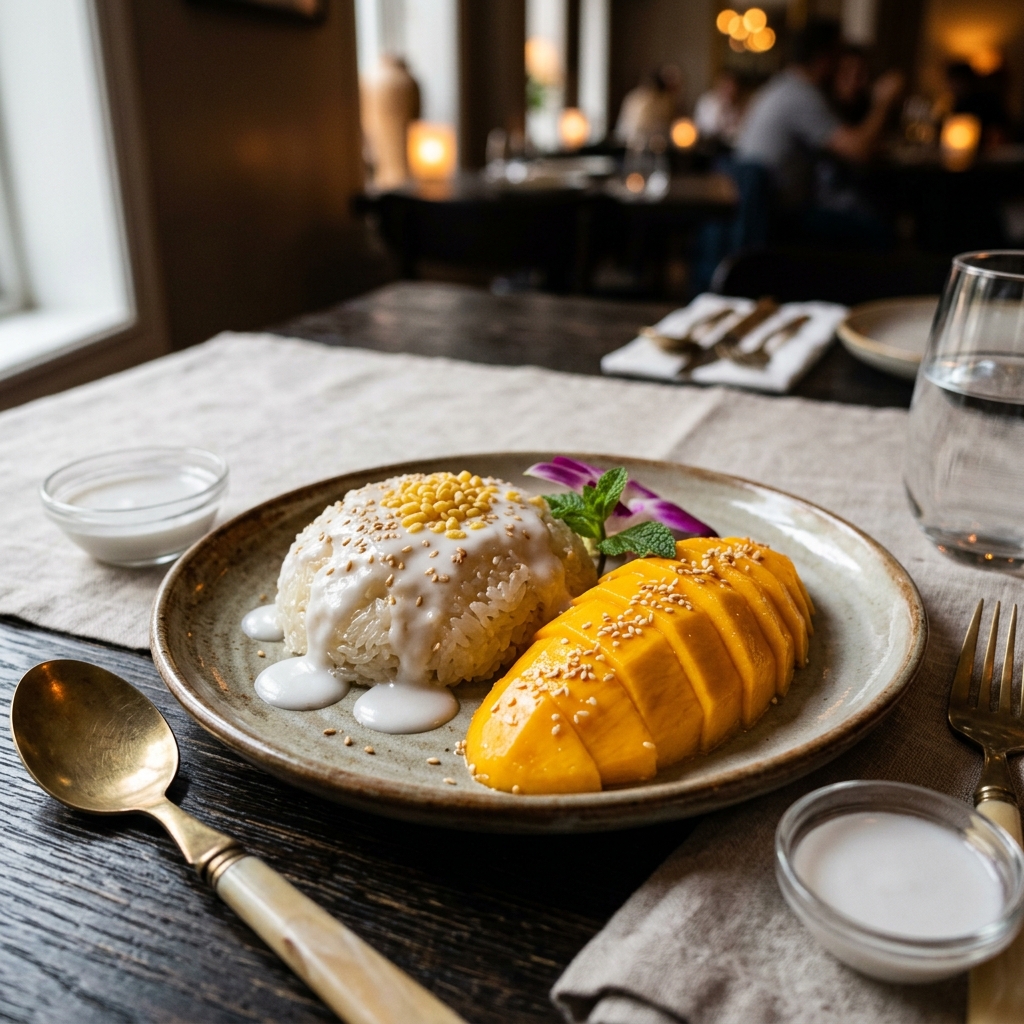
To answer those mango sticky rice near me searches, look to Thai restaurants, Thai dessert shops, and Asian markets, especially during mango season from roughly March to July. The best plates come from places that take their mango seriously.
When you order out, judge quality by these signs:
- The mango is ripe and fragrant, not firm, pale, or stringy.
- The rice is chewy and shiny, not dry, hard, or mushy.
- The coconut sauce tastes salty-sweet, not just sugary.
If you are hunting mango sticky rice near me on a maps app, sort by reviews and scan photos for bright orange-yellow mango. A shop that specializes in Thai sweets often beats a general restaurant. During the off-season, expect quality to dip, since any mango sticky rice near me result is only as good as the fruit that week.
Common Mistakes to Avoid
A few simple errors ruin more batches than anything else:
- Using bad mango. Firm, fibrous, or underripe fruit kills the dish. Choose Ataulfo and let it fully ripen.
- Skipping the soak. Sticky rice needs hours of soaking, or it stays hard in the center.
- Boiling instead of steaming. Boiled sticky rice turns gummy. Steam it.
- Forgetting the salt. Without salt in the coconut, the dessert tastes flat and one-note.
- Over-saucing. Too much liquid makes the rice soupy. It should be plump and shiny, not swimming.
Fix these five things and your coconut mango sticky rice will taste like the real deal. Most home cooks who feel let down by their first try made one of these slips, usually the mango or the missing salt.
Storage and Reheating
Mango sticky rice tastes best the day you make it, but leftovers store fine. Keep the rice, sauce, and mango separate when you can.
- Refrigerate cooked sticky rice for up to about 3 days in a sealed container.
- Freeze portions wrapped tightly for up to a month.
- Reheat by covering the rice with a damp paper towel and microwaving until piping hot, breaking it up halfway for even heat. The rice softens again only when fully reheated.
- Store mango separately and add it fresh, since it does not reheat well.
Play it safe with cooked rice. Chill leftovers promptly and keep them cold rather than leaving them out at room temperature for long stretches.
Final Thoughts
Mango sticky rice earns its fame through balance, not sugar overload. Here are the takeaways worth keeping:
- Flavor comes from contrast: sweet rice, salty coconut sauce, and bright ripe mango.
- The mango makes or breaks it. Choose soft, sweet Ataulfo and let it fully ripen.
- You have options: an authentic thai mango sticky rice recipe or an easy mango sticky rice shortcut both deliver.
- Mind your portion if you are tracking mango sticky rice calories, since coconut milk and sugar drive the count.
Make it at home or use these tips to find a great plate near you. For more flavor breakdowns and honest taste rankings, keep exploring Flavor Suggest. We taste, test, and rank so your next bite is your best one.
Frequently Asked Questions
What is mango sticky rice made of?
Mango sticky rice is made from steamed glutinous (sticky) rice soaked in sweetened coconut milk, topped with a salty coconut sauce, and served beside slices of fresh ripe mango. Some cooks add crispy mung beans or toasted sesame seeds for crunch. In Thai it is called khao niao mamuang, and it is one of the most popular desserts across Southeast Asia.
Is mango sticky rice healthy?
Mango sticky rice is best treated as a sweet, rich treat rather than a health food. Most of the calories come from coconut milk and sugar, while the mango adds vitamin C and a little fiber. Enjoy a sensible portion and savor it, especially if you are watching your sugar or calorie intake.
How many calories are in mango sticky rice?
Mango sticky rice usually has between about 280 and 420 calories per serving, depending on portion size, sugar, and the amount of coconut milk used. Restaurant versions tend to sit at the higher end because they are generous with coconut cream and sugar. Portion size is the biggest factor, so a small scoop is far lighter than a heaping plate.
What is the best mango for mango sticky rice?
The best mangoes are sweet, soft, low-fiber types like Ataulfo (also called Manila or Champagne mango), which is the easiest match in the United States. In Thailand, cooks favor nam dok mai or ok rong mangoes. Avoid firm, fibrous mangoes like Tommy Atkins, since they taste flat and stringy in this dish.
Is mango sticky rice served warm or cold?
Mango sticky rice is traditionally served warm or at room temperature, with the rice freshly steamed and still soft. The mango is served fresh and cool alongside it, which adds a nice contrast against the warm, creamy rice. If you reheat leftovers, the rice softens again only once it is fully heated through.
Can you make mango sticky rice without a steamer?
Yes, you can make mango sticky rice without a steamer. Place three balls of foil in the bottom of a pot, add a little water, set a heatproof plate of soaked rice on the foil, cover, and steam for 20 to 30 minutes once it boils. A rice cooker on the steam setting also works well—just check at 20 minutes for that tender, chewy bite.
Is mango sticky rice gluten free?
Mango sticky rice is naturally gluten free, despite the name “glutinous rice.” Glutinous simply describes the sticky, glue-like texture of the rice and has nothing to do with wheat gluten. Just double-check any optional thickeners or toppings, and choose cornstarch over wheat-based ingredients if you need to keep it strictly gluten free.
Why is the coconut sauce on mango sticky rice salty?
The coconut sauce is salty on purpose, and it is the secret to the dish’s balance. A pinch of salt in the coconut cream stops the dessert from tasting flat and one-note, adding richness and depth instead. The salty top sauce plays against the sweet rice and bright mango, which is what makes each spoonful so satisfying.
Where can I find good mango sticky rice near me?
Look for mango sticky rice at Thai restaurants, Thai dessert shops, and Asian markets, especially during mango season from roughly March to July. Judge quality by the fruit: the mango should be ripe and fragrant, the rice chewy and shiny, and the coconut sauce salty-sweet rather than just sugary. On a maps app, sort by reviews and scan photos for bright orange-yellow mango, since shops that specialize in Thai sweets often beat general restaurants.