Korean Fried Chicken: The Complete Flavor Guide (Recipe, Sauces & What Makes It So Addictive)
You order it once, maybe at a late-night spot with friends or from a delivery box that arrives still hot. You bite through the crust and it shatters. Not crumbles, not flakes, shatters. There is sauce underneath, sticky and warm, with heat that builds slowly behind the sweet. A faint garlic burn sits at the back of your throat for minutes afterward. You reach for another piece before you have finished thinking about the first one.
That is Korean fried chicken, and at Flavor Suggest, we believe it may be the most technically perfect fried food in the world. This guide, written by the FlavorSuggest Editorial Team, breaks down exactly why it works: the science of the crust, the anatomy of every major sauce, how it compares to American fried chicken, and how to make it at home with the right ingredients.
Korean fried chicken (known in Korean as chikin, or 치킨) is a South Korean style of fried chicken defined by a thin, ultra-crispy coating achieved through a double-frying method, typically finished with bold glazes like sweet chili or soy garlic. It differs from Western-style fried chicken in its lighter batter, its twice-fried crust, and its sauce-forward flavor philosophy.
Why Korean Fried Chicken Has a Different Flavor From Every Other Style
The difference starts with the batter and ends with the sauce, and it all comes down to a deliberate design choice.
Most American-style fried chicken uses a thick flour-and-egg coating, often soaked in buttermilk, seasoned inside the batter with herbs, garlic powder, and salt. The crust is dense and golden, with its own strong flavor. It is rich, bread-like, deeply satisfying in its own way.
Korean fried chicken takes the opposite approach. The batter is thin, almost translucent when raw, built from potato starch instead of wheat flour. Potato starch crisps differently. It creates a rigid, glass-like shell rather than a soft, cakey one. That shell fractures when you bite it. There is a physical snap you feel in your jaw, a clean break that sends flavor straight to the surface of your tongue.
The coating itself is nearly flavorless, and that is entirely on purpose. It exists only to carry the sauce without going limp. Every flavor decision was made to serve the glaze that comes after.
Then comes the double fry. The first round cooks the chicken through at a lower temperature. The second round, at higher heat, drives off the remaining surface moisture and locks the crust into that signature rigidity. The result is a piece of chicken that stays crispy longer than almost any other style, even after being coated in a sticky, liquid sauce.
The eating experience goes in order: crack, then juice, then sweetness, then building heat, then a slow garlic warmth that lingers pleasantly on the back of the palate.
Korean Fried Chicken Sauce: A Flavor Guide to Every Major Style
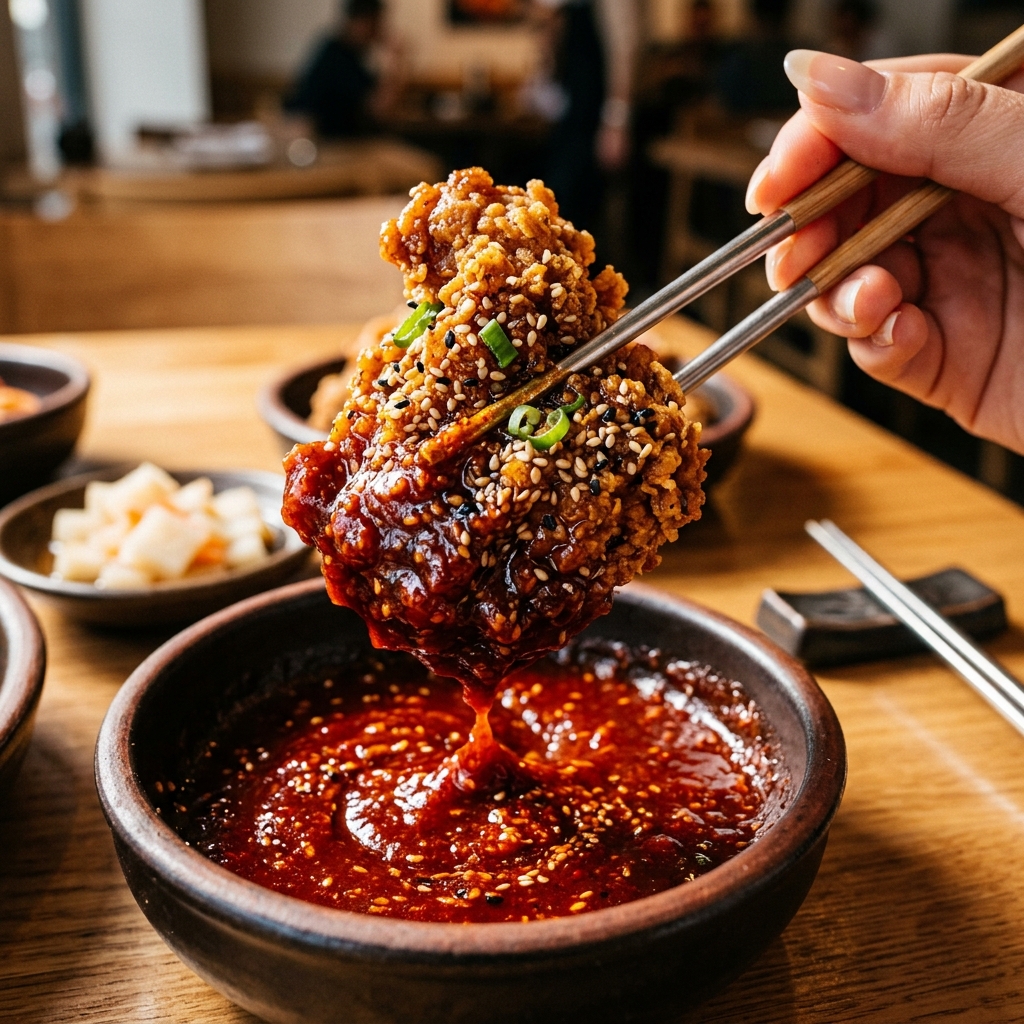
The sauce is where the dish becomes personal. Different sauces produce completely different eating experiences, even though the crust beneath is identical.
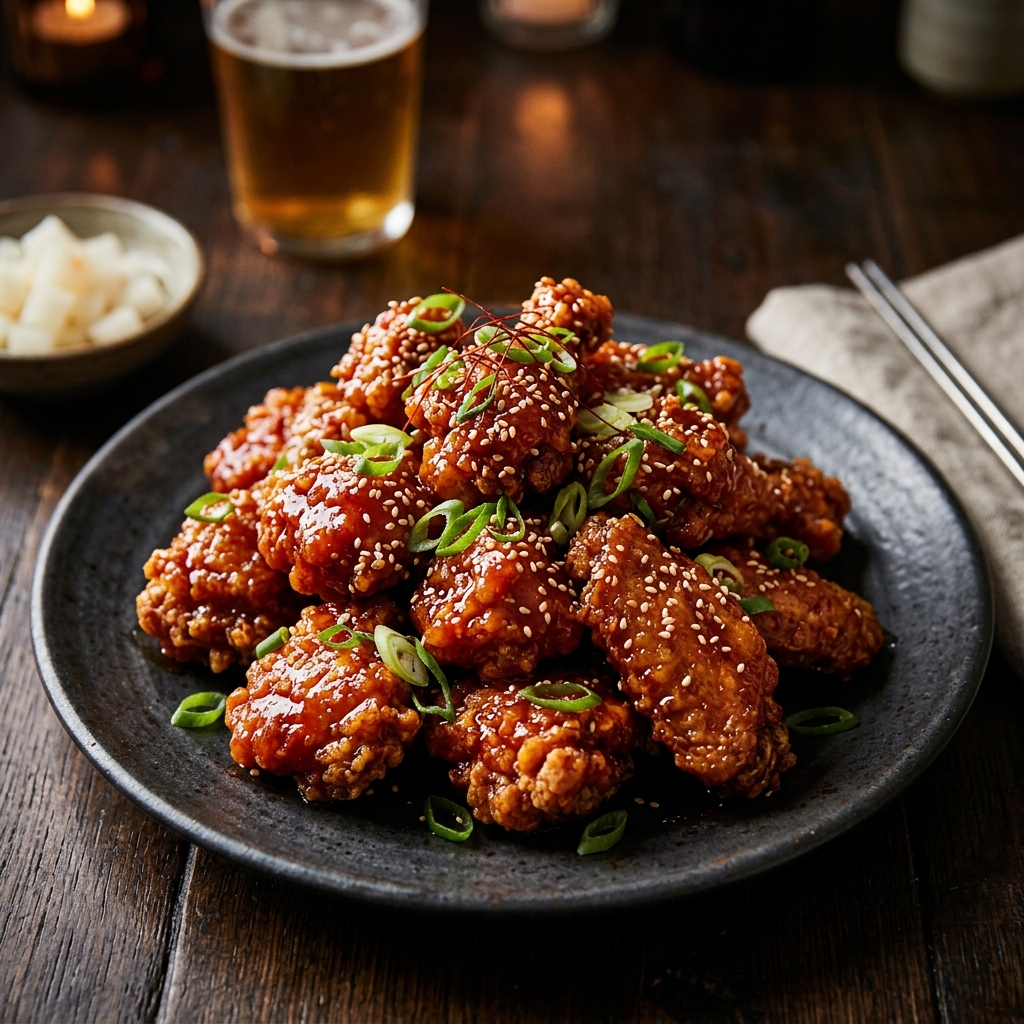
Yangnyeom (양념) is the sauce most people picture when they hear Korean fried chicken. It is built from gochujang (fermented Korean chili paste), ketchup, honey, brown sugar, soy sauce, minced garlic, and sesame oil. The flavor arrives in waves: first sweet, almost candy-like, then a slow rolling heat from the gochujang, then a savory garlic note, then a faint toasted sesame finish. It is sticky and glossy. It coats every ridge of the crust and soaks into the edges just enough to create contrast between crispy and sauced spots. This is the classic sweet spicy Korean fried chicken profile, and the one that most people become obsessed with.
Soy Garlic is cleaner and less fiery, but intensely savory. Made from soy sauce, garlic, sugar, and sometimes a small amount of butter or oyster sauce. The garlic is front and center, slightly caramelized from the heat of the sauce. This one converts people who think they don’t like spicy food. It is warm and deeply umami, with a faint sweetness that keeps the salt from overpowering.
Dakgangjeong (닭강정) is technically an older, separate dish, though it is often included on Korean fried chicken menus. Made with whole dried chilies, vinegar, soy sauce, and sugar, it has a sharper, more tangy heat than yangnyeom. Less sticky, more lacquered. The vinegar cuts through the richness and leaves your palate cleaner between bites.
Honey Butter arrived in Korea during the snack food craze of the 2010s. Sweet, buttery, no real heat. Popular with kids and useful as a contrast when ordering half-and-half. The flavor is mild enough to highlight the quality of the crust itself.
Plain (Naked) is just the double-fried chicken with no sauce, served with a dipping sauce on the side. A good piece of naked Korean fried chicken should taste clean, lightly savory, and faintly rich from the fry. This version shows you whether the kitchen actually knows what it is doing, because there is nothing to hide behind.
If you are searching for the best Korean fried chicken near me, most major chains like Bonchon, bb.q Chicken, and Kyochon let you mix sauce styles. Order half soy garlic and half yangnyeom on your first visit. You get both major flavor profiles side by side and can decide which direction you want to go from there.
Korean vs. American Fried Chicken: A Direct Comparison
| Feature | Korean Fried Chicken | American Fried Chicken |
|---|---|---|
| Batter type | Thin potato starch or rice flour | Thick wheat flour, eggs, often buttermilk |
| Frying method | Double-fried (two rounds) | Typically single-fried |
| Crust texture | Glass-thin, shattery, rigid | Dense, bread-like, golden |
| Flavor strategy | Sauce is the main flavor vehicle | Seasoning is built into the batter |
| Common sauces | Yangnyeom, soy garlic, honey butter, dakgangjeong | Buffalo, honey mustard, ranch served on the side |
| Typical cuts | Whole chicken, wings, and boneless bites | All cuts: thighs, breasts, tenders, wings |
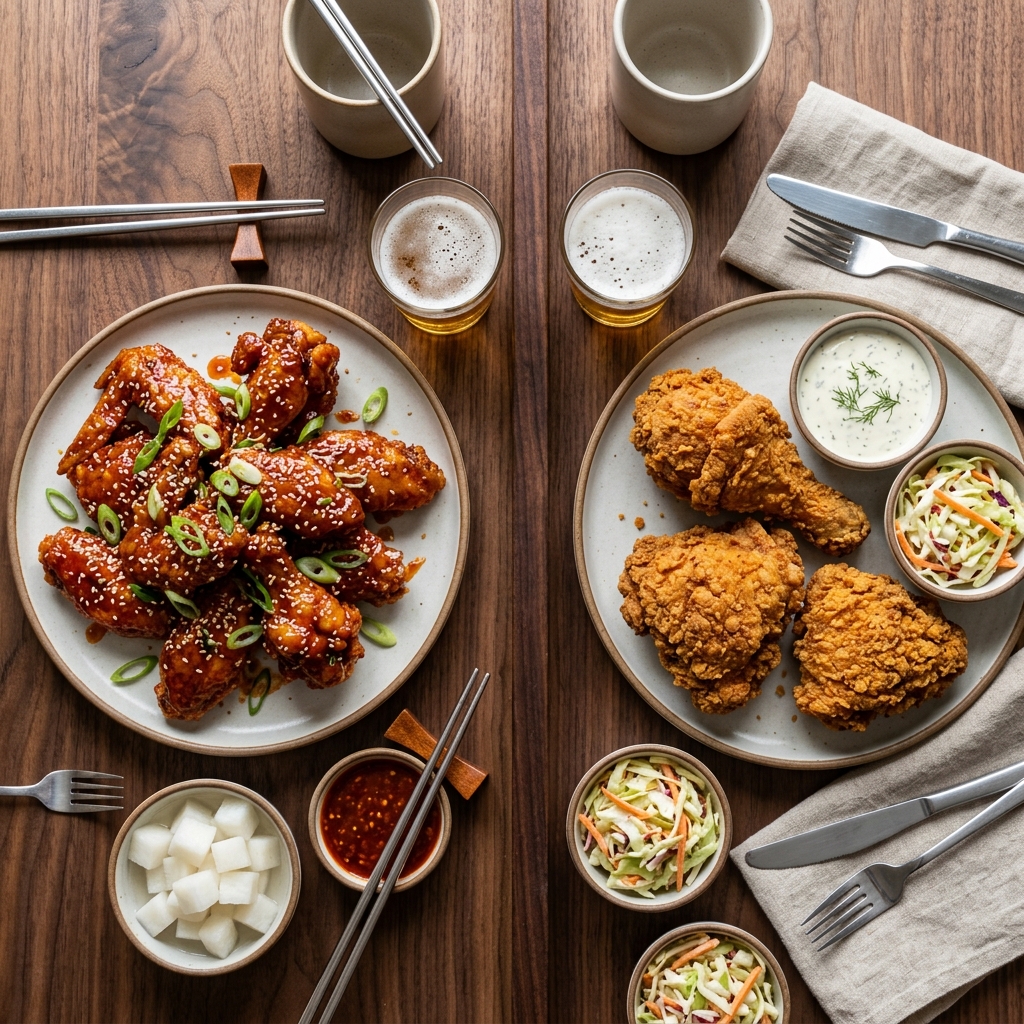
| Serving context | Shared plates, often paired with beer (chimaek) | Individual meals, family buckets, fast food |
| Heat level | Mild to very spicy depending on sauce choice | Mild to extreme (Nashville hot style) |
| Sauce application | Tossed or hand-brushed onto the finished crust | Dipped at the table by the eater |
The biggest flavor difference, when you place them side by side, is about direction. American fried chicken flavor comes from inside the coating. Korean fried chicken flavor comes from what is painted on the outside. Neither approach is superior. They are solving different problems. American-style asks: how do we make the coating itself delicious? Korean-style asks: how do we make the coating the perfect vehicle for sauce?
For more deep-dive flavor comparisons across global dishes, explore FlavorSuggest.
How to Make Korean Fried Chicken at Home: A Recipe Built Around Flavor
A great korean fried chicken recipe is less about following steps and more about understanding what each step is doing to the flavor and texture.
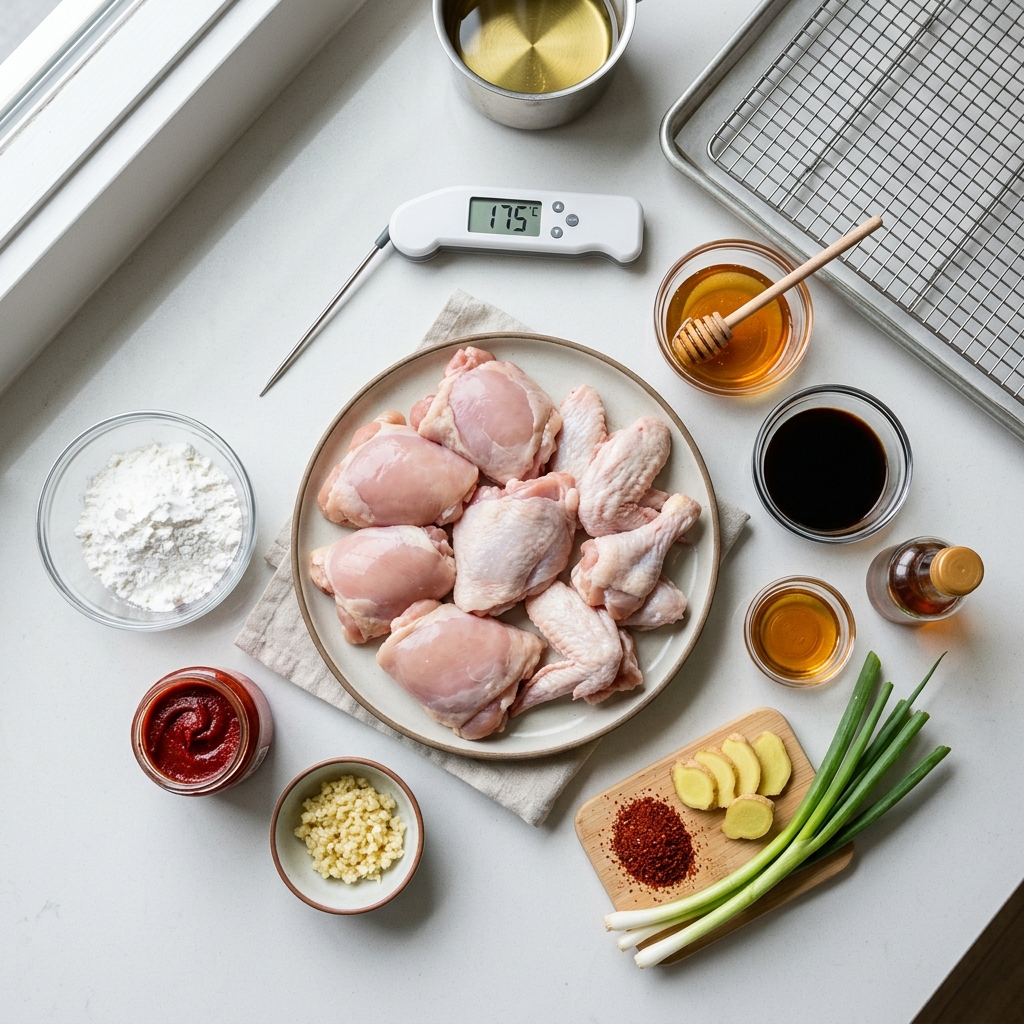
Step 1: The marinade. Place chicken pieces (wings, drumsticks, or boneless thighs all work) in a bowl with 2 tablespoons rice wine, 1 teaspoon grated fresh ginger, 1 teaspoon salt, half a teaspoon black pepper, and a small pinch of garlic powder. Mix well and let it sit for at least 30 minutes. The rice wine tenderizes the meat and removes any gamey odor. The ginger adds a faint warmth you won’t be able to identify by name, but you will notice its absence if you skip it.
Step 2: The coating. Use potato starch, not all-purpose flour. Coat each piece evenly but lightly. You want a thin, even layer with no clumps. Shake off the excess. The thinner the coating, the crisper and more delicate the crust will be.
Step 3: The first fry. Heat a generous amount of neutral oil, such as vegetable or rice bran oil, in a deep saucepan to 325°F. Use a reliable frying thermometer to monitor the temperature. Fry the chicken in batches for 4 to 5 minutes. Do not crowd the pan. The goal here is to cook the interior fully. Pull the chicken out and place it on a wire rack, not paper towels. Paper towels trap steam and soften the crust. A wire rack lets air circulate around every side.
Step 4: The second fry. Raise the oil temperature to 375°F. Fry the chicken again for 2 to 3 minutes until the crust is deeply golden and rigid. The internal temperature of the chicken must reach 165°F. The USDA FSIS recommends 165°F as the safe minimum internal temperature for all poultry. The CDC notes that about 1 million Americans get sick each year from contaminated poultry, so checking that internal temperature is worth the 5 seconds it takes.
Step 5: The yangnyeom sauce. In a small saucepan over low heat, combine 2 tablespoons gochujang, 3 tablespoons ketchup, 3 tablespoons honey, 2 tablespoons brown sugar, 2 tablespoons soy sauce, 2 tablespoons minced garlic, and 1 tablespoon sesame oil. Stir and heat until just bubbling. Pull it off the heat immediately. Toss the hot fried chicken in the sauce and serve right away. The sauce should cling, not pool.
For a plain soy garlic version, replace the gochujang, ketchup, and honey with 3 tablespoons soy sauce, 1.5 tablespoons sugar, 1 tablespoon minced garlic, and half a tablespoon of butter. Simmer until slightly thick. The result is a cleaner, quieter flavor that lets the crunch do more of the talking.
What Korean Fried Chicken Actually Feels Like to Eat
If you have never tried it, here is an honest sensory description.
The crust shatters cleanly. Not in the thick, crumbling way of Southern-style fried chicken, but in a sharp, brittle snap. You feel it in your jaw. It is satisfying in a physical way that is hard to describe without sounding dramatic.
Below the crust, the meat is juicy. The double-fry method, which cooks low and slow from the inside on the first round, keeps the interior moist even as the exterior becomes dry and rigid. There is almost no greasiness in a well-made piece. The oil cooked out during the second fry.
With sweet spicy Korean fried chicken, the first flavor you register is sweetness. It reads almost like candy on the front of your tongue, which sounds overwhelming but isn’t, because the gochujang heat arrives almost immediately after. The heat from gochujang doesn’t spike. It builds. By the third or fourth bite, you are reaching for another piece precisely because the warmth is satisfying rather than punishing.
The garlic in the sauce moves to the back of your palate and stays there for minutes. The ketchup in the yangnyeom reads as acidity, not as ketchup flavor specifically. The sesame oil leaves a faintly nutty, roasted note at the very end of each bite, which is what makes the finish feel complete rather than just hot and sweet.
It is a layered, sequential flavor experience. That sequence is designed, not accidental. And it is why people who try it once tend to want it again within a week.
Finding the Best Korean Fried Chicken Near Me: What to Actually Look For
Chain restaurants are a reliable starting point when searching for the best Korean fried chicken near me. Bonchon hand-brushes every piece individually with sauce rather than tossing the chicken in a bowl, which produces a more even crust-to-sauce ratio. bb.q Chicken fries at lower temperatures for longer periods, which the brand says creates a lighter, more delicate texture. Kyochon trends leaner and more soy-forward, with less sweetness than most yangnyeom styles.
The better find, if you can locate one, is an independent Korean chicken shop. Look for places where the menu is short, the signage is partially or entirely in Korean, and the wait is longer than 20 minutes on weekday evenings. That wait usually means each order is made fresh rather than held under a lamp. Ask if they offer half-and-half orders. Almost every serious spot does, and it is the best way to compare flavor profiles on a first visit.
Signs of a well-made piece: the crust holds its shape when you pick it up and does not flex or go limp. The sauce is glossy and clings to the surface rather than pooling at the bottom of the box. The meat pulls away from the bone cleanly without being dry.
Korean Fried Chicken FAQ
What is Korean fried chicken?
Korean fried chicken is a South Korean style of fried chicken made with a thin potato starch coating, fried twice for an ultra-crispy crust, and typically finished with bold sauces like sweet chili or soy garlic. The double-frying technique and sauce-forward flavor philosophy set it apart from most Western styles.
What makes Korean fried chicken so crispy?
The crispiness comes from two things working together: potato starch batter and the double-fry method. Potato starch creates a thinner, more rigid crust than wheat flour. Frying twice, first at lower heat to cook the interior and then at higher heat to set the crust, removes excess moisture and produces the signature glass-like snap.
What sauce does Korean fried chicken use?
The most common Korean fried chicken sauce is yangnyeom, a sweet and spicy glaze built from gochujang, ketchup, honey, soy sauce, garlic, and sesame oil. Other popular options include soy garlic (savory, mild), dakgangjeong (tangy, sharper heat), and honey butter (sweet, no heat).
How is Korean fried chicken different from American fried chicken?
Korean vs. American fried chicken differs mainly in batter thickness, frying method, and flavor strategy. Korean uses thin potato starch batter and double-frying for crunch; American uses thick flour batter for a denser coating. American chicken seasons the batter itself; Korean chicken gets most of its flavor from the sauce applied after frying.
What internal temperature should Korean fried chicken reach?
According to the USDA FSIS, all poultry must reach a safe minimum internal temperature of 165°F (74°C). This applies to every cut, whether bone-in wings or boneless thighs. A reliable instant-read thermometer is the only accurate way to confirm this.
Can I make Korean fried chicken without gochujang?
You can substitute a mix of sriracha and a small amount of miso paste to approximate the fermented, spicy-sweet flavor of gochujang, though the result will taste noticeably different. Gochujang has depth that comes from months of fermentation. For the authentic sweet spicy Korean fried chicken experience, sourcing the real ingredient from a Korean grocery or online makes a clear difference.
Why is Korean fried chicken served with pickled radish?
Pickled radish (called chicken-mu) cuts through the richness and heat of the fried chicken. The cool, lightly sour, slightly sweet cubes reset your palate between bites, which is why Korean fried chicken restaurants include it almost universally. It is a functional flavor contrast, not just a garnish.
Is Korean fried chicken healthier than American fried chicken?
Korean fried chicken is still fried food and calorie-dense, with a yangnyeom serving running roughly 600 to 700 calories depending on portion and sauce. Its thinner batter generally absorbs less oil than thick-battered American styles, making it slightly lighter overall. The sauces, particularly sweet styles, can add significant sugar.
What is chimaek?
Chimaek is the Korean pairing of fried chicken (chi from chikin) and beer (maek from maekju). It is a popular social eating format, often late at night, either at a restaurant or ordered for delivery. Cold carbonated beer contrasts the hot sticky sauce in a way that has become deeply embedded in South Korean food culture.
How do I find good Korean fried chicken near me?
Search for Korean fried chicken chains like Bonchon, bb.q Chicken, or Kyochon on Google Maps or Yelp filtered by your city. For independent spots, look in Korean neighborhoods or food courts and read reviews that specifically mention crunchiness, fresh frying, and sauce quality rather than just overall rating scores.