Udon Noodles: The Complete Flavor Guide, Best Broth Pairings, and Top Picks for 2026
Here at Flavor Suggest, we spend a lot of time tracking down the best flavors, textures, and food experiences worth your time and money. Few noodles in the world deliver comfort as reliably as a bowl of udon. Thick, silky, and deeply satisfying, udon noodles have a way of making even a simple broth feel like a full meal.
Whether you are brand new to Japanese noodles or you have been slurping bowls for years, this guide covers everything: what udon actually tastes like, how to pick the right type, how it stacks up against ramen, and which products to grab online right now.
What are udon noodles? Udon are thick Japanese noodles made from wheat flour, water, and salt. They have a soft, chewy bite with a smooth, almost silky surface that holds broth beautifully. Udon noodles are most often served in a warm dashi-based soup, stir-fried with vegetables and protein, or eaten cold with a dipping sauce. The best udon broth is a light, umami-rich dashi base seasoned with soy sauce, mirin, and a touch of sugar.
What Do Udon Noodles Actually Taste Like?
This is the question most guides skip, so let us answer it clearly.
On their own, udon noodles taste mild and slightly wheaty. Their main appeal is not bold flavor but a dense, smooth chewiness that the Japanese call koshi. That bouncy, springy resistance when you bite into a good noodle is the whole point. A poorly made or overcooked udon turns soft and gummy. A great one snaps back.
The real flavor comes from what you pair them with. A classic best udon broth is built on dashi (a stock made from kombu seaweed and dried bonito flakes), seasoned with soy sauce and mirin. The result is a pale golden liquid that smells faintly of the sea and tastes of deep umami. It is savory, slightly sweet, and just salty enough to make the noodles sing.
Frozen Sanuki-style udon, from Kagawa prefecture in Japan, is widely considered the gold standard for texture. These noodles cook in about one minute from frozen and come out thick, firm, and satisfyingly chewy. If you find them at a Japanese grocery store or online, grab them.
Udon vs. Ramen: Which Should You Try First?
This is one of the most searched questions about Japanese noodles, and the answer depends on what you are looking for.
Udon noodles are thicker, chewier, and have a milder flavor profile. The broth in a classic udon soup is lighter, cleaner, and more delicate than most ramen broths. Udon suits people who want comfort without a lot of richness or spice.
Ramen noodles are thinner, wavier, and made with an alkaline agent that gives them a slightly springy, almost snappy texture. Ramen broths tend to be richer, ranging from the pale and salty shio style to the thick, creamy tonkotsu. The flavor is more intense and complex from the first sip.
If you are new to Japanese noodles and want something easy to love, start with udon. The mild broth and soft texture are approachable for almost anyone. If you want bold, layered flavors and do not mind spending more time on a recipe, ramen is your pick.
| Feature | Udon | Ramen |
|---|---|---|
| Noodle thickness | Very thick | Thin to medium |
| Texture | Dense, chewy, silky | Springy, wavy, firm |
| Flavor of noodle | Mild, wheaty | Slightly alkaline, distinct |
| Classic broth | Light dashi, soy, mirin | Rich tonkotsu, miso, or shoyu |
| Best for | Comfort soups, stir-fry | Bold flavor-forward bowls |
| Cook time from frozen | About 1 minute | 2 to 3 minutes |
Kake Udon vs. Yaki Udon: Two Very Different Eating Experiences
The style of preparation completely changes the flavor, texture, and aroma of your bowl.
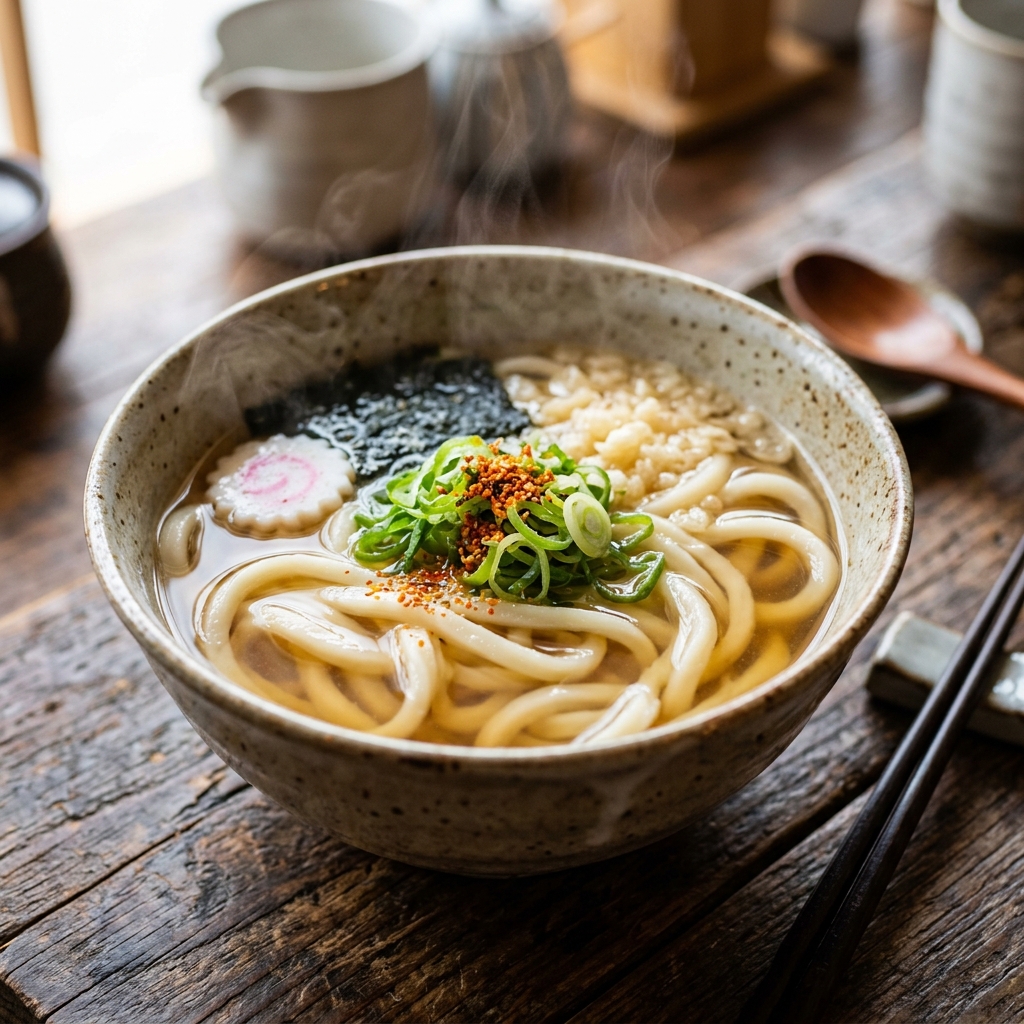
Kake udon is the most traditional form. You serve the cooked noodles in a hot dashi broth, top them with sliced green onion, and sometimes add a sprinkle of shichimi togarashi (a seven-spice blend). It is restrained and clean. The broth is the star. According to Just One Cookbook, kake udon is the most basic hot udon soup and a specialty of regions like Kagawa and Fukuoka in Japan.
The experience: warm, soothing, lightly savory. The noodles absorb just enough broth to taste like something more than plain wheat. The aroma from the bowl is gentle and oceanic from the dashi.
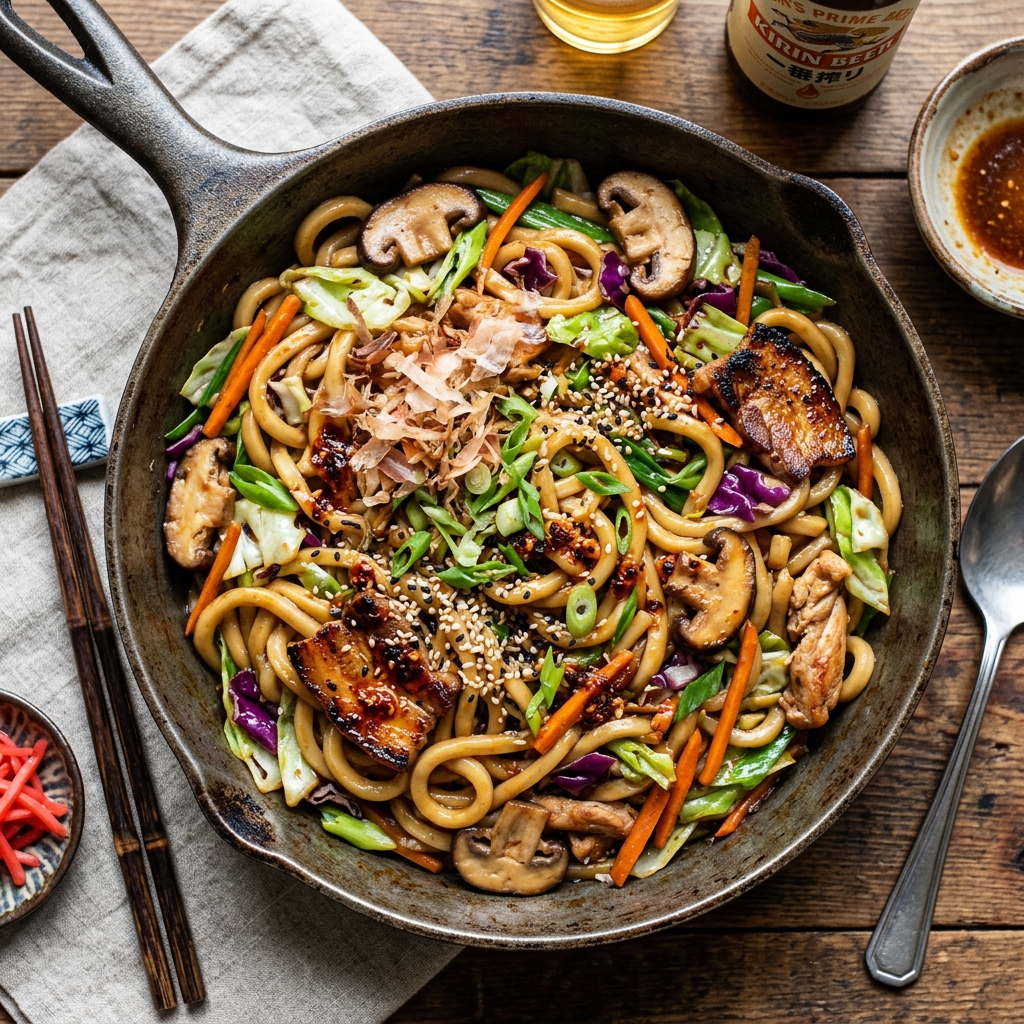
Yaki udon (stir-fried udon) is a completely different animal. The noodles hit a hot pan with oil, protein, and vegetables. The edges pick up a little char. The sauce, usually a blend of soy sauce, oyster sauce, and mirin, caramelizes into the noodles. The result is smoky, savory, and slightly sticky.
The experience: bold, deeply savory, with a bit of wok fragrance. Where kake udon is meditative, yaki udon is energetic. If you are cooking for someone who says they do not like “bland” food, yaki udon is the one to make.
| Kake Udon | Yaki Udon | |
|---|---|---|
| Cooking method | Boiled, then served in broth | Stir-fried in a hot pan |
| Key flavor | Delicate dashi umami | Smoky, savory, caramelized |
| Aroma | Light, oceanic | Wok-charred, rich |
| Difficulty | Very easy | Easy to moderate |
| Best noodle form | Frozen or fresh | Frozen or fresh |
The Curry Udon Flavor: Why It Works So Well
Curry udon is one of the best things you can do with a package of udon noodles, and it is criminally underrated outside Japan.
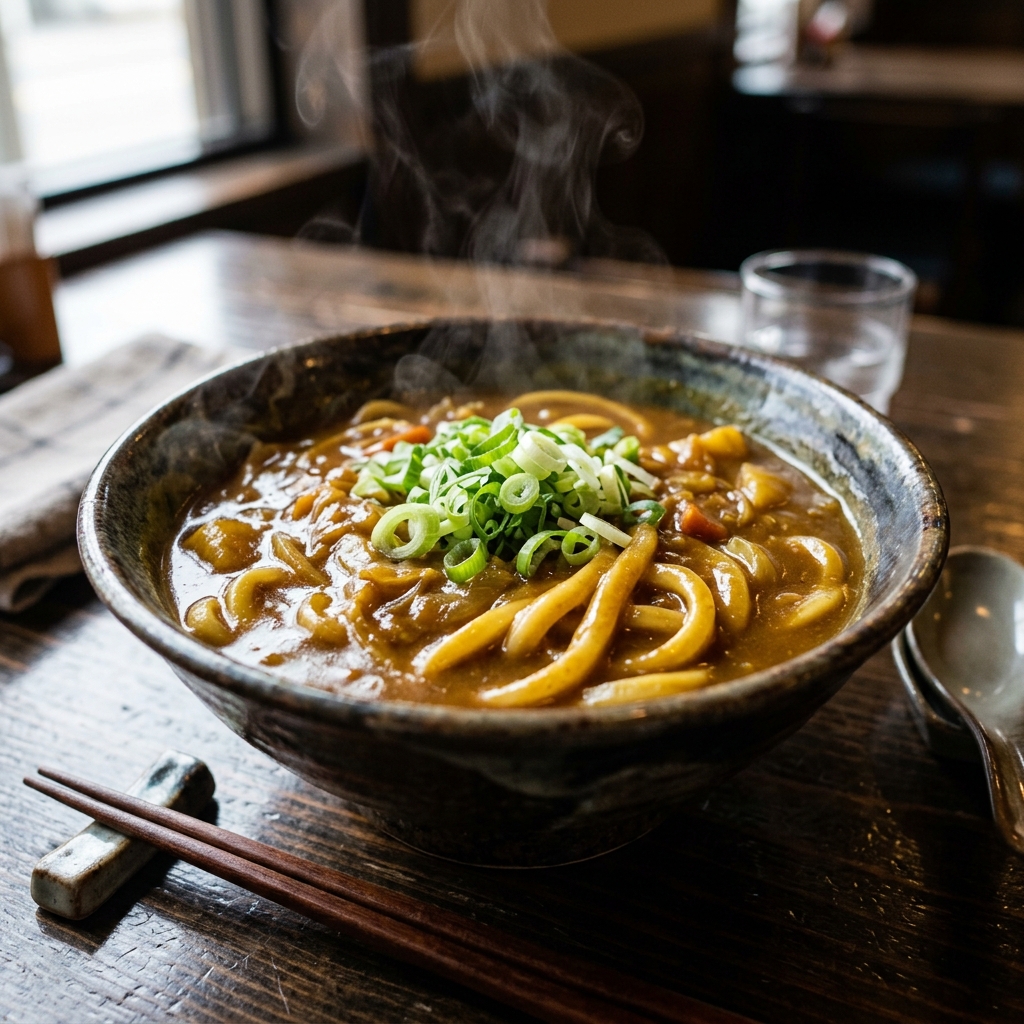
The curry udon flavor comes from blending a thick Japanese curry roux into your dashi broth. Japanese curry is warmer and sweeter than Indian or Thai curries. It uses notes of apple, carrot, and warm spices rather than sharp heat or heavy coconut. When that sauce coats thick udon noodles, you get a bowl that is hearty, fragrant, and deeply comforting.
The texture contrast is part of the appeal. The noodles are smooth and chewy. The curry sauce is thick and clingy. Every bite pulls the sauce along with it. The aroma is warm and spiced, with a hint of sweetness.
You can make curry udon at home by stirring Japanese curry roux into a basic udon broth. The result is much better than you expect for how little effort it takes.
If you are exploring Japanese flavor profiles for the first time, curry udon is one of the most crowd-pleasing places to start. You can read more in our guide to the best Japanese noodle flavors on Flavor Suggest.
Udon Noodle Types: A Full Comparison
| Type | Texture | Best Use | Broth Match | Shopping Tip |
|---|---|---|---|---|
| Frozen Sanuki udon | Thick, very chewy, firm | Hot soup, stir-fry | Light dashi or curry | Best texture overall; cooks in 1 minute |
| Fresh (refrigerated) udon | Soft, smooth, springy | Hot soup, quick meals | Light dashi | Use within a few days of purchase |
| Dried udon | Firm but thinner after cooking | Budget cooking | Any broth | Decent shelf-stable option |
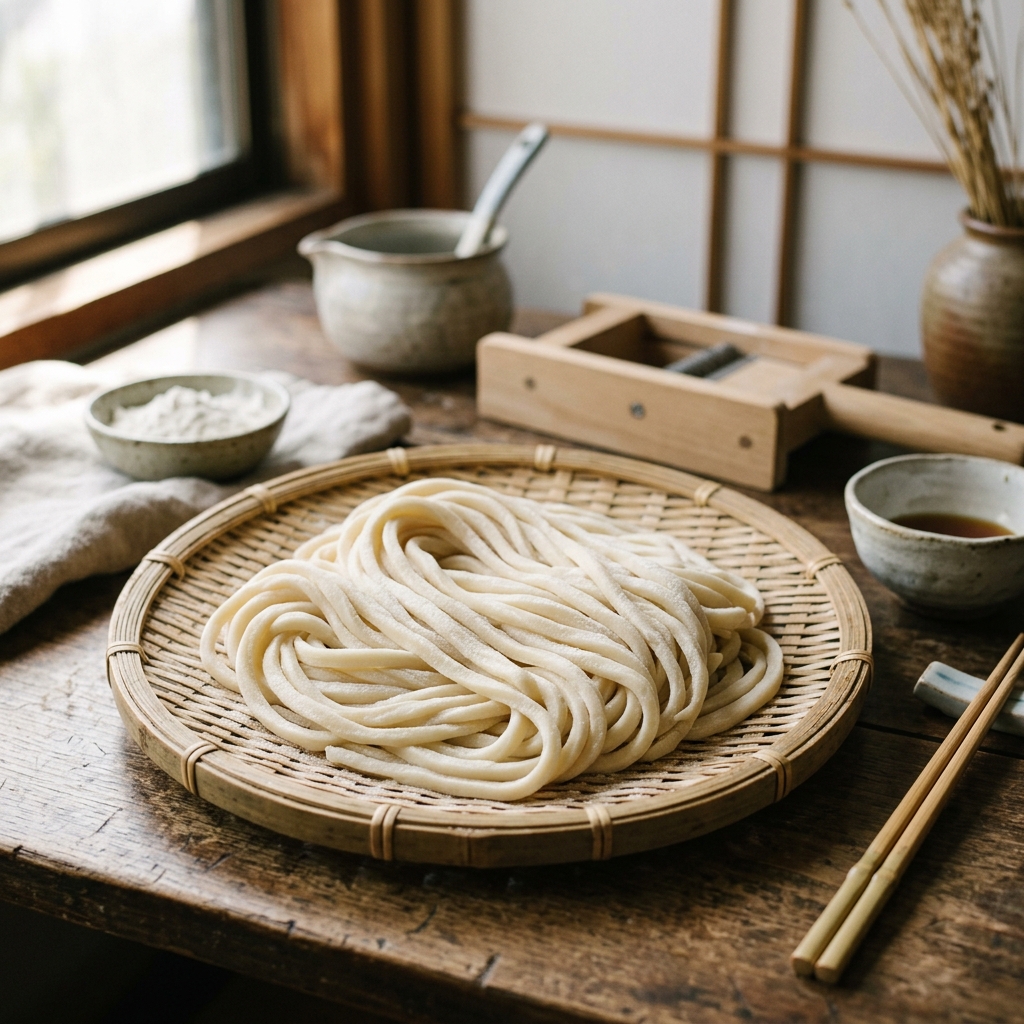
| Homemade udon | Best bite if made well | Any preparation | All broths | Requires 3 hours total; very rewarding |
Fresh Udon Noodle Brands: What to Look For
When it comes to fresh udon noodle brands, the main thing to look for is noodle thickness and ingredient quality. The best frozen or fresh udon should list wheat flour, water, and salt as the primary ingredients. Minimal additives mean better texture.
Sanuki-style udon from Kagawa prefecture has a reputation as the gold standard. The noodles are thicker and firmer than most other regional styles. If you see “Sanuki udon” on the packaging, that is usually a sign you are getting the right chew.
For shelf-stable or online shopping, frozen udon packages that come individually portioned are the most convenient. They store easily, cook in about one minute, and deliver consistent texture every time.
Avoid dried udon as your first introduction to the noodle. The texture after cooking is noticeably thinner and softer than frozen or fresh, and it does not give you that satisfying koshi bite that makes udon special.
Best Udon Broth Basics: What Makes It Good
A great best udon broth is built on three things: a good dashi base, the right ratio of soy sauce to sweetness, and the discipline not to overcook the noodles in the soup.
Dashi is the foundation. It is made from kombu (dried kelp) and katsuobushi (dried bonito flakes) and has a subtle, clean, savory depth. The smell when it is simmering is faint and oceanic. The flavor is umami-forward but never heavy.
Season the dashi with soy sauce, mirin, and a small amount of sugar. The goal is a broth that is salty, slightly sweet, and golden in color. According to the Just One Cookbook Kake Udon recipe, a typical ratio uses about 2 and one-third cups dashi to 1.5 tablespoons soy sauce and 1 tablespoon mirin for two servings.
One important note from Just One Cookbook: always cook the noodles separately from the broth. Udon releases starch into the water, and if you cook them in your broth, the broth turns cloudy and starchy. Drain the noodles, place them in a bowl, and pour the hot broth over the top.
Product Picks for Your Udon Setup
These are starter picks available on Amazon to help you build a solid udon experience at home. We are listing them as example options based on product descriptions. Always check current reviews and listings before purchasing.
Udon Noodles: Unha’s Japanese Sanuki Fresh Udon Noodles — A Sanuki-style frozen udon option available in multi-pack format. Quick to cook and designed for hearty soups or stir-fries.
Soup Base: Japanese Versatile Noodle Soup Base (Mentsuyu) — A concentrated mentsuyu soup base that works for udon, soba, and somen. Dilute to your preferred strength following the bottle instructions.
Curry Roux: S&B Golden Curry Sauce Mix — A Japanese curry roux that works well stirred into udon broth for a fast curry udon flavor at home. Medium-hot variety available.
Is Udon Healthy? What You Should Know
Udon noodles are made from refined wheat flour, which means they are not a whole-grain food. According to Harvard T.H. Chan School of Public Health’s Nutrition Source, refined grains are stripped of valuable nutrients including fiber, B vitamins, and vitamin E during processing. Whole grains, by contrast, keep all three layers of the kernel intact.
That does not mean udon is bad for you. It means udon is a comfort food first. It is a satisfying, easily digestible noodle that is gentle on the stomach. Pair it with a broth-based soup loaded with vegetables and protein, and you have a balanced meal. Just do not expect it to perform like a whole-grain food.
Since udon contains wheat, it is not suitable for people with celiac disease or wheat allergies. The U.S. Food and Drug Administration identifies wheat as one of the nine major food allergens, and all packaged foods containing wheat must clearly list it on the label. If you are gluten-free, some brands make rice-based udon noodles as an alternative.
Safe storage: Per USDA Food Safety and Inspection Service guidance, cooked noodles and broth should be refrigerated within 2 hours of cooking. Stored separately in airtight containers, they are generally best used within 3 to 4 days. When reheating, make sure the dish reaches an internal temperature of 165°F.
The Best Udon Noodles Come Down to These Four Things
- Noodle form matters. Frozen Sanuki udon beats dried udon for texture every single time. If you want the right chew, start there.
- Build your broth right. The best udon broth is a dashi base, not a generic soup stock. That oceanic, umami depth is what makes the bowl feel complete.
- Match your style to your mood. Kake udon when you want something calm and soothing. Yaki udon when you want bold and smoky. Curry udon when you want warmth and richness.
- Explore fresh udon noodle brands online. You do not need a specialty store. A few well-reviewed frozen options on Amazon will get you a great bowl at home.
At Flavor Suggest, we believe every food experience is worth understanding at the flavor level, not just the recipe level. If this guide helped you find your next favorite bowl, explore more of our rankings and tasting guides on the site.
Frequently Asked Questions
What are udon noodles made of?
Udon noodles are made from wheat flour, water, and salt. Those three ingredients, in the right ratio and with proper kneading, produce a thick, chewy noodle with a smooth surface. Some commercial versions may include minor additives to extend shelf life.
What do udon noodles taste like?
On their own, udon noodles taste mild and lightly wheaty with almost no strong flavor. Their main quality is texture: thick, dense, and springy. The flavor experience comes from the broth or sauce you serve them with.
What is the difference between kake udon and yaki udon?
Kake udon is a simple hot soup: noodles in a light dashi broth, topped with green onions. Yaki udon is stir-fried: the noodles go into a hot pan with oil, protein, vegetables, and a savory sauce. Kake udon is clean and delicate; yaki udon is smoky and bold.
What is the best udon broth?
The best udon broth starts with dashi (made from kombu and dried bonito flakes) and is seasoned with soy sauce, mirin, and a small amount of sugar. It should be clear, golden, lightly savory, and slightly sweet. Avoid using plain chicken or beef stock as the base, as it lacks the clean umami that makes udon broth distinctive.
Which fresh udon noodle brands are best?
Sanuki-style udon from Kagawa, Japan, is widely considered the best style for texture. Look for frozen Sanuki udon brands with simple ingredients: wheat flour, water, and salt. These cook in about one minute from frozen and deliver the chewy bite that makes udon special.
Are udon noodles gluten-free?
No. Standard udon noodles are made from wheat flour and contain gluten. Wheat is one of the nine major food allergens recognized by the FDA, and it must be listed on all packaged food labels. Rice-based udon alternatives exist for those with celiac disease or wheat sensitivity.