What Does Red Velvet Cake Taste Like? A Complete Flavor Guide
There is a slice of cake that confuses people in the best possible way. It looks dramatic. The color is deep, almost burgundy red. You take a bite expecting chocolate, but that is not quite what you get. The flavor is softer, tangier, more complex. If you have ever tried to explain red velvet cake to someone who has never had it, you already know the problem: it resists a simple description.
At Flavor Suggest, this is exactly the kind of flavor we love to break down. This guide covers everything you need to know about red velvet cake: what it actually tastes like, why it is red, how it compares to chocolate cake, how to bake it from scratch, which boxed mixes are worth buying, and how to store it safely.
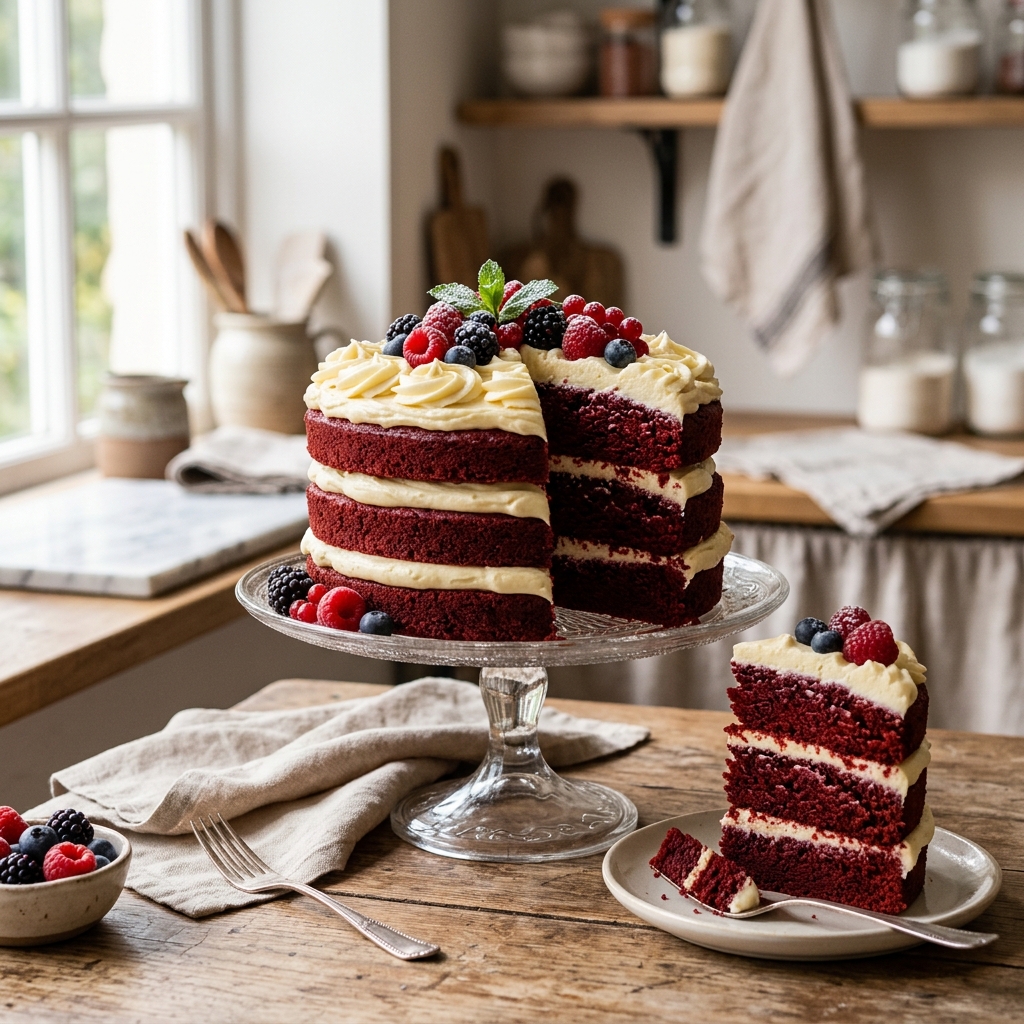
Quick answer: Red velvet cake is a layered American cake with a mild cocoa flavor, a tangy buttermilk crumb, and a characteristic deep red color. It is traditionally paired with cream cheese frosting or ermine (cooked milk) frosting. The flavor sits between vanilla and chocolate, with an acidic tang that makes it distinctly its own thing.
What Does Red Velvet Cake Actually Taste Like?
This is the question most recipe sites dodge. They tell you the ingredients. They show you the steps. But the flavor itself gets described in vague terms.
Here is what you are actually tasting when you eat a well-made red velvet cake:
- Mild cocoa: The chocolate note is present but restrained. A classic recipe uses just one to two tablespoons of cocoa powder, compared to the six to eight tablespoons in a standard chocolate cake.
- Buttermilk tang: This is the most underrated part of red velvet’s flavor. Buttermilk brings a gentle sourness that brightens the whole crumb and keeps the texture moist and tender.
- Butter and vanilla: These give the cake its warmth and depth. Red velvet leans buttery rather than fudgy.
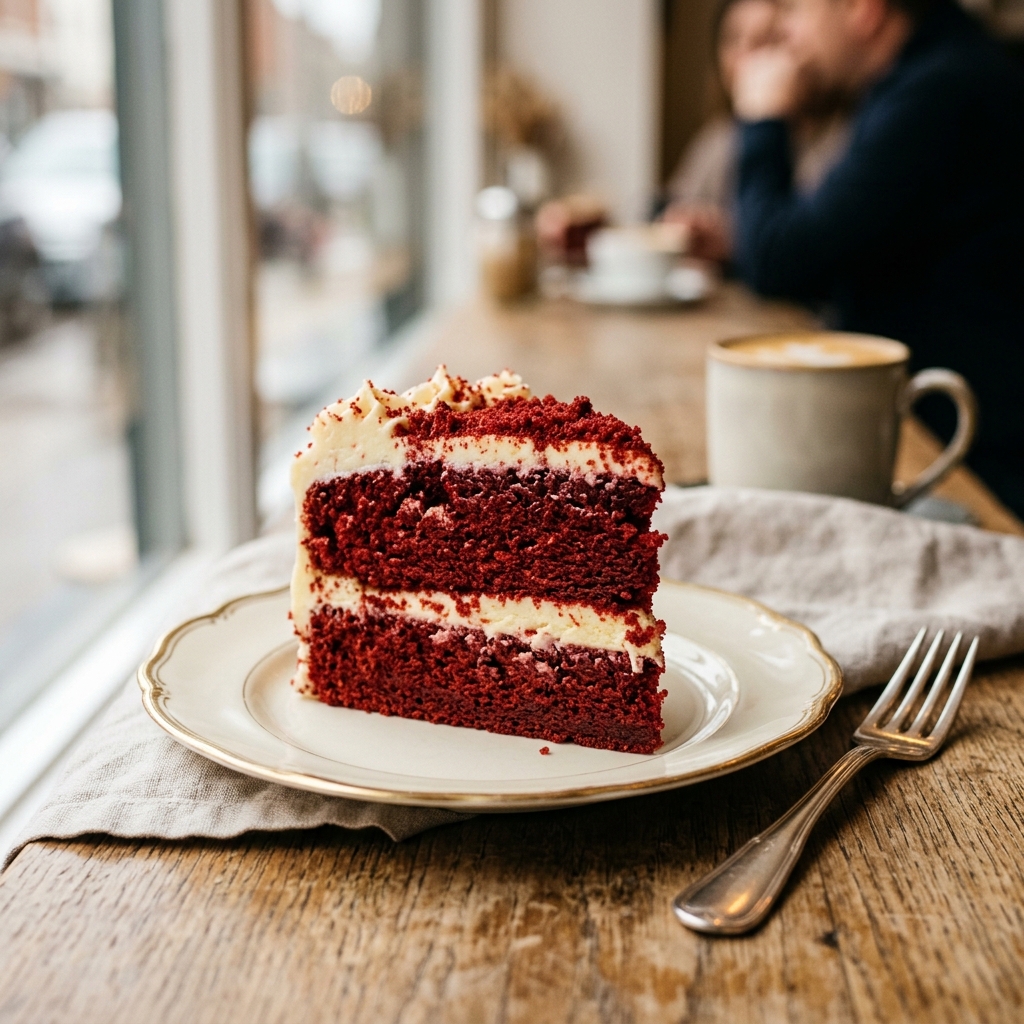
- A slightly velvety crumb: The name is not just marketing. Cake flour, buttermilk, and the reaction between acidic ingredients and baking soda produce a finer, softer crumb than most chocolate cakes.
The cream cheese frosting is not optional decoration. It completes the flavor profile. Its cool, tangy creaminess balances the sweetness of the cake and amplifies the acidic notes already present in the batter.
Why Is Red Velvet Cake Red?
This is one of the most searched questions about this cake, and the answer has two parts: history and chemistry.
The Original Red
Before synthetic food dyes, red velvet cake got its reddish-brown tint from a natural chemical reaction. Cocoa powder contains anthocyanins, which are pH-sensitive pigments. When cocoa reacts with acidic ingredients like buttermilk and vinegar, those pigments shift toward a reddish-brown hue. Natural (non-alkalized) cocoa was more reactive this way. The “velvet” in the name referred to the soft, fine crumb that acids and cake flour produced.
The Modern Red
Today, the vivid crimson color in most recipes comes from red food coloring, typically about one to two tablespoons of liquid or one to two teaspoons of gel. This became standard during the mid-20th century when commercial dyes became widely available and affordable.
The FDA and Red No. 3
In January 2025, the U.S. Food and Drug Administration revoked its authorization for FD&C Red No. 3 in food and ingested drugs. This was based on the Delaney Clause, which requires the FDA to revoke approval of any color additive shown to cause cancer in humans or animals. The FDA noted that the evidence came from high-dose studies in male rats and that the mechanism does not apply to humans at normal consumption levels. Manufacturers had until January 2027 to reformulate. Most red velvet products today use Red 40 (Allura Red), not Red No. 3.
If you prefer to avoid synthetic dyes entirely, beet root powder is a workable natural alternative. It produces a deeper purple-red tone rather than bright crimson, but the flavor impact is minimal when used in small amounts.
Red Velvet vs Chocolate Cake: What Is the Real Difference?
People ask this constantly, and the honest answer is: these are two different cakes with different goals.
| Feature | Red Velvet Cake | Chocolate Cake |
|---|---|---|
| Cocoa amount | 1 to 2 tbsp (very mild) | 6 to 8+ tbsp (strong) |
| Primary flavors | Buttermilk tang, vanilla, mild cocoa | Cocoa, chocolate, sometimes coffee |
| Acidity | High (buttermilk + vinegar) | Low to moderate |
| Crumb texture | Fine, velvety, soft | Moist, dense, rich |
| Color | Deep red | Dark brown |
| Traditional frosting | Cream cheese or ermine | Chocolate buttercream |
| When to choose it | You want complexity, tang, elegance | You want deep chocolate flavor |
The debate often comes down to cocoa intensity. If you want a cake that is primarily about chocolate flavor, choose chocolate cake. Red velvet uses cocoa as a supporting note, not the star. The tang from buttermilk and the cream cheese frosting carry the flavor here.
One more thing worth knowing: the vinegar in most recipes is not just a quirk. It activates the baking soda for lift, brightens the red color, and adds a subtle sharpness that you taste without being able to name.
Red Velvet Cake Recipe: Ingredient Roles and Troubleshooting
A good recipe is not complicated, but every ingredient is doing a specific job. Understanding why each item is there makes it easier to troubleshoot when something goes wrong.
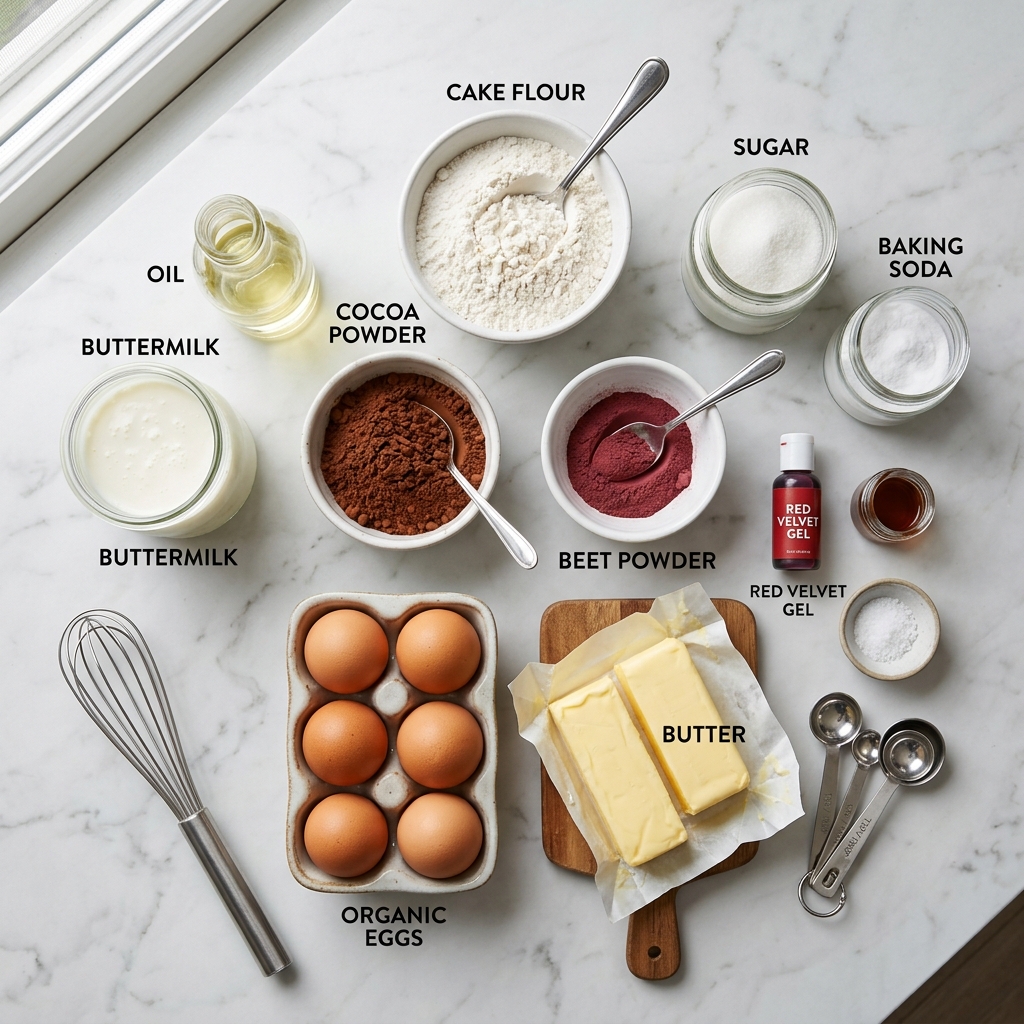
- Cake flour vs all-purpose flour: Cake flour has lower protein content, which means less gluten development and a finer crumb. This is what creates the “velvet” texture. If you only have all-purpose flour, the cake will still work, but the crumb will be slightly coarser.
- Buttermilk: Provides tang, moisture, and reacts with baking soda to leaven the cake. Do not skip it. If you do not have it, add one tablespoon of white vinegar or lemon juice to one cup of regular milk and let it sit for five minutes.
- Cocoa powder (unsweetened, natural): Use natural cocoa, not Dutch-process. Natural cocoa is more acidic, which is part of the original color reaction and the correct flavor profile.
- Butter and oil together: Butter gives flavor. Oil gives moisture. Using both produces a cake that tastes rich and stays moist after refrigeration, which matters because this cake is usually stored cold.
- Vinegar: Typically one teaspoon of white distilled vinegar. It helps with color and reacts with baking soda for extra lift.
- Red food coloring: One to two tablespoons of liquid or one to two teaspoons of gel. A concentrated gel like AmeriColor Super Red gives a deeper color with less product.
Common Troubleshooting
- Cake tastes flat: You likely used Dutch-process cocoa instead of natural. Dutch-process is already neutralized and does not react properly with baking soda.
- Crumb is dense and gummy: Overmixing after adding flour develops too much gluten. Mix until just combined once the dry ingredients go in.
- Color looks brown rather than red: Either not enough food coloring, or your cocoa is overwhelming the dye. Add more gel coloring. Some bakers use a small amount of beet powder alongside gel dye to deepen the color naturally.
- Cake sinks in the middle: Oven temperature is too high, or the oven door was opened too early. Use an oven thermometer to verify your actual baking temperature.
Red Velvet Cake Frosting: Cream Cheese vs Ermine
Two frostings are traditional for red velvet cake. Most people today know the cream cheese version, but the original frosting is ermine, also called boiled milk frosting or flour frosting.
Cream cheese frosting is tangy, creamy, and rich. It uses brick-style cream cheese, butter, powdered sugar, vanilla, and a pinch of salt. It is soft by nature and benefits from a 30-minute chill before piping.
Ermine frosting is made by cooking a mixture of flour, sugar, and milk into a thick paste, cooling it, then whipping it with butter until light. It is less sweet and silkier than cream cheese frosting. Many bakers actually prefer it for its more delicate finish.
Both work well. The difference is in sweetness and texture. Ermine is more restrained. Cream cheese frosting is richer and tangier.
Food Safety: How Long Can Cream Cheese Frosting Stay Out?
According to the FDA, cream cheese is a perishable dairy product that should not sit at room temperature for more than two hours. A cream cheese-frosted cake should be stored in the refrigerator and will keep for up to five days when covered tightly. If you are serving it at an event, take it out of the fridge 20 to 30 minutes before serving to soften the frosting, then return any leftovers promptly.
Best Red Velvet Cake Mix: A Verified Ranking
Not everyone wants to bake from scratch, and a good boxed mix can produce a genuinely satisfying result. Based on the Tasting Table product test published in July 2025, here is how the available store-bought mixes ranked:
| Rank | Brand | Notes |
|---|---|---|
| 1 | Old School Brand | Most natural flavor, short ingredient list, rich and moist |
| 2 | Betty Crocker | Strong cocoa flavor, vibrant color, clean taste, easy to make |
| 3 | Pillsbury | Very close to Betty Crocker, slightly less punchy flavor |
| 4 | Mom’s Place | Allergen-friendly (gluten-free, dairy-free), milder flavor |
| 5 | Plentiful Pantry | Dense pound cake style, off-putting metallic notes |
| 6 | Duncan Hines | Artificial aftertaste despite appealing appearance |
Amazon Buying Advice
If you are shopping for red velvet baking supplies, here are the product types worth your attention:
- Red velvet cake mix: For the most natural flavor, reach for Old School Brand. For dependable availability, Betty Crocker is the reliable pick.
- Gel food coloring: A concentrated option like AmeriColor Super Red uses less product per batch and gives a truer color.
- Cake flour: Swan’s Down and Bob’s Red Mill are both fine-milled options that produce the best crumb.
- Natural red food coloring: Beet root powder is a solid synthetic-dye-free alternative.
What Red Velvet Cake Is Really About
Red velvet cake is not a chocolate cake with food dye. It is a carefully balanced combination of mild cocoa, buttermilk tang, butter, vanilla, and acidity, held together by a frosting that completes the flavor profile.
The four things to take away from this guide:
- Flavor first. Red velvet’s appeal comes from complexity and balance, not from any single dominant note. The cocoa is intentionally subtle.
- Why it is red matters. The original color came from chemistry, not dye. Modern versions use Red 40, and the FDA revoked Red No. 3 in early 2025. If you want to avoid synthetic dyes, beet powder is a real option.
- Red velvet and chocolate cake are genuinely different. Want chocolate intensity? Choose chocolate cake. Want elegance and tang? Choose red velvet.
- For boxed mixes, Old School Brand leads, with Betty Crocker as the most accessible runner-up.
Ready to bake your own? Pick up a quality cake flour and a concentrated gel coloring, then put this guide to work on your next batch.

Frequently Asked Questions
What does red velvet cake taste like?
Red velvet cake has a mild cocoa flavor with noticeable buttermilk tang and warm vanilla and butter notes. It is less chocolatey than chocolate cake and has a slightly acidic brightness that sets it apart. The cream cheese frosting adds a cool, tangy richness that completes the experience.
Why is red velvet cake red?
Originally, the reddish tint came from a natural reaction between anthocyanins in natural cocoa powder and acidic ingredients like buttermilk and vinegar. Today, most recipes and mixes use red food coloring, typically Red 40, to achieve the deep crimson color. In January 2025, the FDA revoked authorization for Red No. 3 in food, so manufacturers are shifting to other approved dyes or natural alternatives.
What is the best red velvet cake mix?
Based on a hands-on test by Tasting Table (July 2025), Old School Brand produces the most natural and richest flavor among store-bought options. Betty Crocker is the best widely available alternative, with vibrant color, clean cocoa flavor, and consistent texture.
What frosting goes on red velvet cake?
Two frostings are traditional: cream cheese frosting and ermine (cooked milk) frosting. Cream cheese frosting is the most popular today and pairs well with the cake’s tangy crumb. Ermine frosting is the original choice, less sweet and slightly silkier, made by cooking a flour-milk paste and whipping it with butter.
How long can a red velvet cake with cream cheese frosting sit out?
The FDA recommends that cream cheese should not sit at room temperature for more than two hours. A frosted red velvet cake should be refrigerated and will stay fresh for up to five days when covered tightly.
What is the secret to a moist crumb?
The combination of both butter and oil in the batter is key. Butter contributes flavor; oil contributes moisture and keeps the crumb tender even after refrigeration. Buttermilk is equally important, adding moisture and reacting with baking soda for a fine, soft texture.
Can I make red velvet cake without food coloring?
Yes. Without food coloring, the cake will be a warm brown or reddish-brown color rather than vivid red, but the flavor will be identical. You can also use beet root powder as a natural alternative; it produces a purplish-red hue with minimal impact on flavor in small quantities.
What is the difference between red velvet cake and chocolate cake?
The main differences are cocoa quantity, acidity, texture, color, and frosting. Red velvet uses a small amount of natural cocoa and a large amount of buttermilk and vinegar for tang. Chocolate cake uses significantly more cocoa for a deep, rich flavor and is typically paired with chocolate buttercream. Red velvet also has a finer, softer crumb.