The Best Matcha Latte in 2026: Flavor, Calories, and How to Make One
The first sip of a good matcha latte is a small surprise. There’s a soft grassy note up front, a savory umami middle, a whisper of bitterness, and then milk smooths the whole thing into something creamy and calm. Get it wrong and it tastes like chalky lawn clippings. Get it right and you understand why people skip coffee for it.
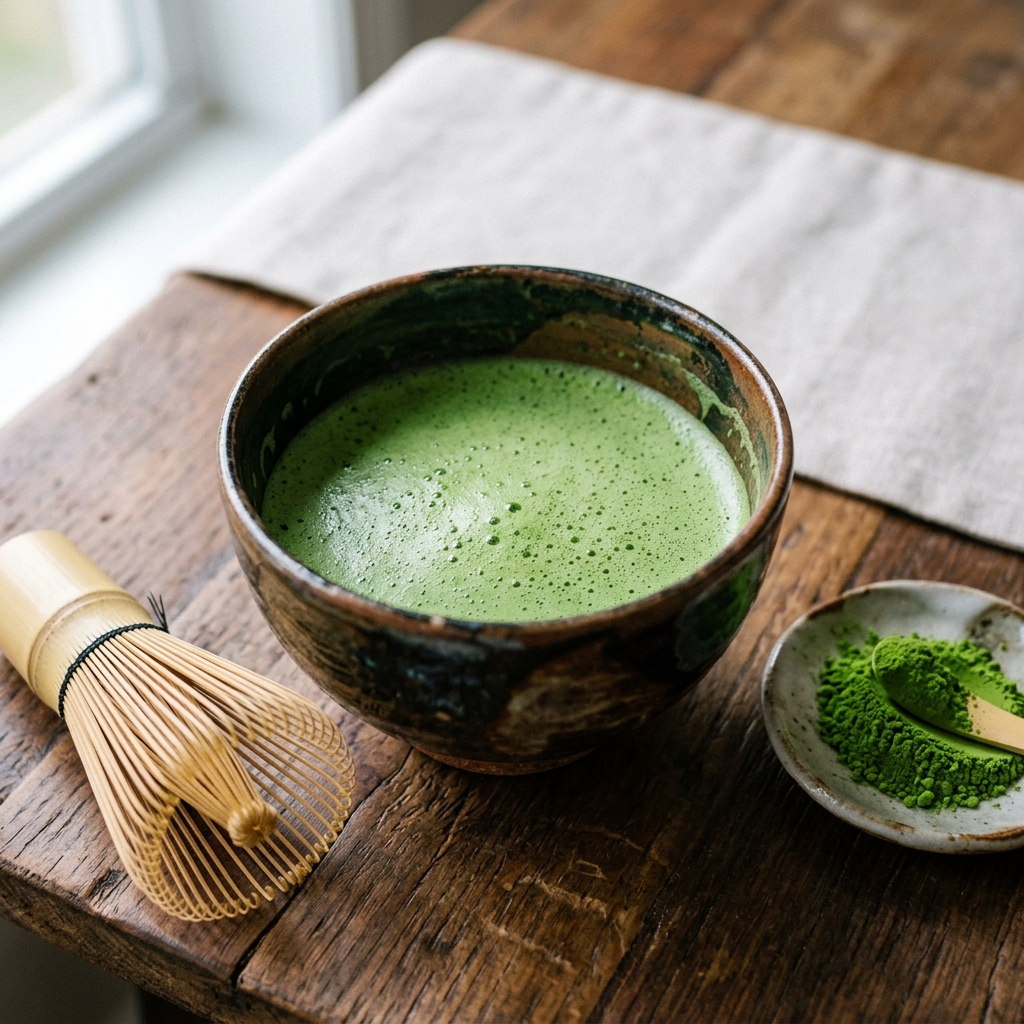
At Flavor Suggest, we rank and break down flavors for a living, so this guide focuses on what a matcha latte actually tastes like and how to make yours better. A matcha latte is a drink made by whisking finely ground green tea powder (matcha) with hot water, then mixing in steamed or frothed milk. Unlike steeped green tea, you drink the whole leaf, which gives it a fuller, rounder flavor and a smooth, gentle energy.
A matcha latte is whisked matcha powder plus milk. For the best flavor, sift 1 to 2 teaspoons of ceremonial-grade matcha, whisk it with water around 175°F (not boiling) until frothy, then add your milk of choice. Café versions like the Starbucks hot Matcha Latte run about 220 calories [Starbucks], while homemade cups vary with milk and sweetener.
What a Matcha Latte Actually Tastes Like
Here’s the part most recipes skip. Matcha has a layered flavor, and knowing the layers helps you fix a bad cup.
- Grassy notes: The fresh, green, slightly vegetal top note. Pleasant in small doses, harsh if the matcha is low quality or the water is too hot.
- Umami: A savory, almost brothy roundness. Shade-grown matcha has more of this, which is why good matcha tastes “full” instead of thin.
- Bitterness: A light, clean edge. Boiling water or too much powder pushes it from pleasant to sharp.
- Creaminess and finish: Once milk joins in, the grassy edge softens and the finish turns smooth and lingering.
Whole milk gives the richest, creamiest body. Oat milk froths well and adds a touch of natural sweetness. Almond milk keeps it light but can thin out the matcha flavor.
How to Make the Best Iced Matcha Latte Recipe at Home
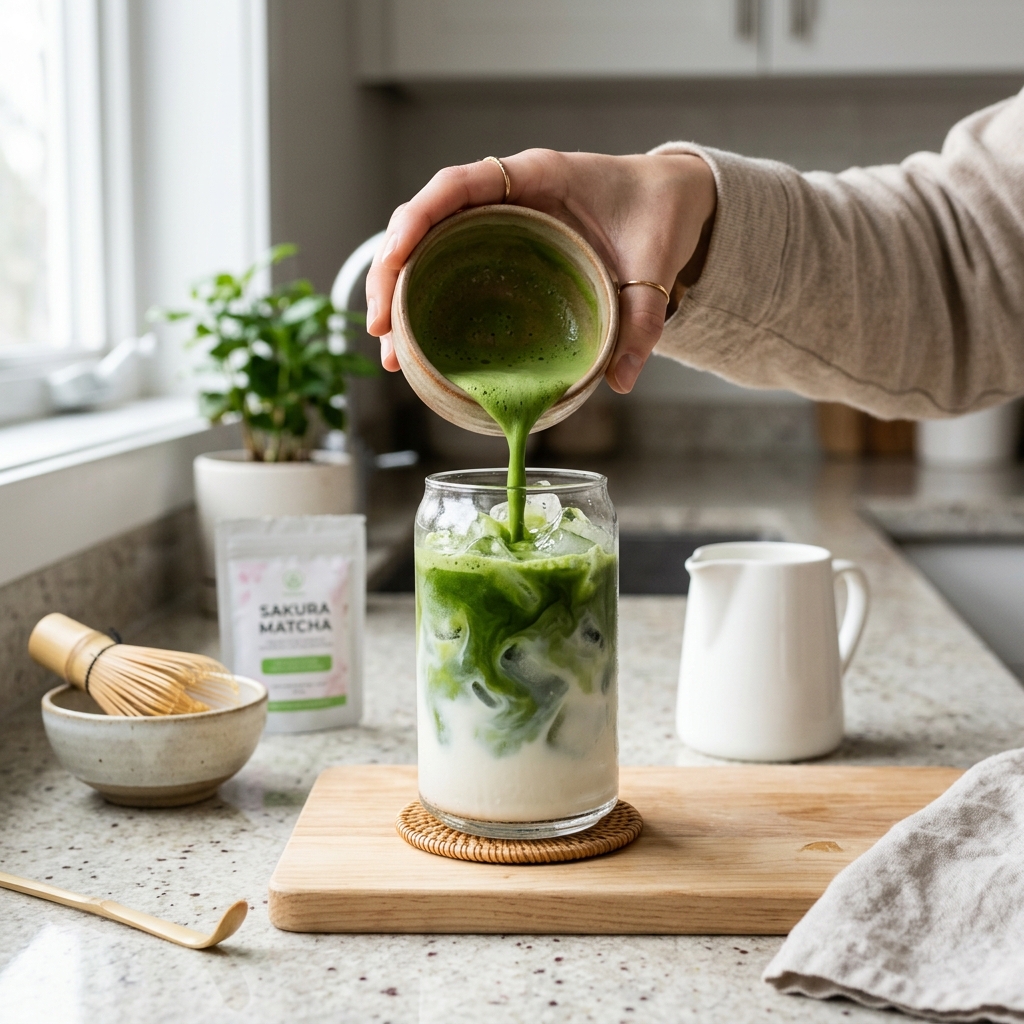
This is the method that gives you the best matcha latte without café prices. It works hot, but this iced matcha latte recipe is the one most people want in warm weather.
- Sift 1 to 2 teaspoons of matcha into a cup or bowl. Sifting removes clumps so you don’t get bitter lumps later.
- Add a small splash of hot water, around 175 to 176°F. Not boiling. Too-hot water scorches the matcha and turns it bitter.
- Whisk until smooth and lightly foamy. Use a bamboo whisk or a milk frother, moving in a brisk W or up-and-down motion, not slow circles.
- Add sweetener now if you want it. Maple syrup, honey, or simple syrup blend easier into the warm base than into cold milk.
- Fill a glass with ice, pour in your milk, then pour the matcha over the top. You get those pretty green-and-white layers, plus a creamy finish.
For a smaller, stronger flavor, use 1 teaspoon matcha to 1.5 tablespoons water. For a bolder cup, bump it to 2 teaspoons.
Want more cold drink ideas like this? See our guide at Non-Carbonated Alcoholic Drinks.
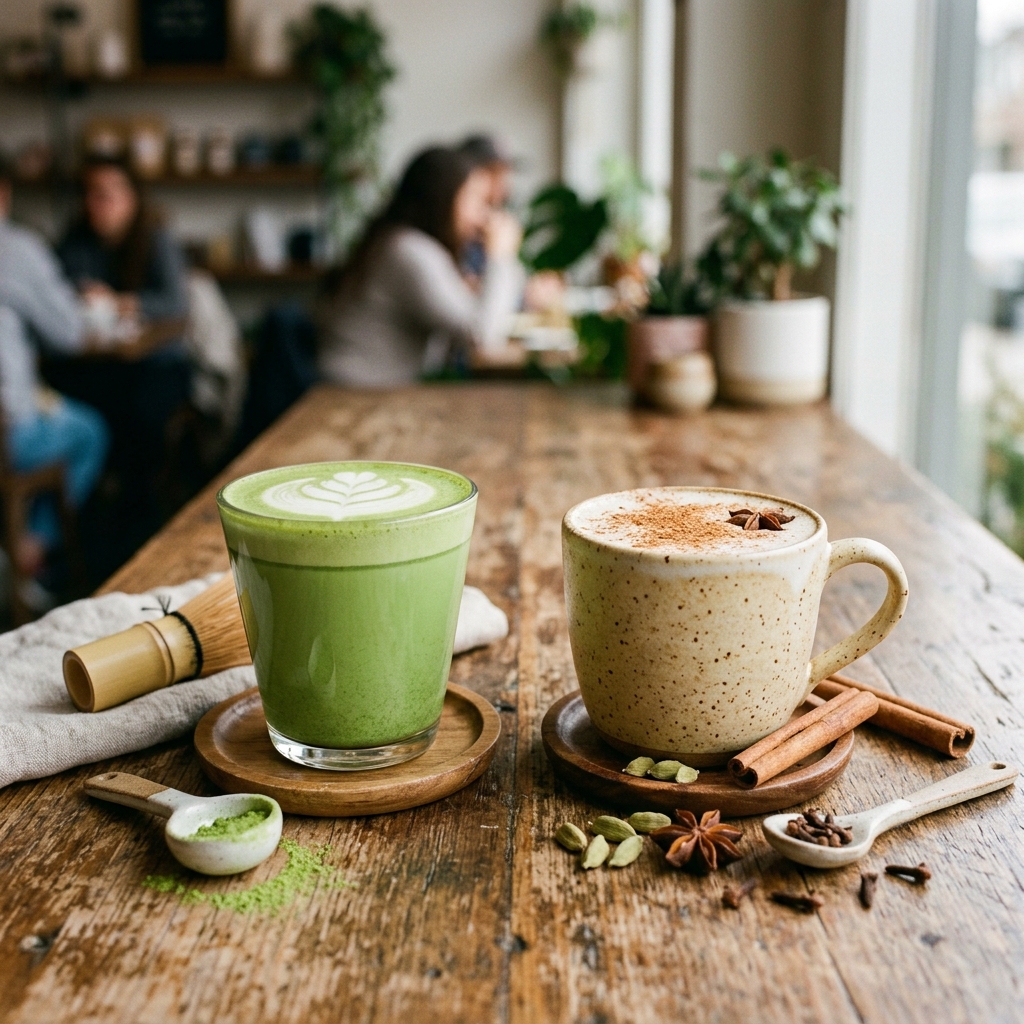
Matcha Latte vs Chai Latte
This is the counter decision a lot of people freeze on. The matcha latte vs chai latte choice comes down to flavor, spice, sweetness, and how much of a caffeine lift you want.
| Feature | Matcha Latte | Chai Latte |
|---|---|---|
| Core flavor | Grassy, umami, slightly bitter, creamy finish | Warm spices: cinnamon, cardamom, ginger, clove |
| Sweetness | Naturally low; you control it | Often sweeter, especially pre-mixed concentrates |
| Caffeine | Moderate, steady; matcha is roughly 38 to 89 mg per 8 oz [Harvard Health] | Lower from black tea base, usually 25 to 50 mg |
| Color and look | Bright green | Warm tan or brown |
| Best for | Calm, focused energy and fans of green, savory flavor | Cozy, dessert-like comfort and spice lovers |
Pick matcha if you like clean, green, savory flavor with a smooth energy lift. Pick chai if you want sweet, spiced, cozy comfort. Neither is “better.” They scratch different itches.
Matcha Latte Calories
Calories depend almost entirely on milk and sweetener, so the number swings a lot. The matcha powder itself is tiny in calories; the milk and syrup do the heavy lifting.
Here’s a concrete reference: the Starbucks hot Matcha Latte lists 220 calories for the standard size on its product page, made with 2% milk and classic syrup [Starbucks].
A homemade cup can land much lower or higher:
- Unsweetened with almond milk: often well under 100 calories.
- Whole milk with a spoon of honey: closer to or above the café number.
- A printable homemade recipe shown on Just One Cookbook lists about 136 calories per serving with the milk and sugar amounts used [Just One Cookbook].
The simple rule: matcha latte calories rise with creamier milk and added sweetener. If you want a lighter cup, skip the syrup and use a lower-calorie milk.
What the Research Actually Says
Matcha gets a lot of health hype, so here’s the careful version. Matcha contains caffeine, the amino acid L-theanine, and antioxidants called catechins, especially EGCG [Harvard Health].
A published review of human and animal studies found that matcha may help with stress and attention, and showed promising effects on heart-related and metabolic markers. The same review is clear that many results come from small human trials or animal studies, and stronger evidence is still needed [NCBI PMC review]. Harvard Health makes a similar point: the antioxidants are promising, but more human research is needed before strong claims hold up [Harvard Health].
So enjoy your matcha latte for the flavor and the gentle lift. Treat the bigger health claims as “possible, not proven.”
Matcha Latte Powder Brands We’d Point You To
Quality matters more here than with most drinks, because cheap matcha tastes dull, bitter, or flat. Below are three matcha latte powder brands with verified Amazon listings. We’re describing them based only on their product pages, not personal taste tests.
| Product | Origin and style | Best for | Price note | Rating |
|---|---|---|---|---|
| Naoki Superior Ceremonial Blend | First-harvest, Uji, Kyoto; smooth, balanced, slight bitterness | Beginners and daily lattes | Mid-range, often the value pick | 4.5 stars, 6,600+ ratings |
| Ippodo Sayaka | Kyoto, family-run since 1717; rich, smooth, hint of astringency | Those wanting a traditional, premium cup | Higher per gram | 4.6 stars, 2,600+ ratings |
| GOLDE Pure Matcha | Ceremonial grade, Uji; organic, smooth and mellow, ~60 mg caffeine per serving | Latte and smoothie drinkers who want organic | Premium pricing | 4.2 stars, 560+ ratings |
- Naoki Superior Ceremonial Blend is described as smooth and beginner-friendly, made for lattes and usucha. It’s frequently the best balance of quality and price.
- Ippodo Sayaka is positioned as a rich, smooth starter matcha from a centuries-old Kyoto house. The page notes it works well in lattes and as traditional matcha.
- GOLDE Pure Matcha lists organic, ceremonial-grade matcha from Uji with a mellow flavor and around 60 mg caffeine per serving. Reviews are a bit more mixed, and it sits at a premium price.
If you’re new, a smooth, balanced ceremonial blend is the safest first buy. Save the higher-end tins for once you know you love the flavor.
Common Mistakes That Ruin a Matcha Latte
- Boiling water. The fastest way to a bitter, harsh cup. Aim for around 175°F.
- Skipping the sift. Lumps don’t whisk out fully and turn into gritty, bitter bites.
- Whisking in slow circles. A brisk W-motion builds the foam and smooths the texture.
- Too much powder. More matcha means more bitterness, not just more flavor.
- Cheap powder. No technique can fix dull, stale matcha.
Frequently Asked Questions
What is a matcha latte made of?
A matcha latte is made from matcha (finely ground green tea powder), a little hot water to whisk it smooth, and milk. Many people add a sweetener like honey or syrup. The matcha gives it the green color and grassy-umami flavor, while the milk adds creaminess.
How many calories are in a matcha latte?
It depends on the milk and sweetener. The Starbucks hot Matcha Latte lists about 220 calories for its standard size, while a homemade cup can be under 100 calories if you use unsweetened almond milk and no syrup. Whole milk and added sweeteners push the number higher.
How do I make an iced matcha latte at home?
Sift 1 to 2 teaspoons of matcha, whisk it with a splash of water around 175°F until smooth and frothy, then pour it over a glass of ice and milk. Add sweetener to the warm matcha base first so it blends evenly. Whole or oat milk gives the creamiest result.
Why is my matcha latte bitter?
Bitterness usually comes from water that’s too hot, too much powder, or low-quality matcha. Use water around 175°F instead of boiling, start with about 1 teaspoon of matcha, and choose a smooth ceremonial-grade powder. Sifting first also helps prevent harsh, lumpy bites.
Matcha latte vs chai latte: which has more caffeine?
A matcha latte usually has more caffeine. Matcha runs about 38 to 89 mg per 8 ounces, while a chai latte made from black tea is often closer to 25 to 50 mg. Matcha also tends to give a steadier feeling of energy thanks to L-theanine.
Is a matcha latte healthy?
Matcha contains antioxidants, caffeine, and L-theanine, and early research suggests possible benefits for focus and stress. But many studies are small or done in animals, so strong health claims aren’t proven yet. As a latte, the milk and sweetener also affect how healthy the final drink is.
What is the best matcha powder for lattes?
A smooth, balanced ceremonial-grade matcha is the best choice for lattes. Beginner-friendly blends like Naoki Superior Ceremonial are made to taste good with milk and aren’t too bitter. Higher-end tins from houses like Ippodo are great once you know you enjoy the flavor.
Can I make a matcha latte without a bamboo whisk?
Yes. A small handheld milk frother works well and is easier for many people than a bamboo whisk. You can also shake the whisked matcha and water in a sealed jar until smooth. The key is breaking up clumps and creating a little foam.
Does a matcha latte taste like green tea?
Sort of, but richer. A matcha latte has the grassy, green flavor of green tea plus a savory umami depth, since you drink the whole leaf. The milk softens the bitterness and adds a creamy, smooth finish.
What milk is best for a matcha latte?
Whole milk gives the richest, creamiest cup, while oat milk froths nicely and adds gentle sweetness. Almond milk keeps it light but can thin the matcha flavor. Choose based on whether you want richness, foam, or a lower-calorie drink.
The Wrap-Up
A great matcha latte is mostly about a few small choices. Here’s what to remember:
- Taste in layers. Good matcha is grassy, umami, slightly bitter, and creamy once milk goes in.
- Technique fixes most problems. Sift the powder, use water around 175°F, and whisk briskly to avoid bitterness and lumps.
- Calories live in the milk and sweetener. Café cups like Starbucks run about 220 calories; homemade can be much lower.
- Buy smooth, start simple. A balanced ceremonial-grade powder is the best first step toward the best matcha latte.
For more flavor breakdowns, taste rankings, and honest product picks, keep exploring Flavor Suggest.